Iain Machell is one of many professors at SUNY Ulster that teaches and influences students with his artistic creativity and experience. SUNY Ulster is proud to have him on board! Machell was awarded the SUNY Chancellor’s Award for Excellence in Teaching and is currently a Professor of Studio Arts and formerly held the position of department chair of art, design, music, theatre, fashion, and communication and is now Co-ordinator of the Fine Art program.
This artist has been mentioned many times in various publications throughout his career; such as the New York Times, Saugerties Artists Tour, Chronogram, and more. One of his books can even be seen in the Museum of Modern Art/ Franklin Furnace/ Artist Book Collection. Most recently Machell was included as one of twelve skilled artists in a well known artist’s blog Vasari 21. Check out the fourth name on their “What is Drawing?” series part five, to see the shout out to this professor featuring his 2015 piece entitled “PEEL”, shown above.
Inspirations and Style
Machell creates what he calls “landscape interventions” described as sculptures made of found materials like wood or stone that are removed from the natural environment. These things are altered in some way, often with text or signage from an unlikely source, and then replaced in the landscape. He also draws and paints other nature inspired creations in his home studio which could be said to represent the human impact on nature and vise versa. One site describes him as a Brit living in New York State’s Hudson Valley, who has been engaged in observing the battle between the human condition and the natural world for many years.
Not Again – 2006
Root Ball 31 – 2014
Sketch 17 – 2015
Sorry Not Sorry – 2005
Terra Interruptus 2 – 2012
Terra Interruptus 62 – 2013
Iain Machell’s drawings, book projects, paintings and sculptures have been shown in galleries and institutions throughout the United States and United Kingdom notably The Drawing Center, The Sculpture Center and the Center for Book Arts in New York City and a handmade book is in the collection of the Museum of Modern Art/Franklin Furnace/Artist Book Collection.
If you’re interested in technology and want to work in a field with great employment and financial opportunities, a Computer Science degree from SUNY Ulster may be for you! Computer Science students prepare for a variety of software related careers, including Artificial Intelligence, Cyber Security, Game Design, Mobile Application Development, Web Development, and many others. The job market for Computer Science graduates has always been excellent, and projections show future demand will continue to outpace the number of students receiving Computer Science degrees. As a result, starting salaries for computer science and engineering graduates are among the highest of all majors.
The Computer Science program at SUNY Ulster offers an Associate’s degree in Computer Science which can be taken on campus or fully online. This degree prepares students to transfer and pursue further Computer Science degrees or go directly into the workforce. Alumni have gone on to complete Bachelor’s degrees at schools such as SUNY New Paltz, SUNY Albany, Brooklyn College, RIT, and RPI. Alumni going straight into the workforce can be hired for a variety of positions through both traditional routes and SUNY Ulster partnerships, including the one recently developed with IBM as part of their New Collar Jobs Initiative.
Computer Science alum Jesse Thibault graduated in 2014 and went on to earn a Bachelor’s from SUNY New Paltz; while there, he participated in an internship at IBM that led to a full-time position. He now works at Microsoft in Washington as a software engineer. He says, “I still follow the principles taught in the software engineering class even now, and I refer to the notes from the foundation classes when I refresh my data structures knowledge. Thank you for the education!”
John Sheehan, Computer Science Department Coordinator, says, “The SUNY Ulster Computer Science program is a great option for any student, whether just graduating high school, seeking a new career, or just enhancing skills in an existing career. Between on campus, online, and continuing education, we have options available for all scheduling needs. This is a great opportunity for anyone, anywhere, to become a part of the exciting and ever changing world of computer technology!”
The Public Safety department is much more involved in your college experience than you may think, as they protect campus every minute of every day. We may only get the chance to hear from them when we get parking passes, I.D. cards, and RAVE alerts, but they work hard to keep SUNY Ulster a safe learning environment for everyone in our community. Taking swift action that keeps us comfortable on campus is their strong suit, and they’re well equipped to handle a wide variety of situations.
So Safe You Don’t Even Think About It
The Public Safety department ‘practically manages a small village’ on campus to keep our students and staff safe on a daily basis. Officers are here and constantly vigilant 24/7, regularly patrolling the grounds to ensure that the college is secure at all times. There are NY state sheriffs on campus daily that patrol the grounds and always stop by the Public Safety department where they have a satellite office. There’s even a seasonal bike patrol present to promote added surveillance and safety in the Summer and Spring.
Hasbrouck Hall call box located just outside Public Safety Office
Outdoor call box located near Lot B, outside Hardenburgh building
There are abundant resources available to you if you need them, some you may not even know about! One safety feature that may seem like part of the furniture are the outdoor blue call boxes scattered all around campus with a light on top. There are also bright yellow call boxes indoors all throughout the campus. They are pretty important; they’re call boxes that connect the user directly to a peace officer. They are guaranteed to get your message as it not only goes to the office, but also the officer’s radio and cell phone. If you wanted an escort to your car on a dark night, just pick up one of these phones and hit the button. One of the officers is happy to meet you where you are on campus to make sure you and your car can get on your way safely.
Our Peace Officers Have Your Back
Ever forgotten to turn off your headlights? Don’t kick yourself too hard. If your car is parked on campus, just call Public Safety, they will come to your rescue with a battery starter. The security staff on campus are plentiful and well trained across the board of safety. Whether the situation is big or small.
Surveillance is always present to keep college community members and all their belongings in the building safe. New cameras were recently added to additional areas on campus such as in the cafeteria and in the parking lots. More cameras are set to be installed in the elevators and other spots very soon.
The various badges of police, fire, and medical personnel that have worked as a Public Safety officer at SUNY Ulster are proudly displayed on Chief Freer’s office wall.
They rely on us just as we rely on them; if someone sticks out as suspicious on campus or seems to be agitated, don’t hesitate to call public safety! Though you might feel uncomfortable by someone’s presence or behavior, this is exactly what our security staff are trained for. They want to make sure everyone stays safe and sound using their various medical, fire, and police force training. There is never any harm in getting an officer to talk to another person if they make you feel uncomfortable. Your name and information can always be kept anonymous, everyone deserves to feel safe in their home for learning.
Trained for Everything, Ready for Anything
Currently, we have twenty-three officers and all but two of them are known as peace officers. What this means is that they have more power and potential to keep things cool on campus. While they rarely use it, they have powers of arrest and to order mental evaluation. They are also trained, certified, and qualified to carry weapons as armed guards.
Almost all of these professionals have a long history in law enforcement work and safety training. Most officers also have experience in high school and college towns before they are hired to make sure they are the most apt for the job.
Chief Freer’s Peace Officer badge, similar to the ones carried by all peace officers at SUNY Ulster
Chief Wayne Freer is our man in charge; he has had over thirty-five years of law enforcement experience. He is both the director of public safety and the chief of law enforcement. He has been with us at SUNY Ulster for seven years, fostering wonderfully low crime rates on campus. He and his staff have their eyes and ears peeled to all the crime and emergencies locally.
Always In The Background
I bet you didn’t know that the public safety team are involved in every campus event you’ve ever attended. These folks make sure that everything is up to code for public events and ensure that everything is accessible by wheelchair.
Also, behind every door lock and key is one of Chief Freer’s team. These men and woman are responsible for making all keys and lock cylinders themselves. They use a press tool to cut keys and make inner locks so that they are all perfect fits.
So next time you see one of our safety personnel in uniform, make sure to think about just how involved they are in your college experience. They’re here to help whether we realize it or not. If you see something suspicious or just have a question; give them a ring and set your mind at ease because no matter what the situation these folks are more than ready to handle it and answer all your questions.
From March 9-17, 2019, a group of nine SUNY Ulster nursing students and alumni traveled to Durban, South Africa with Dr. Ellen Tangney, Associate Professor of Nursing, for a study abroad opportunity. While they were there, they visited fellow COIL collaborating students at Durban University of Technology (DUT), traveled to nearby health clinics, met traditional village healers, and visited a few of the local attractions!
SUNY Ulster nursing students and alumni meet Auntie Connie and DUT Nursing Professor Elliot Mqansa Makhathini at DUT Pietermaritzburg campus. The group participates in a radio talk show with host Ingelosi Engenamaphiko, discussing the integration of traditional healers in western medicine. The travelers are entertained and educated on Zulu dance. Dr. Dudu Sokhela, DUT, Dr. Ellen Tangney, SUNY Ulster, Professor Elliott Makhathini, DUT, and SUNY Ulster Nursing Student Chelsea VanKleeck outside Cato Ridge rural clinic. SUNY Ulster students and alumni at a South African clinic. People walk 2-3 hours to arrive at this clinic, which has a western medical doctor, nursing, homeopathy, and chiropractic services. SUNY Ulster travelers at Cato Ridge, South Africa. The group prepared and enjoyed an African-style beef stew with the assistance of Lillian, the B&B cook. The travelers visit the Nelson Mandela capture site in Howick, South Africa.SUNY Ulster students and alumni join Durban friends for an evening meal by the Indian Ocean. Before leaving for home, the travelers visit Durban’s Ushaka Marine.The group heads back home!
For most students, getting through that weekly textbook reading can be a real challenge. Believe it or not, there are a few ways to make that nonfiction assignment easier. Learning the ways to power through reading that can feel daunting or impossible is a great skill, a skill that is bound to follow you through life wherever you may need it, for another degree or just a relaxed educational reading session. Here are some tips to boost your GPA through the roof with the power of effective studying.
#1. Start Your Engines, Prepare to Learn
When sitting down with your book make sure you are ready to learn. You should have a writing tool and some note paper. No one that I’ve ever heard of was sorry that they took too many notes. You want to be ready to learn, but you also don’t want to dive in headfirst. Ease your way into submersion. Preview the topic and material you intend to research. Read the front cover, back cover, the preface, the inner flaps, boldfaced prints, pictures, and diagrams so you are aware of what you’re supposed to learn. You should gather a clear picture of what the text is about, if not, predict what you will be learning. Write your ideas down and see if your initial feeling is right later.
According to Live Your Legend this step is “akin to warming up before a big game.” You wouldn’t hit the field without a good warm up. Why then would you skip these equivalent steps for a research project? Being prepared when you start your research can help you perform better, just like a good stretch! Take the time to prep your brain and your grades will thank you.
#2. Use The Author’s Organization to Understand
Start off by separating the facts from opinion in the text as you read. Remembering that facts are only the stuff that you can prove, opinions just tend to float around and cannot be proven. Finding the facts is a good practice because that’ll likely be where the answers you seek are living.
Next, look at the way the author presents the material, it may be pretty informative. The order of events can vary as well as the style it’s put together in. In biographies and autobiographies, events are usually in chronological order. Other pieces may have an arrangement that is centered around the main idea (a.k.a. the topic you need to learn). If you can pick up on the organization and utilize it, you can predict what will come next. Pick up on the arrangement of info and where the important bits are, what the point is, and what to study for the big test!
#3. Stop, Drop, Summarize
After each section you read you should stop and put the book down for a minute to summarize the main point(s). This not only keeps you from falling asleep from reading the same book for a while, it also sticks that information you just read, but almost forgot, down in your mind.
Another sweet tip: if you create questions to summarize by and put your answers on the other side, it makes the most amazing study flashcards later on. The most bang for your study bucks, I like to say. I don’t know about you, but I like to remember what I read the first time and not have to search the whole book or chapter for answers down the road.
#4. Ask Questions & Analyze Your Work
Go big or go home, right? So finish strong by reaching for that notebook you have nearby and jotting down some thoughts. ASK QUESTIONS! Get those thinking muscles warmed up and actually ponder a little bit about what you just read. Check and see if those initial topic predictions we covered in Step 1 were right. One of my favorite things to do is to go discuss what I just learned with someone and have a good conversation about the subject. They can help provide some questions that might make you want to hop back into reading that book.
This is the ultimate adhesive to your brain for study material. The bread to your test’s butter. One of the more important steps, I assure you.
When you move on to the next section, read and repeat steps 3 & 4. You won’t get lost in timelines and jargon if you understand the chain of events, organization, and topic.
Good Luck!
If things between you and the textbook start to get hairy, take a breather. I’m not suggesting getting lost down the rabbit hole of social media. I am suggesting that you take less than five minutes to relax your mind and refresh your perspective. Get out of your chair, stretch your arms and legs, breath in and out deeply. If you’re not ready to jump back in, try taking a short walk or tidying up the house a bit by completing a chore. Your mood tends to improve with such activities and enables you to jump back into the ring with that textbook and win with a knockout.
Being a student and having to study informational material is not always the most fun thing you have to do, but skirting around the knowledge by only skimming texts will ultimately not benefit you. It might only waste your time, honestly. If you really learn the material, you can’t go wrong.
Those clubs you see posters for all around campus could really help you boost your own success!
Get to Know Your Fellow Students
Meeting new people during your studies could lead to success-promoting network connections later on in life. Plus, everyone needs study buddies! Clubs are quite an effective way to make new friends, making the jump to college an easier one. A club meeting typically has a fun atmosphere where people are happy to chat about upcoming events or club motivations.
SUNY Ulster Vet Tech Club members represent their club at a college activities fair.
You could find out about a life changing experience to take part in by merely mentioning your interests to the right person or being vigilant about posters for meetings and events. Almost all colleges have a long list of special programs that you should explore. Clubs also tend to work with the community outside the college a little more than your classes will. Meet everyone you can, and make the most out of your college experience. The more people you know the merrier, especially for students intending to become successful entrepreneurs. The importance of networking is undeniable in most career fields. Joining clubs in college is a lot like getting a head-start on building those business connections.
Your Ticket to Less Stress
You won’t need that spa day this semester! Another reason that clubs will boost your overall success is that they can be a major stress reliever. While course work can cause you to feel pressure or tension, going to a club meeting after class is like a getaway, a place to talk to people in the same situation (and maybe even classes) as you. No pressure of academia to be found, just friends willing to get involved in projects based on something you both care about.
Gold for Your Resume
The more impressive material you have to present to someone you want to work for, the better. Volunteering and having extracurricular commitments are always a pleasant surprise for a potential employer. This may be one of the easiest opportunities you have to boost your resume.
Remember while you’re busy with all your class work that volunteering and campus involvement are great factors for a resume. Clubs are a prime opportunity to get involved in those activities. You’re unlikely to regret making new friends or becoming part of something greater than yourself. One of the most important things to do when attending college is to enjoy yourself and the experience along the way as much as you can. Do yourself a favor and join a club or start your own, and let me know, I might want to join!
If you dream of performing for the stage or screen, then obviously a Theatre degree is for you. But if your passion lies in writing, woodcraft, art, makeup, or anything else creative, really, then Theatre could be for you too!
Students who receive a theatre degree are well equipped for a variety of jobs in performing arts and beyond. Students immerse themselves in diverse classes, including performance, playwriting, directing, and technical theatre. When they graduate, most students transfer to obtain a Bachelor’s degree, sometimes even going on to get a Master’s. SUNY Ulster students are prepared for further education by building the necessary skills a theatre student needs, including communication, organization, public speaking, community building, self-discipline, and motivation. Students leave SUNY Ulster knowing how to work power tools, read effectively, paint and build structures, and create their own work on and off stage. They learn the importance of a play and how to interpret text as actors, designers, writers, and directors.
Many students who are undecided (regardless of age or self-described level of “talent”) find their place in the Theatre program, since there’s something for any creative person. The program is excellent for those who like to work with their hands and think critically. Theatre Program Coordinator Stephen Balantzian says, “Our goal is to teach students respect and understanding of all the roles in theatre. It is a community of wonderfully creative people whose jobs ultimately depend on each other. It’s exciting, challenging, and worth the ride.”
Alumni from the Theatre Arts program are now running their own theatre companies, freelance playwriting, creating their own businesses, and working as drama therapists and educators. Kaitlynn Bridget graduated with an AA in Theatre Arts in 2011. She went on to earn a BA from Brooklyn College in Theatre Arts, then received a Master’s from NYU in Drama Therapy. She currently works as a Drama Therapist in New York City, working with children and adolescents with complex trauma histories and conducting a research project with veterans using therapeutic theatre. She says, “Within the coursework and performances I participated in, I discovered the therapeutic nature in theatre. It’s at Ulster where I developed the foundation for the Drama Therapist I am today, and I could not be more grateful for the amazing professors and colleagues I studied with.”
Rita Ritolo-Miranda graduated from the Theatre Program in 2012. After graduating, she received a professional makeup certificate from Make Up For Ever Academy in New York City. She now works as a freelancing makeup artist for weddings and theatre performances. She says, “I’m doing makeup and wardrobe for incredibly talented, experienced actors. The last show I worked on was with the legendary Sean Astin, with a surprise audience member appearance from Stephen Colbert!”
Whether your goal is to perform in the spotlight, create a production behind the scenes, or even help others find themselves on stage, the SUNY Ulster Theatre Arts program can be a rewarding and formative experience.
Both locally and nationally, today’s employers are now looking for candidates with more than a college degree. Employers are looking for personnel that have detailed credentials with a proven and tailored skill set to fit a specific job description. A combination of applied learning experiences, credentialing, and a quality degree stack the competencies needed for graduates to succeed in today’s highly competitive job market. SUNY Ulster is one of the growing number of colleges providing these credential options for individuals and students looking to enhance their skill sets with highly marketable qualifications.
What is a Microcredential?
At the most basic level, microcredentials verify, validate, and attest that specific skills and/or competencies have been achieved. They differ from traditional degrees and certificates in that they are generally offered in shorter or more flexible time frames and tend to be more narrowly focused. Microcredentials can be offered online, on campus, or via a hybrid of both.
Who Needs a Microcredential?
The industries with the most common use or requirement of microcredentials are in Industry Trades (including technology and advanced manufacturing); Health Care, Computers, Networking, and Engineering. The majority of licensure‐related offerings are within Education and Health Care. Others who may be interested in microcredentials are individuals working in fields such as Business, Entrepreneurship,Human Resources, Paralegal Studies, Mental Health, Protective Services, Veterinary Sciences, and more!
MicroCredentials at SUNY Ulster
SUNY Ulster currently offers four microcredentials, with several more currently in development. The four currently offered are Accounting Computer Skills, Computer Game Design, Mobile Application Developer, and Web Application Developer. Each consists of four classes which, when finished, earn the student a 14 or 16 credit microcredential. Accounting Computer Skills is designed primarily for Business majors, while the other three are geared toward those with a Computer Science background.
Are you a creative person? Do you dream of making money from your art or designs? If so, a degree in Graphic Design may be for you!
Perfect for traditional and adult students who are looking for more employment options or a career change, students can find themselves on a path to success when they start with the Advertising Design and Graphic Technology Program at SUNY Ulster, also known as the Real World Classroom.
The Real World Classroom is a unique opportunity for SUNY Ulster Graphic Design students. Each semester they are paired with local clients who are in need of design help. Recently, these classes have designed a brochure for the Ulster County Jewish Federation and created packaging for SOUL, a socially responsible coffee company supporting farmers in Rwanda. In addition to classroom work, students have the opportunity further their education in specific disciplines by participating in local internships.
Numerous graduates have transferred to four-year programs or gone directly on to employment within the fields of Print Media, Multimedia, Video, Web Design, and Illustration. Design careers combining graphic design and technology, including Video and 3D Printing, have become especially popular.
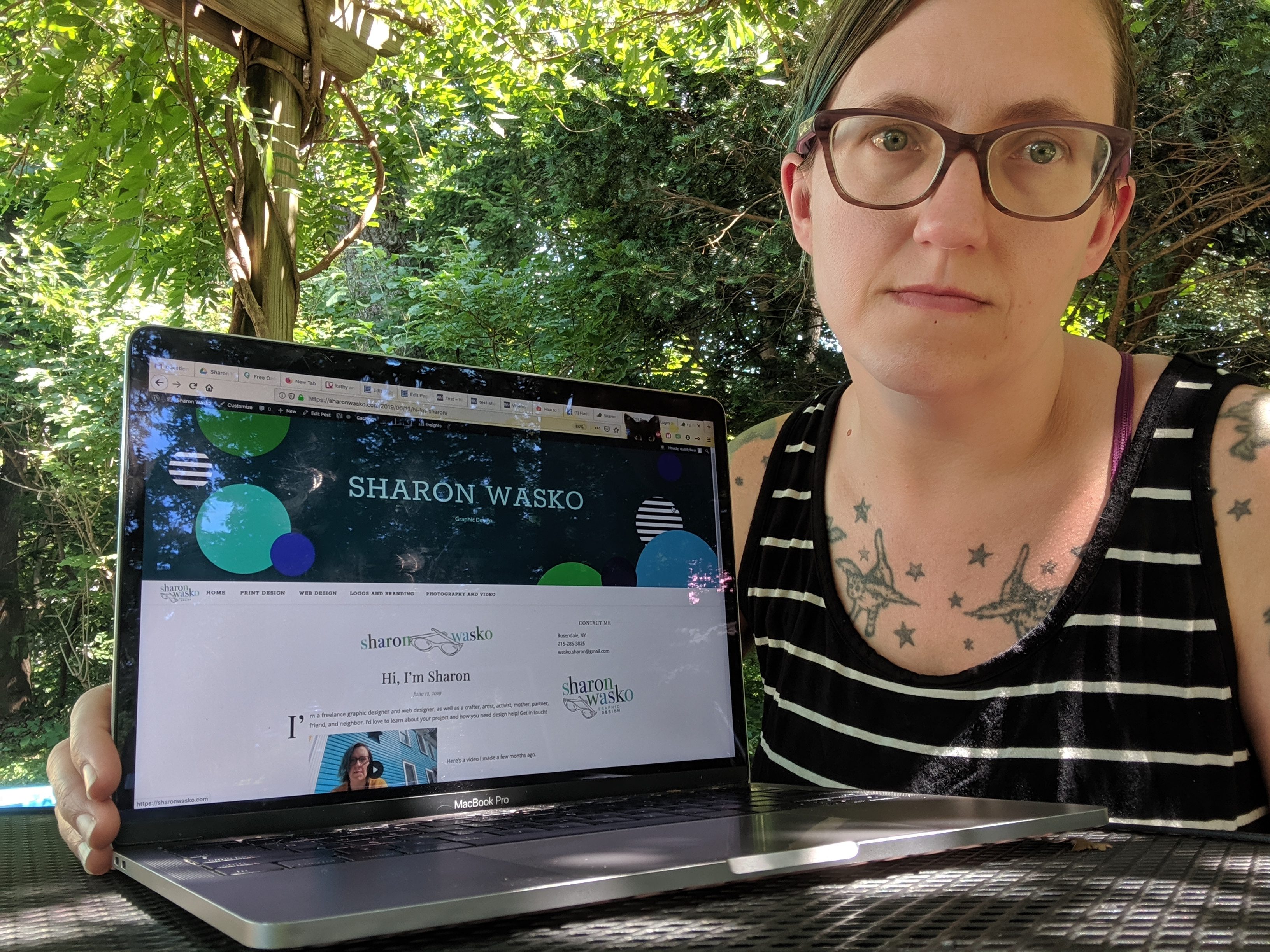
Students from a variety of backgrounds find a great fit in the Graphic Design program. SUNY Ulster student Sharon Wasko received her bachelor’s degree in Fine Arts in the past. She came to SUNY Ulster after learning about the Real World Classroom, as she wanted directly employable skills with real clients. Graphic Design alumna Leanna White has had an exciting career since her 2012 graduation, designing album covers, patrol car wraps, and advertisements featured in magazines right after graduation.
No matter what stage of life you’re currently in, you have to take the first step to begin your career if you want to make a living doing what you love. For artists and designers, the Graphic Design Real World Classroom can be the perfect place to start.
Here at SUNY Ulster, athletic life is both work and play. Just an added bonus being a student in Stone Ridge, all students are encouraged to apply themselves to one of our sports teams. Student athletes have more than doubled in the past three years and there are now eight teams one can join. These activities help students build collaborative and athletic skills that they can carry with them through the rest of their educational journey, and life.
Drum Roll Please…
We just recently released our new athletics page, pretty exciting stuff! Potential students are welcome to check out the new site and use it as a way to apply for the school. Current students are also able to easily find coaches; as a matter of fact, the site has a handy directory of all the athletic staff. So students can find any one of our sports centered staff who are always available to answer any questions you might have.
The new site has all the good stuff: rosters, schedules, game reports and even videos of our hard-working student athletes in action. Game reports and rosters feature biographies of athletes individually so fans can find all the information available about a player right from the stands if they wanted to!
Don’t Forget To Follow Us Everywhere Else Too
If the all that up to date game info doesn’t quite scratch your sports itch; included in the site are links to our various sports social media profiles such as Facebook, Instagram, and more. Where even more player coverage can be found.