Meet Michelle Moore

image of floral fabric designed by michelle moore

Michelle Moore is a SUNY Ulster alumnus and now an adjunct faculty member at SUNY Ulster. Here is her recent interview with Bold Journey Magazine:

Michelle, appreciate you making time for us and sharing your wisdom with the community. So many of us go through similar pain points throughout our journeys and so hearing about how others overcame obstacles can be helpful. One of those struggles is keeping creativity alive despite all the stresses, challenges and problems we might be dealing with. How do you keep your creativity alive?

Creativity like all things in life needs nurturing and care. There will be periods of high activity and periods of dormancy. I have learned that when I am in either state that I have to be mindful that it will not last forever.

The creative mind needs rest in order to come up with new ideas and be to be inspired. The only way to keep it thriving is to listen, and give it what it needs when it needs it.

On the other side of that is when the “creative spark” hits, I know I have to act on it, and move the idea forward in order to keep my advancing my work.

Thanks for sharing that. So, before we get any further into our conversation, can you tell our readers a bit about yourself and what you’re working on?

Hi! I am an Artist, Surface Designer and Art Educator located in the Hudson Valley region of New York State.

I am currently focused on the use of natural dyes using homegrown flowers and botanicals for textiles and artwork. I spent the last ten(ish) years experimenting with this craft and have honed in on the specific area of hammered flowers and leaves on cloth and paper. Over that time I have worked with major retail brands to bring naturally dyed goods to the commercial market. I have designed natural dye kits that have been sold across the US, and have taught many workshops to share this art form with others.

Over the last few years I have been writing a book about my hammered flower process that is due to publish at the end of the year. Keep an eye out!

I also teach art courses at my Alma Mater – SUNY Ulster. I teach courses in drawing, 2D Design, graphic design foundation.

There is so much advice out there about all the different skills and qualities folks need to develop in order to succeed in today’s highly competitive environment and often it can feel overwhelming. So, if we had to break it down to just the three that matter most, which three skills or qualities would you focus on?

  1. Digital design. I decided early on in my artistic journey that it was as important if not more to learn how to Floral wall hanging use CAD programs, as well as create my own website in order to showcase my artwork. We live in the world of tiny screens and limited attention spans. You need to grab your viewers attention quick, and the best way is through great photos and presentation of the work your invested so much time creating.
  2. Stop comparing yourself. This is indeed a learned “skill”. It doesn’t matter what everyone else around you is doing. Just keep focused on what you are doing and it will in time evolve organically the way it i supposed to. Everything good takes time, energy, and consistency. Keep chipping away.
  3. Don’t focus on what you “don’t know”. I think the biggest challenge sometimes is getting started. We often think we don’t know enough to make progress. The truth is that you need to start somewhere. Be curious, make mistakes, lean into the process. The more experiments you do, the more knowledge you will gain.Keep at it. It gets easier.Continuing to show up for yourself is best quality you can have.
How can folks who want to work with you connect?

Yes, I’m always looking for new ways to share my work with the world!

I’d love to do collaborations with my hammered flower art specifically.I’d love to work with an eco friendly stationery or home goods brand to bring these designs into the retail market in small batches. I also would love to work with a fashion designer to create a really beautiful hammered flower garment for something special.

I’m also looking to exhibit more of my original artwork this year.

More flowers on everything!

Contact Info:

Fighting Hunger One Bag at a Time

Peanut butter and Jelly on a rack in the Pantry

The Pantry at SUNY Ulster is proud to announce that it has been selected as January’s nonprofit for the West Hurley Hannaford Fight Hunger Program. Each month, the Hannaford Fight Hunger Bag Program selects a remarkable nonprofit local to each store to benefit from the purchase of every Fight Hunger Bag.

During the month of January, for every $2.50 spent on Fight Hunger Bags, $1.00 will be awarded to The Pantry at SUNY Ulster. The Pantry at SUNY Ulster provides students, faculty, and staff who may be experiencing food insecurity, with food and select personal care items, in a stigma-free environment. The more bags that are purchased, the more needs can be filled!

Add fighting hunger to your New Year’s Resolutions! Purchase your Fight Hunger Bags at  Hannaford 295 State Route 375, West Hurley NY.

The Pantry at SUNY Ulster is located on the Stone Ridge Campus in Vanderlyn Hall, Room 155, around the corner from the Senators Store Bookstore.

10 Tips from a 2nd Year Student That I Wished I Knew as a First Year

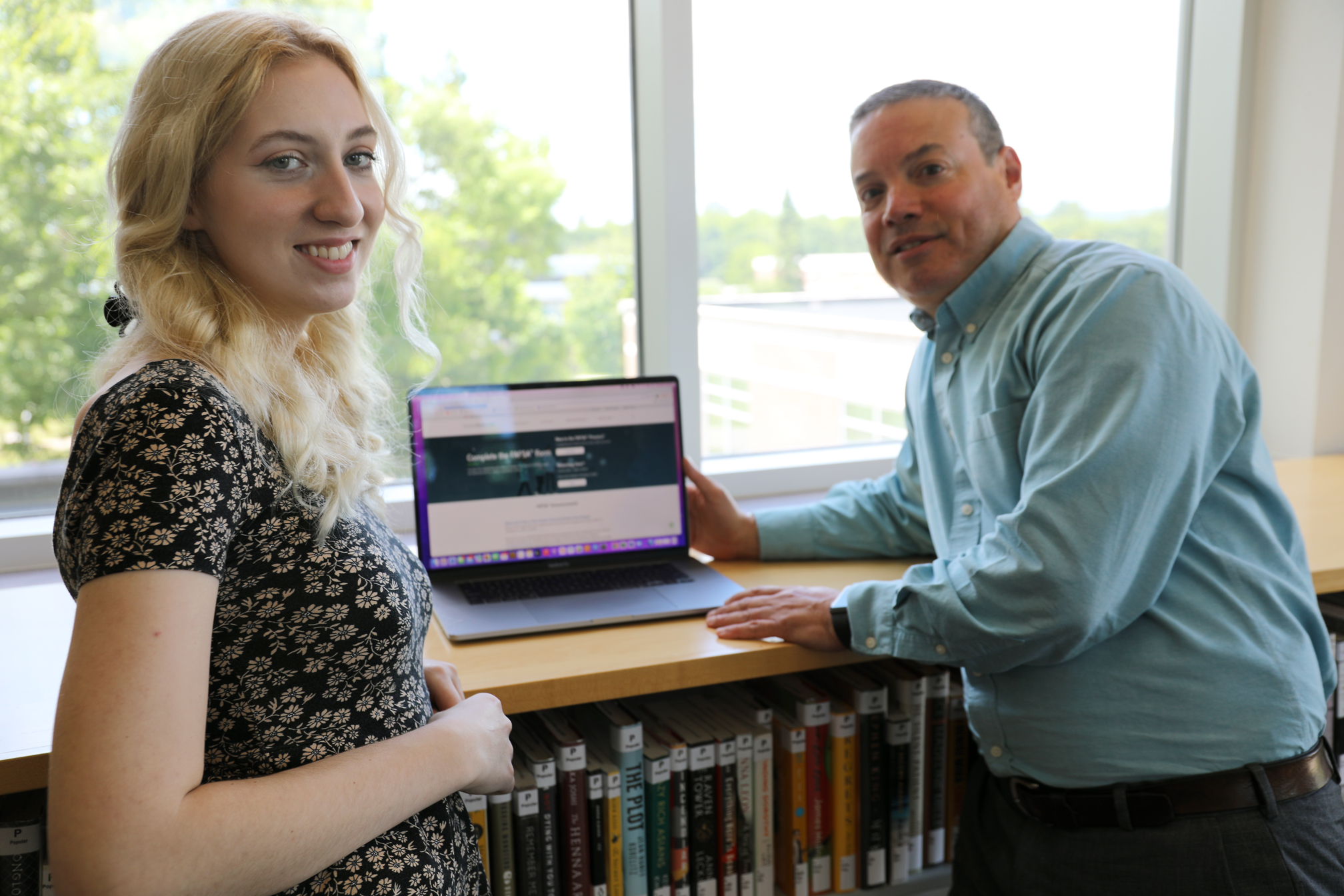
financial aid officer helps student with FAFSA
  1. Create a good rapport with your professors; it makes classes more enjoyable that way.

  2. The website you use for your assignments may take a bit to learn, but once you do it a few times it becomes easier to navigate.

  3. Ask your professors about clubs. There might be a few that are not in session but could start up again if it gains enough following.

  4. Your professors are here to help so don’t be afraid to email them questions. It can be a problem when professors don’t email back, if that happens don’t be afraid to speak out and ask other professors for help.

  5. If you have a scholarship like the College Scholar’s Scholarship it may not take effect and pay for your tuition until after you start classes. Keep up to date with its processing but know that you might miss the tuition due date.

  6. Don’t be afraid to talk to your fellow classmates, even if they might not be the same age as you.

  7. Take the class that you’re on the edge about taking because even if you don’t like it you will ultimately learn something from that experience.

  8. Everyone here regardless of what department they’re in will try and help you to the best of their ability –  whether they can help you directly or point you to the correct department.

  9. There is a place called the “Zen Den” where students can relax in a calm environment with access to amenities provided there.

  10. Put the public safety office’s phone number on your phone. This campus is pretty safe and I have never had a problem. This is just in case something ever did happen, you’ll have a direct line to help. 

Study Tips for Finals: 10 Ways to Ace your Exams

student studying
  1. Avoid the Urge to Procrastinate
    This Natural tendency seems to define the college experience with some students even boasting about their ability to survive all-nighters. In reality, however, procrastination is not cause for celebration or even lighthearted joking. This harmful practice stresses students out and almost always leads to worse scores.
  2. Get Plenty of Sleep
    At first glance, sleep might not seem like the most important of the many study tips for finals. In reality, however, all that prep work will do little good if it’s not accompanied by plenty of rest. The need for sleep underscores the importance of avoiding procrastination.
  3. Create a Study-Oriented Space
    Environment matters. You might find it difficult to focus if your space is cluttered or chock full of distracting devices. If possible, set up a nook exclusively dedicated to studying. This area should include a desk, an ergonomic chair, quality lighting, and any materials you might require during your study session.
  4. Level Up Your Playlist
    The right music can make your study session more enjoyable and more effective. Several studies highlight the value of classical music in particular.
  5. Ditch Distracting Devices
    In today’s digital world, it’s tough to go even a few minutes without glancing at our smartphones. Unfortunately, this dependence can cause big problems when it’s time to buckle down and study. For best results, commit to turning your phone off for at least an hour and placing it in a space as far from your desk as possible.
  6. Experiment with a Variety of Study Tactics
    No one study method works equally well for everyone. Some people learn best from reading notes out loud, while others benefit from flashcards or highlighters. Experiment with several approaches until you find a strategy that best addresses your unique needs.
  7. Create Sample Test Questions
    This method provides a variety of benefits. First, it forces you to boil down weeks of learning into a few basic takeaways. Writing sample questions also allows you to think like an instructor. This thought process may benefit you when the actual exam arrives.
  8. Get Involved in a Study Group
    It’s never too late to start a study group. While these gatherings are most beneficial if they take place throughout the entire course of the semester, they can provide plenty of value in the last few days before finals.
  9. Don’t be Afraid to Ask for Help
    Don’t hesitate to seek help from your instructors. Office hours exist for a reason, and yet far too many students are too intimidated to chat up those in the best position to help. SUNY Ulster also has tutoring in almost all subjects. Call 845-687-5039 or email tutoring@sunyulster.edu to make an appointment.
  10. Keep the Big picture in Mind
    Final exams aren’t designed to torture stressed-out students. If you take exam prep seriously, you’ll come away with a richer understanding of key concepts, which in turn, will ensure that you retain the knowledge you’ve worked so hard to gain. As you move forward with upper-level courses, graduate school, or your eventual career, you’ll thank yourself for putting in the effort. 

Summer Reading Fun

Illustration of open book with sun and plants in the background

Yay! Finals Are Done!

The weather is beautiful and our minds are allowed to roam as free as a butterfly. So where do we begin? Why a good book of course. Let your mind be consumed with far off places, great adventures, mysterious occurrences, fact or fiction, the choices are limitless.

Where did I begin, you ask? Well, with my favorite author, Stephen King. I have read all of his books except one, The Stand. I was very excited to read a real novel after a long year of textbooks and study guides. I sat Link to book preview of The Standdown and began to read the enormous 1,153-page book and was immediately enthralled. I had no idea what the book was about, only that it was really long. After the first few pages, I realized that it may not have been the best choice for someone with my easily excitable imagination. A super-flu, of our own making, wipes out almost all of mankind and the ensuing battle between Good and Evil is on. Frightening in the current crisis, yet completely captivating. I finished the book in less than a week and it was quite amazing!

As I went looking for my next great read I decided to reach out to our own SUNY Ulster faculty for their recommendations. I was elated to have received numerous responses. So,  I’ve done my best to categorize a small assortment into a summer reading list with something for everyone.

Christopher Seubert, Assistant Professor and Program Director for Fine Arts and Visual Arts at  SUNY Ulster said, “I find it important to take time to read. It activates, stimulates, and occupies my mind and creativity in an engaging way.”

So let’s dive in and stimulate our minds and imaginations!

Each selection can be clicked on to view a preview of the book. 

Non-Fiction/Slavery & Racism

What a truly relevant subject matter at this time in our nation’s history. Slavery and Racism have left a long and scathing wound in the history of this great country. Reading about it, understanding the plights of others, and opening your eyes to the past can help us in the present and aid in a brighter future.

White Fragility by Robin DiAngelo

Link to book preview of White Fragility


This book explores the counterproductive reactions that white people have when their assumptions about race are challenged, and how these reactions maintain racial inequality.


Slave in the White House by Elizabeth Dowling Taylor

Link to book preview of Slave in the White HousePaul Jennings was an American personal servant, as a young slave, to President James Madison during and after his White House years. After buying his freedom in 1845 from Daniel Webster, Jennings is noted for publishing in 1865 the first White House memoir.

This is a biography of his life, but also an insight into many other forgotten slaves, abolitionists, and civil rights activists.

Never Caught: The Washingtons’ Relentless Pursuit of Their Runaway Slave
by Erica Armstrong Dunbar

Link to book preview of Never Caught

A startling and eye-opening look into America’s First Family, Never Caught is the powerful narrative of Ona Judge, George and Martha Washington’s runaway slave who risked everything to escape the nation’s capital and reach freedom.


The Narrative of Sojourner Truth
dictated by Sojourner Truth (ca. 1797-1883) edited by Olive Gilbert

Link to book preview The Narrative of Sojourner Truth

“Remarkably, one of the most important accounts of American slavery takes place here in Ulster Country. It seems more essential than ever that we read it, in some sense as an act of witness to our local past. The story of enslavement, gradual emancipation, and abolition in the Hudson Valley is a complicated one. Don’t be deterred by the surface of the Victorian prose in Truth’s story. What lies within these pages is nothing short of a searing emotional account, full of indelible moments, which will change the way you see the region around you forever. “
-Matthew DelaMater,  SUNY Ulster Adjunct Faculty, Social Sciences


Non-Fiction/History

The Lost Painting by Jonathan Harr

Link to book Preview of The Lost Painting

Prizewinning author Jonathan Harr embarks on a spellbinding journey to discover the long-lost painting known as The Taking of Christ. Its mysterious fate and the circumstances of its disappearance have captivated Caravaggio devotees for years. After Francesca Cappelletti stumbles across a clue in that dusty archive, she tracks the painting across a continent and hundreds of years of history. But it is not until she meets Sergio Benedetti, an art restorer working in Ireland, that she finally manages to assemble all the pieces of the puzzle.

The Island at the Center of the World by Russel Shorto

Link to book preview of The Island at the Center of the World

This is the story of New Netherland, the Dutch colony that pre-dated the Pilgrims and established ideals of tolerance and individual rights that shaped American history. This book uncovers a lost world and offers a surprising new perspective on our own.


Duty, Honor, Country
by Bob Mayer

Link to book preview of Duty, Honor, Country

Duty, Honor, Country is history told epic and personal so we can understand what happened, but more importantly feel the heart-wrenching clash of duty, honor, country, and loyalty. And realize that sometimes, the people who changed history weren’t recorded by it. This is a three-part series.


Polio: An American Story
by David Oshinsky

Link to book preview of Polio:An American Story
Polio: An American Story is a book by David M. Oshinsky, professor of history at the University of Texas at Austin, which documents the polio epidemic in the United States during the 1940s and 1950s and the race to find a cure, which was eventually developed in the 1950s by medical researcher Jonas Salk.

Endurance: Shackleton’s Incredible Voyage by Alfred Lansing

Link to book preview of Endurance

Endurance: Shackleton’s Incredible Voyage, is a 1959 book written by Alfred Lansing, about the failure of the Imperial Trans-Antarctic Expedition led by Sir Ernest Shackleton, in its attempt to cross the Antarctic continent in 1914.


Non-Fiction/Mathematics & Sciences

Journey Through Genius: The Great Theorems of Mathematics by William Dunham

Dunham places each theorem within its historical context and explores the very human and often turbulent life of the creator — from Archimedes, the absentminded theoretician whose absorption in his work often precluded eating or bathing, to Gerolamo Cardano, the sixteenth-century mathematician whose accomplishments flourished despite a bizarre array of misadventures, to the paranoid genius of modern times, Georg Cantor. He also provides step-by-step proofs for the theorems, each easily accessible to readers with no more than a knowledge of high school mathematics. **No Preview Available**

History of Pi by Petr Beckmann

Link to book preview of History of Pi
The history of pi, says the author, though a small part of the history of mathematics, is nevertheless a mirror of the history of man. Petr Beckmann holds up this mirror, giving the background of the times when pi made progress — and also when it did not, because science was being stifled by militarism or religious fanaticism.

The Mythical Man-Month: Essays on Software Engineering by Frederick P. Brooks Jr.

Link to book preview of The Mythical Man-MonthThe Mythical Man-Month: Essays on Software Engineering is a book on software engineering and project management by Fred Brooks first published in 1975, with subsequent editions in 1982 and 1995. Its central theme is that “adding manpower to a late software project makes it later”.

“This book was written by one of the world’s most respected computer software development leaders based on his role in large scale software development right here in the Hudson Valley.  It is a motivating description of both the excitement of software development and the challenges of such projects.  It serves as a background for many new current-day software engineering approaches. “ -Lou Thomason, SUNY Ulster Adjunct Faculty, Computer Science

The Demon-Haunted World: Science as a Candle in the Dark by Carl Sagan

Link to book preview of The Demon-Haunted WorldThe Demon-Haunted World: Science as a Candle in the Dark is a 1995 book by the astrophysicist Carl Sagan, in which the author aims to explain the scientific method to laypeople, and to encourage people to learn critical and skeptical thinking.

A prescient warning of a future we now inhabit, where fake news stories and Internet conspiracy theories play to a disaffected American populace.

Cosmos by Carl Sagan

Link to book preview of CosmosPresents an illustrated guide to the universe and to Earth’s relationship to it, moving from theories of creation to humankind’s discovery of the cosmos, to general relativity, to space missions, and beyond.
“Somewhat dated but fascinating, and an easy read” -Karl Wick, SUNY Ulster Associate Professor, Coordinator of Network Administration


Lights Out: A Cyberattack, a Nation Unprepared, Surviving the Aftermath
by Ted Koppel

Link to book preview of Lights Out

In this New York Times bestselling investigation, Ted Koppel reveals that a major cyberattack on America’s power grid is not only possible but likely, that it would be devastating, and that the United States is shockingly unprepared.


The Story of More: How We Got to Climate Change and Where to Go from Here
by Hope Jahren

In The Story of More, she illuminates the link between human habits and our imperiled planet. In concise, highly readable chapters, she takes us through the science behind the key inventions—from electric power to large-scale farming to automobiles—that, even as they help us, release greenhouse gases into the atmosphere like never before. She explains the current and projected consequences of global warming


An Ocean of Air
by GabrielleWalker

Link to book preview of An Ocean of Air

We don’t just live in the air; we live because of it. It’s the most miraculous substance on earth, responsible for our food, our weather, our water, and our ability to hear. In this exuberant book, gifted science writer Gabrielle Walker peels back the layers of our atmosphere with the stories of the people who uncovered its secrets.


Spirituality/Fiction

A Prayer for Owen Meany by John Irving

Link to book preview for A Prayer for Owen Meany
This book looks at the relationship between faith and doubt in a world in which there is no obvious evidence for the existence of God.
This book was banned and censored around the United States for its stance on religion and criticism of the US government regarding the Vietnam War and Iran-Contra.

The Shack by William Paul Young

Link to book preview for The Shack

Four years after his daughter was abducted and evidence of her murder was found in an abandoned shack, a man returns to the shack in response to a note claiming to be from God, and has a life-changing experience.


Full Catastrophe Living  by Jon Kabat-Zinn

Link to book preview of Full Catastrophe Living
A guide to the practice of mindfulness and other exercises that promote well-being. Lots of detail about the relationship between mind and body, and how our thoughts contribute to a life of chronic stress. Both an idea and a “how-to” book, written by a psychologist working at the University of Massachusetts Medical Center.

Splitting the Arrow by Prem Rawat

Link to book preview of Splitting the Arrow
“A wonderful collection of inspiring stories about living a fulfilled and peaceful life. Written by a world-renowned individual who has been speaking on the topic for 50 years.”
– James Hobbs, SUNY Ulster Professor, Behavioral Sciences


Classic Fiction


1984
by George Orwell

Link to book preview for 1984War is Peace. Freedom is Slavery. Ignorance is Strength. 1984 is a dystopian novella by George Orwell published in 1949, which follows the life of Winston Smith, a low ranking member of ‘the Party’, who is frustrated by the omnipresent eyes of the party, and its ominous ruler Big Brother.

This book has repeatedly been banned and challenged in the past for its social and political themes, as well as for sexual content. Additionally, in 1981, the book was challenged in Jackson County, Florida, for being pro-communism.

Slaughterhouse-Five by Kurt Vonnegut

Link to book preview of Slaughterhouse Five
Slaughterhouse-Five, or The Children’s Crusade: A Duty-Dance with Death is a science fiction-infused anti-war novel by Kurt Vonnegut, first published in 1969. Along with asking moral questions, SlaughterhouseFive is also a novel that focuses on the philosophies of fate and free will. In the novel, Billy Pilgrim tries to determine what his role in life is and what the purpose of everything going on around him is as well.

Hitchhikers Guide to the Galaxy by Douglas Adams **My all-time favorite series**

Link to book preview of Hitchhikers Guide to the GalaxyThe Hitchhiker’s Guide to the Galaxy is the first of six books in the Hitchhiker’s Guide to the Galaxy comedy science fiction “trilogy” by Douglas Adams. The novel is an adaptation of the first four parts of Adams’ radio series of the same name. The novel was first published in London on 12 October 1979.

Arthur Dent had never really got the hang of Thursdays and in his bleary eyed state that morning he notices that there are bulldozers outside his house. It turns out they have come to knock his house down to make a bypass. Lying down in front of one of the bulldozers, his friend Ford Prefect suddenly appears. Arthur Dent thinks he is an out of work actor; it turns out he is a researcher for the most popular book in the universe, The Hitchhiker’s Guide to the Galaxy, and is from a planet called Betelgeuse but has been stuck on the Earth for 15 years. Dragging Arthur to the pub and plonking three pints down in front of him, Ford reveals all of this and the minor issue that the planet is to be demolished to make way for a galactic freeway in about 12 minutes time.


 Fiction/Slavery & Racism

The Handmaid’s Tale by Margaret Atwood

Link to book preview of The Handmaid's Tale
Set in a near-future New England, in a totalitarian theocracy which has overthrown the United States government, the dystopian novel explores themes of women in subjugation and the various means by which they gain agency.


To Kill a Mockingbird by Harper Lee

Link to book preview of To Kill a Mockingbird
To Kill a Mockingbird is a novel by Harper Lee published in 1960. Instantly successful, widely read in high schools and middle schools in the United States, it has become a classic of modern American literature, winning the Pulitzer Prize. Harper Lee’s Pulitzer Prize-winning masterwork of honor and injustice in the deep South—and the heroism of one man in the face of blind and violent hatred

The Hate U Give by Angie Thomas

Link to book preview of The Hate U GiveThe Hate U Give is a 2017 young adult novel by Angie Thomas. It is Thomas’ debut novel, expanded from a short story she wrote in college in reaction to the police shooting of Oscar Grant. Inspired by the Black Lives Matter movement, Angie Thomas’s searing debut about an ordinary girl in extraordinary circumstances addresses issues of racism and police violence with intelligence, heart, and unflinching honesty.

Sold on a Monday by Kristina McMorris

Link to book preview of Sold on a MondayInspired by an actual newspaper photograph that stunned the nation, Sold on a Monday is a powerful novel of love, redemption, and the unexpected paths that bring us home.

This is a story about “two young writers who want to make their careers as journalists in Philadelphia, 1931. They struggle to balance success and their principles in the hard-driving world of newspapers, rum-running gangs, and the Depression-era economic desperation that leads them both to the heartbreaking human-interest story that gives the novel its title. The moral and social implications, however, are impressive.

So get reading! Open your mind to all of the possibilities! See you all in the Fall!


Get Involved in Virtual Get-Togethers

Group photo of the E-sports club with Professor Sheehan

So, here we are.

bored, bear, tv, popcorn

Home. All the time! Boredom setting in. Isolated from our friends. What can we do to stay sane? Let’s figure out how to get out of our chairs, put the remotes down, and be a part of that thing called LIFE!


Well, Get Involved, Of Course!

At SUNY Ulster we have a number of groups and activities reaching out to each other and the community. Thank goodness for modern technology! With so many outlets for communication and participation, we never have to be bored.

fairy tale, storybookAn example of a great give-and-take opportunity is the Story Time on Demand available to the entire SUNYUlster family. This provides multicultural themed stories to participants read by fellow students and faculty. You can participate by viewing as well as recording a story for others to access.

For more information about this and other opportunities to interact contact the Coordinator of Campus Life, Meg Sheeley at sheeleym@sunyulster.edu .

ESports ClubAnother opportunity for connecting with others is through various clubs at SUNY Ulster. My spotlight is going out to the ESports Club. ESports are a great way to interact while still practicing social distancing. They have an amazing tournament coming up which is open to ALL 64 SUNY schools! Chancellor Johnson wanted to make a way for students to get creatively involved throughout this time.

The ESports tournament will include games like Fortnite and Super Smash Brothers. The tournament will work to raise money for #SUNY Together Student Emergency Funds.

So, come out! Support your school, help your fellow classmates, have a great time!

For more information about the club and its upcoming activities you can contact Professor Sheehan, the Advisor for the ESports Club, at sheehanj@sunyulster.edu or Ryan Shepard, the ESports Club President, at shepardr57@my.sunyulster.edu .

Mindy Kole and Senator Sam


In addition, Adult Education has multiple web-based get-togethers. For more information about these online gatherings contact the Associate Dean of Adult Learning, Mindy Kole at kolem@sunyulster.edu .


Discover The World, Be Involved

koalasMissing nature, long walks, beaches, mountains, and amusement parks, and just, well, everything?
Well then, take a virtual trip to the zoo where you can visit the animals, learn everything about them, and enjoy watching them in their daily habits. There are quite a few places to go but my favorite is the Cincinnati Zoo. I use it every single day for homeschooling my grandson. It is a lot of fun and there is just so much to explore there.

grand canyon


How about hiking up a mountain. The beautiful views, the precarious climb to the summit, and the beautiful scenery. My personal favorite is rafting through the Grand Canyon. It feels like you’re actually there. If you have a virtual reality headset it’s even better! Either way, it’s a great time and there are hundreds to choose from.face mask

Feeling like you need to help out? Well, I found the easiest method for making masks on YouTube. They aren’t medical-grade but they’re great for everyday use. The best thing was that I had plenty of material to use. Didn’t we all clean out our closets over the last month? I know I did! Our first few tries didn’t go that well. But eventually, we got rolling and made 22 masks for our family and friends!

So There You Have It

The SUNY Ulster newsletter gets sent to every single SUNY Ulster student on Fridays. It is packed full of information and opportunities to interact with each other. Take a few minutes and check it out, you won’t be disappointed!

There is a whole world out there to be explored. There are groups, clubs, and activities to stay involved. So put down your remote and set the popcorn aside!

Search, Click, Discover!


Faculty & Staff Are Here To Help

Text composition saying "Together we'll succeed"

You Are Not Alone

Online learning has successfully begun here at SUNY Ulster. Although all classes are being taught through remote instruction it is important to remember that all of SUNY Ulster’s staff and faculty are at your disposal. You are definitely not in this alone! We will succeed together!

Every single department is functioning . Most business is handled by phone, e-mail, and video conferencing. If you need to contact anyone in the SUNY Ulster network simply email them and they will respond quickly.

Access to Resources

If any student needs to access the campus they simply need to go to the Public Safety Office located in Hasbrouck 133 or the lobby of the KCSU facility to sign in. The health of our community is our main concern. Therefore, you will have to get your temperature taken as a safety precaution. Before leaving,  just let the Public Safety Office know so they can dispatch Housekeeping to sanitize the area for the next user.  You can also call ahead if you are unsure if access will be allowed. The direct phone number to do this is (845) 687-5053.

For additional information on the many resources available and contact information visit: https://www.sunyulster.edu/campus_and_culture/campus_resources/covid-19-resources.php.

We Can Succeed Together!

Do not get discouraged. Your instructors and advisers are an invaluable asset to you. Reach out to them with any questions or concerns.  Everyone at SUNY Ulster is invested in your success. We want to see you succeed in this unprecedented time in our institution’s history!


Online Classes For All

illustration of college grad with computers

At 44 years old, with minimal technological ability, I was going back to school after an 18 year hiatus. One of my first classes was an online class – Technical Writing and I was not confident. I would not only be expected to master the subject matter of the course but the online learning system, Blackboard. How does it work? Who would answer my questions?

Everything You Need To Succeed

I discovered I was unnecessarily worried. The first thing I did was open Blackboard on my SUNY Ulster Student Portal. I explored every clickable item so I knew where to find things. Thank goodness they have a Blackboard Tutorial! After completing the tutorial I felt much more confident about using the online tools available.

However, I still didn’t understand how it would all work. Enter my amazing professor, Kimberly Wozencraft. First, she reached out by email and explained in  detail how she ran her class. She explained her expectations,  assignment submissions, and discussion forums. She then outlined her calendar for the class which included readings, discussions, assignments, and due dates. Each assignment submission contained a detailed description of what was required for the assignment and how to submit it.

Supportive Faculty

Any time I had a question or was unsure how to manipulate any facet of Blackboard I simply sent Professor Wozencraft a message through Blackboard Messaging. She always responded quickly with a detailed explanation. One of the main technical issues I experienced was opening Blackboard in Internet Explorer. I had some problems with functionality. Professor Wozencraft informed me that Chrome would work better. I followed her advice and had no problems after that.

In addition, we used a Discussion Forum to share thoughts, ideas, and research topics and findings. It was very helpful because the whole class was giving each other feedback on assignments and participating in real world discussions.  Professor Wozencraft participated in our discussions and made her presence known in every aspect of the class.

I was amazed at the thoroughness of the lectures and the prompt grading of assignments. Each assignment was returned with a personal breakdown of the strengths and weaknesses, as well as a kind word on participation and progress.  I finished the class with an “A” and did not hesitate to register for another online class this semester. All of the staff and faculty at SUNY Ulster want us to succeed. Never hesitate to reach out!

Stay Focused

At the start of the class I realized I was new to time management. It was easy to forget to log into my class. When life is busy,  you have to stay focused and make time. Just as we get up each day and go to campus, we have to set aside time each day to do our online classes. I set aside a set time for each class and found a quiet nook to do the work. On the bright side, you can do it all in your pajamas at 2 am if that’s what will make you successful!

Stay Focused…

Stay Organized…

Stay Safe!!!

Student Wellness with Spinning

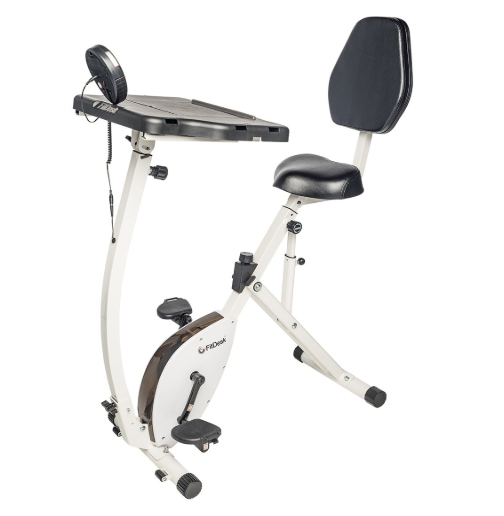
fit desk bicycle against a plain white background

School, Work, Study, Repeat!

Who has time to take a stroll, stop and enjoy the view, hit the gym for a quick set? Unfortunately, most of us don’t. However, at SUNY Ulster we like to take care of our students’ minds and bodies.

Beginning in January 2020 there has been an addition to the already calming Mountain View Room located in the Macdonald DeWitt Library. Through the generosity of the Ulster Community College Foundation, Inc. we were able to add four Fit Desk Bicycles.


These bikes are whisper quiet so they don’t disturb the hushed study area. Each bike has a small drawer to place personal items and a strap to hold your laptop or tablet in place. Nearby outlets make powering your devices easy. The desk can also be used as a great way to read a book while spinning away.The seat height and backrest height are adjustable along with the resistance of the spin itself.

Caring for the Mind & Body

Cycling desks are becoming very popular throughout the business world. Therefore, studies are  being done. Most have come back inconclusive. However, it is seen as more of a benefit than not. Cycling desks eliminate some of the sitting time that leads to health problems.

The rhythmic movement of the peddaling can be beneficial to your mind as well as your body. Calming and soothing. Take time for yourself today. Take a spin, enjoy the view, take care of YOU!

Why Taking Hand-Written Notes Makes You a Better Student

A bouquet of flowers sits in the corner of the image of a table top from an aerial view. Also on the table is two notebooks, one of which says, "make it happen".

When you take good notes in class, you have a study tool that’s sure to help you get better grades. The way you take those notes can also determine your likelihood to sink or swim in a class. As it turns out, the old-fashioned method, using a pen and pad, is superior in terms of the learner retaining more information. So to shorten that up: paper notes are good and laptop or phone notes are not so good, and I’ll tell you why.

Benefits of Good Paper Notes

It seems a little obsolete to bring a notebook to class in this world of readily available technology that we live in. When we’re talking about being a successful student, however, paper the best resource available! One of the reasons for that is that laptops and phones tend to be too distracting. A student is far too tempted to play a game or take a gander at social media from any computer device; whereas with paper, you’re forced to stay on track.

five notebooks rest on a table with a string of lights and a small bottle of what looks to be perfume or make-up
Photo by Brittany Neale on Unsplash

On top of that, more mental processing takes place with the information when you’re taking hand-written notes. That’s one great reason to put your laptops away, but let’s break that down a bit.

When students take notes on devices such as laptops, they try to take down every word and detail, verbatim. When students hand-write their notes as opposed to typing them, they’re forced to find keywords and summarize the lecture. This means that they had to think about what was said, process it and write it down in a way that they understand. Doing that leads to the subject being better remembered by the writer. We write a lot slower than we can type, so we end up taking fewer notes but they’re more effectively learned.

Mental processing power booster aside, benefits of of hand-written notes go even further in helping you as a student. Pen and paper notes can keep you more alert and engaged during class. It helps to emphasize and organize specific information, and of course creates a more condensed version of the lecture to study.

Successful Note Taking Methods

A woman sits in grass with only her knees and hands visible, she is holding a slim pen to a notebook resting against her knees.
Image by StockSnap from Pixabay

There are different methods of taking notes for everyone. You might already have a way that works for you and that’s great. If you need some ideas on how to better your note taking, I’ve got some suggestions.

First of all, most instructors have no problem with you recording the audio of their lecture. This IS NOT me advising you to substitute this for taking notes, but merely a suggestion of a supplement to your notes that might come in handy later. Just ask your teacher or professor, they might be surprised by your initiative (bonus!).

A Few Methods to Try

The three major note taking methods are widely used and taught among college students. The first is a system of outlining all the material by identifying the main topic. Then make a list of details about it under the topic. This can be good if the lecture is staying with one topic and not jumping around a lot. If you are working on retaining a lot of information, you may want to try another method.

A light bulb is surrounded by bubbles
Image by Gerd Altmann from Pixabay

A different method to try is called mind-mapping, this is something you’ve probably seen before as it’s pretty common in high schools. The idea is to write the overall main topic in the middle of a page in a circle and branch ideas off of the middle circle. For example you might write “water cycle” in the middle and branch off of it with subtopics like “condensation”, “evaporation”, or “water tables”. This can be good for keeping up with a fast lecture but lots of details can fall through the cracks.

Finally, the last well-known method of note taking I have for you is called the Cornell system. This is where you start of the lecture by dividing your page into three sections with lines. Make it so there are extra small spaces on the sides or top and bottom. You take notes as you normally would in the middle, but the extra sections are there to get you a little more involved. After the lecture you are supposed to write keywords or questions in one of the smaller sections. In the other small section, you should write a summary of the whole lecture while it’s still fresh in your mind.

How Do You Know If You’re Doing It Right?

Two hands reach out onto a notebook, holding a pen and marking the paper. On the table next to the notebook is a croissant and a cup of black coffee.
Photo by Cathryn Lavery on Unsplash

Good grades and teacher satisfaction is always a good method of measuring your success in a class. However, knowing if you’ve taken good notes or not can be difficult until the test comes. If you think you got all the important stuff written down then you’re finished, right? Wrong, you need those notes for the purpose of studying and ultimately passing the class with good grades. If your notes can’t help you with that, you might need to consider the five tips below from Dartmouth college’s website.

5 Essential Steps for Mastering Your Notes:

  1. Record the information
  2. Reduce the ideas to a key word or phrase in the left-hand margin
  3. Recite it without looking at it, and if you can’t, you don’t know it
  4. Review to get a complete picture of the ideas that were recited
  5. Reflect by speculating on the implications of the facts and concepts

P.S.

How you fuel your body also plays a huge part in how successful you and your brain are academically. Take a glace at our other articles about drinking enough water and the best brain food for college students.