Why Taking Hand-Written Notes Makes You a Better Student

A bouquet of flowers sits in the corner of the image of a table top from an aerial view. Also on the table is two notebooks, one of which says, "make it happen".

When you take good notes in class, you have a study tool that’s sure to help you get better grades. The way you take those notes can also determine your likelihood to sink or swim in a class. As it turns out, the old-fashioned method, using a pen and pad, is superior in terms of the learner retaining more information. So to shorten that up: paper notes are good and laptop or phone notes are not so good, and I’ll tell you why.

Benefits of Good Paper Notes

It seems a little obsolete to bring a notebook to class in this world of readily available technology that we live in. When we’re talking about being a successful student, however, paper the best resource available! One of the reasons for that is that laptops and phones tend to be too distracting. A student is far too tempted to play a game or take a gander at social media from any computer device; whereas with paper, you’re forced to stay on track.

five notebooks rest on a table with a string of lights and a small bottle of what looks to be perfume or make-up
Photo by Brittany Neale on Unsplash

On top of that, more mental processing takes place with the information when you’re taking hand-written notes. That’s one great reason to put your laptops away, but let’s break that down a bit.

When students take notes on devices such as laptops, they try to take down every word and detail, verbatim. When students hand-write their notes as opposed to typing them, they’re forced to find keywords and summarize the lecture. This means that they had to think about what was said, process it and write it down in a way that they understand. Doing that leads to the subject being better remembered by the writer. We write a lot slower than we can type, so we end up taking fewer notes but they’re more effectively learned.

Mental processing power booster aside, benefits of of hand-written notes go even further in helping you as a student. Pen and paper notes can keep you more alert and engaged during class. It helps to emphasize and organize specific information, and of course creates a more condensed version of the lecture to study.

Successful Note Taking Methods

A woman sits in grass with only her knees and hands visible, she is holding a slim pen to a notebook resting against her knees.
Image by StockSnap from Pixabay

There are different methods of taking notes for everyone. You might already have a way that works for you and that’s great. If you need some ideas on how to better your note taking, I’ve got some suggestions.

First of all, most instructors have no problem with you recording the audio of their lecture. This IS NOT me advising you to substitute this for taking notes, but merely a suggestion of a supplement to your notes that might come in handy later. Just ask your teacher or professor, they might be surprised by your initiative (bonus!).

A Few Methods to Try

The three major note taking methods are widely used and taught among college students. The first is a system of outlining all the material by identifying the main topic. Then make a list of details about it under the topic. This can be good if the lecture is staying with one topic and not jumping around a lot. If you are working on retaining a lot of information, you may want to try another method.

A light bulb is surrounded by bubbles
Image by Gerd Altmann from Pixabay

A different method to try is called mind-mapping, this is something you’ve probably seen before as it’s pretty common in high schools. The idea is to write the overall main topic in the middle of a page in a circle and branch ideas off of the middle circle. For example you might write “water cycle” in the middle and branch off of it with subtopics like “condensation”, “evaporation”, or “water tables”. This can be good for keeping up with a fast lecture but lots of details can fall through the cracks.

Finally, the last well-known method of note taking I have for you is called the Cornell system. This is where you start of the lecture by dividing your page into three sections with lines. Make it so there are extra small spaces on the sides or top and bottom. You take notes as you normally would in the middle, but the extra sections are there to get you a little more involved. After the lecture you are supposed to write keywords or questions in one of the smaller sections. In the other small section, you should write a summary of the whole lecture while it’s still fresh in your mind.

How Do You Know If You’re Doing It Right?

Two hands reach out onto a notebook, holding a pen and marking the paper. On the table next to the notebook is a croissant and a cup of black coffee.
Photo by Cathryn Lavery on Unsplash

Good grades and teacher satisfaction is always a good method of measuring your success in a class. However, knowing if you’ve taken good notes or not can be difficult until the test comes. If you think you got all the important stuff written down then you’re finished, right? Wrong, you need those notes for the purpose of studying and ultimately passing the class with good grades. If your notes can’t help you with that, you might need to consider the five tips below from Dartmouth college’s website.

5 Essential Steps for Mastering Your Notes:

  1. Record the information
  2. Reduce the ideas to a key word or phrase in the left-hand margin
  3. Recite it without looking at it, and if you can’t, you don’t know it
  4. Review to get a complete picture of the ideas that were recited
  5. Reflect by speculating on the implications of the facts and concepts

P.S.

How you fuel your body also plays a huge part in how successful you and your brain are academically. Take a glace at our other articles about drinking enough water and the best brain food for college students.

Water: the Most Important Liquid in Your Life.

Three glasses of water sit on a table with fruit sitting in them, the closest glass has a raspberry splashing into the water in the glass.
A single droplet bounces off the surface of a container of water.
Image by rony michaud from Pixabay

Water makes up most of our bodies so, needless to say, it’s pretty important. While it may be something you shrug off when you’re told that you need more of, read on for some surprising reasons why drinking more water can improve your life fast and easily.

Brain Function Booster = Water

Photo by Daria Shevtsova from Pexels

There is one word to describe the relationship between your brain and water: essential. Your brain is made of more water than the rest of your body is. Your total percentage of H20 in your body is 60%. While just your brain is made of about 75% water. It helps to keep the mind sharp while also helping the brain itself stay healthy and strong. The reason being that when your brain is hydrated and healthy, water plays an essential role to carry nutrients in and carry toxins out.

What about the flip-side?

A black silhouetted head with colorful cogs inside it in the shape of a brain.
Image by Gerd Altmann from Pixabay

Dehydration can lead to terrible brain-related side effects and can affect how you think and physically function. There’s a long list of the mental symptoms caused by not having enough water in your system. They include brain fog, afternoon fatigue, focus issues, depression, anger, exhaustion, headaches, sleep issues, stress, and a lack of mental clarity and acuity. Source: Your Brain on H20.

These are things we all experience from time to time, and frankly, could do without. What’s a super simple solution that’s backed by science, you ask? Drink water until you see signs that you’re drinking enough! I’ll tell you more on how to tell if you’re well hydrated later.

Energy & Mood Improvements, Brought to You by Water

Scientific studies have been conducted to reveal that increased water consumption resulted in a significant decrease in fatigue, confusion and thirstiness, plus a trend of subjects feeling less sleepy. Next time you get that “2:30 feeling” at work, maybe the results of grabbing a glass of H20 will beat out your afternoon coffee.

Image by engin akyurt from Pixabay

A study isn’t needed to figure out that when people are lacking food or water, they can get pretty cranky. So naturally, drinking water can improve your mood as it hydrates you and can help you feel more full when it’s consumed before eating a meal. When you’re fully hydrated, the chances of your mood swinging for the worse are diminished by far.

Help With a Heart as Strong as a Lion

Your heart is an incredible organ that is always working, pumping around 2,000 gallons of blood a day. This superstar body part is more easily able to do it’s thing when you’re well hydrated. Meaning it can pump blood to your muscles and all over your body more efficiently. This is critical to your overall health as the muscles and organ systems that are receiving more blood are more effective when you need to use them.

An outline of a heart is filled with the silhouettes of a family, a man, a woman, and a small child.
Image by Gerd Altmann from Pixabay

Can Drinking Water Result in Disease Prevention?

Well, yeah it can actually. Did you know that drinking water at certain times in the day, such as right before bed, can help to prevent a heart attack? An American Journal of Medical Epidemiology study found that subjects “who drink five or more glasses of plain water per day have a much lower risk of fatal coronary heart disease, compared to those who drink less than two glasses per day.”

The importance of water in our lives goes far beyond staying hydrated, it can help to prevent a list of sicknesses and diseases. This magical liquid is the basis for all toxin release in your body, the more water you drink, the more bad stuff comes out. Drinking water regularly can help prevent and lower the risk of colon and bladder cancers. You can also lower your risk for hypertension, or high blood pressure, with enough water. When you drink water it thins your blood making it easier for your body to keep it regulated in terms of pressure.

You can prevent kidney, bladder and gallbladder by keeping the water flowing. Methods of removing these stones can involve pain, medicine and sometimes even surgery. Prevent them from being a problem in the first place by drinking up. Consuming more water and eating more moisture rich foods can also help promote the healthy growth, survival, and reproduction of your body’s cells.

So, How Much is Enough?

The National Academies of Sciences, Engineering, and Medicine has determined what the adequate daily fluid intake for the average, healthy adult living in a temperate climate is. For women it’s about 11 cups (~2.7 liters), and for men the daily total is about 15.5 cups (~3.7 liters). Before you run to the water cooler, know that about a quarter of that comes from the food and beverages you already consume.

Drinking water is especially important to athletes, people who consume a lot of sugar and/or caffeine, and those who are sick. Since they are at the most risk of water loss.

If plain drinks are something that makes you frown, never fear! There are lots of alternative methods to staying just as hydrated as the next guy. You can try adding fruit to your water via an infuser bottle or a pitcher in your fridge. Some popular mix-ins are lemons, limes, raspberries, strawberries, and cucumbers.

Photo by Caju Gomes on Unsplash

There is also the option of adding more hydrating foods to your diet such as fruits and veggies. Watermelon is an excellent example, consisting of about 92% water.

Whatever your way of drinking more H20 is, more power to you! It’s the liquid that makes the world go ’round, more than just figuratively. Try drinking a few more glasses of this good stuff each day and see how your life and health improve.

Start Your Own Business After Your Studies

A person sits at a desk with a laptop, two books and a cell phone on the table

Originally Written by

Kayleigh Alexandra
Microstartups.org

Starting a business is a goal that lots of students share while they are getting their degree. Some have the fire and motivation to make their dream business a reality. Students who complete college to continue onto the path of entrepreneurship are bold path blazers, at least they have to be to make it out there.

After trials and tribulations, the excitement of learning, the stress of exams, and the enrichment of social exploration, your studies will inevitably come to an end (as all good things do). For many, this stage of life is intimidating, if not terrifying. The familiar foundation disappears from beneath your feet, and you drop into uncharted waters — unsure where to go.

Still, it isn’t a time for fear or despair. It’s a time for exploration! Everything prior to that point is preparation intended to build your mind and spirit. Making you into someone with the strength and character to earn the kind of life you want. You’ve already shown you have what it takes to get ahead when you finish your studies.

Your future is for you to decide, so consider all of the available options. Maybe you want a comfortable position, or there’s a company you want to work with. Then set a goal and start moving toward it as soon as possible, maybe now.

Or perhaps you’re like many people today and want to work for yourself; being able to set your own schedule, profit fully from your hard work, and never have to deal with a boss. If so, you’re in luck, because it’s never been easier to start your own business. Read on for some tips on doing just that.

Come Up With A Workable Business Concept

A group of six people sit around chatting about ideas in an office area.

This step is far easier said than done; so much so that plenty of people will never get past it. You need to think of a product or service that you can offer – and profit from selling. You can sell almost anything at a loss, so don’t assume an idea is solid because there’s demand for it. If there’s no potential for profit, it’s pointless to begin going down that path.

A good starting point when selling products is to push two existing concepts together to see what results. For instance, someone at some point had the idea of combining “the internet” and “refrigerators” to get smart fridges. Think about technologies and products already available in your chosen field, and look for gaps between them. You could easily fill those gaps and open up a new mini market.

If you want to offer a service (consulting, perhaps), then you need to pick out a unique selling point (USP) of some sort. What will make people want to work with you specifically? Your level of quality, your affordable rates, or your turnaround time? As you would when choosing products, try to choose a USP that fills a gap in the market.

Investigate Comparable Businesses

A man sits in front of a computer screen with one hand on a notepad

Next, you must conduct some market research to see what relevant types of businesses are already in operation. You’ll need to narrow things down, of course; think about what your studies have primed you to do (and what you want to do). See which brands are succeeding, or failing, doing similar things. Once you’ve picked out some brands, you can use a competitor analysis tool (like this one from Brandwatch) to learn about your ideal audience.

You can start with some simple Google searching. Type in the kind of product or service you’re planning to offer, and run through the top results. Note that your searches will likely be affected by your location, and if you plan to operate locally in another area, add the name of that location to your search. What impresses you about the results? How good or bad are the websites? What about the prices?

A good option here is to survey your target audience on the brands they like and dislike. You can use something like the online sample service from Qualtrics: define your niche, and get an appropriate sample of survey respondents. If you truly don’t feel that you can compete with existing businesses, and you don’t see enough room in the niche for everyone, then rethink your concept. Remember the GIGO principle — garbage in, garbage out. If your concept isn’t viable, then any effort to build a business around it will be an exercise in futility.

Base Your Business Online

A woman sits at a computer with an open book and cup of tea next to her.

Even freelancers used to need conventional offices to appear credible in the eyes of many prospective clients. Full businesses needed large offices, with their reputations often being heavily affected by the quality of their premises. This meant that setting up a business could be extremely expensive, to the point of most being unable to achieve it.

Today, you don’t need an office to run a business, because you can run it completely online. This is particularly true if you want to operate as a freelancer. You can set up a business website and promote your services purely through the internet, then work remotely. If you want to sell products, then it’s easy to move into the ecommerce world. You will admittedly still need to invest in sourcing, storing and shipping the products, admittedly — though there are options in the form of dropshipping and warehousing that can even make that easy.

This doesn’t mean that you have to be online-exclusive, though. Instead, you can view it as a launching pad: if you set up an online retail store that becomes hugely popular, you’ll always have the option of setting up a brick-and-mortar store to expand it. It’s actually fairly convenient at this point: for instance, Shopify has a POS hardware package that can provide the full range of tools needed to run a physical store that shares a back-end with an online store.

Alternatively, if you start making enough money through offering services, you can invest in an office to start building a team around you — or even just hire remote workers and save the office money, because that can work extremely economically when done well.

Promote Through Your Established Business Contacts

A hand holds a smart phone above the ground.

Simply getting your business up and running is just the start. If you want it to succeed, you need to promote it — and since you’re coming off your studies, why not take advantage of the contacts you made throughout that time in education? Whether it’s the friends you made in classes or the teachers who helped you, you have access to smart people with the ability to offer invaluable feedback (and possibly connections of their own). Use LinkedIn to help you piece things together since you’re unlikely to remember everyone.

You might worry about being accused of cronyism, but you’re not manipulating your way into a position of power: you’re just leaning on people who already know and trust you, and there’s nothing wrong with that. In the end, getting opportunities won’t make you a success: if your business can’t deliver results, then no number of connections will help it thrive.

After reading through this piece, do you think you’d want to run your own business? It’s very freeing, but just as stressful, and not for anyone who wants an easy life. If so, follow these suggestions to get started — you just might carve out your career path.

How Playing Sports Affects You As A Student

A baseball field with a background of the shawangunk mountains
A mascot costume head and shoulders of the SUNY Ulster mascot, Senator Sam.

One of the most exciting opportunities at college is the chance to play sports. Students can play sports from volleyball to football and most things in between. Generally teams are broken up by sex and the season runs for about a semester, or around 15 weeks.

There is a full list of SUNY Ulster sports teams on our website, at the bottom of this article, and on your portal. The school’s athletic website can be found here, with all the details to everything SUNY Ulster athletics. In case you didn’t know, our mascot is the beloved Senator Sam, seen above, and all sports teams are known as the SUNY Ulster Senators.

There are plenty of reasons why sports help you stay sharp in mind as well as in body. The mental benefits of sports are numerous; including memory boosting, gaining leadership qualities, and improving self-confidence. There are a few more reasons why athleticism is beneficial to being a student that we’ll go over in more detail; like getting better sleep, reducing stressors, and helping with concentration.

Stress Reducer and Depression Aid

Sports are an all-natural stress reducer that is easily accessible to you and all students. Getting your tension out on a field or a court can be much better than letting it bottle up, or worse, come out in unintentional ways. The brain produces extra serotonin when the body is involved in physical activity. This chemical is known as the happy chemical because it’s most often associated with the good feelings it brings forth. This chemical is complicated and having more of it can positively affect learning, memory, and sleep quality. Exercise and other physical activity will also produce endorphins which can improve the ability to sleep which, in turn, reduces stress.

Two women hold themselves up from the ground by their arms, on yoga mats. They reach out to touch hands.
Photo by Luis Quintero on Unsplash

Athleticism can also reduce depression and is a popular way of managing anxiety disorders, according to the Anxiety and Depression Association of America. A sports player that regularly does conditioning and practice is less likely to suffer mood imbalance. Using working out as a healthy coping mechanism may reduce other unhealthy habits that can lead to more depression. Instead, physically producing those feel good chemicals for yourself can be a positive way of dealing with negative emotion. Compared to other ways of dealing with stress, using exercise to ease symptoms of depression can be the best route to take for a busy student.

Improved Sleep Habits

A head lays on a couch, the body of which is covered with a quilt. We see the back side of the sleeping person.
Photo by Rex Pickar on Unsplash

Though it takes a while to feel the difference, it’s proven that better sleep and regular physical activity are correlated. It makes sense that doing exercise normally can improve your sleep. It does so by increasing the amount of deep sleep you receive. After long periods of regular exercise were added to test subject’s lives, they had more long-wave sleep at night, which is the most restorative form of rest.

Effective rest does the brain good and it’s well known that more sleep is always better for students. A good hard practice session of any sport can be tiring and helpful to get some great sleep! Being well rested can help you remember more and can also prevent bodily stress the next day from being tired.

Concentration & Focus Booster

Getting involved in sports can actually help you focus in the classroom. After children in this study had a daily dose of exercise they showed improved attention spans. Just another one of the ways that physical exercise helps your brain work better. “They became more adept at ignoring distractions, multitasking, and holding and manipulating information in their minds” says neuroscientist Ben Martynoga.

A man sits at a desk covered in office supplies. Behind him are cabinets.
Image by SnapwireSnaps from Pixabay

Sports Are For You! Convinced Yet?

Reach out to a coach on campus, find a gym near you, join a self-defense class, or just jump into the next sports season when it starts! There are far fewer ways that sports could do you wrong than how they could improve your life. The benefit of being an athlete is NOT limited to academia, it could improve multiple facets of your life. It can’t hurt to try, that’s for sure!

I realize that sports aren’t for everyone, and that doesn’t mean that there aren’t other outlets you can try. Getting involved in making some kind of art is always a good idea too, see why.

Girls on a gym court give high fives after a volley ball game

What Sports Opportunities Are Available For You?

SUNY Ulster Senator’s teams include:

  • Baseball
  • Women’s Basketball
  • Men’s Basketball
  • Cross Country
  • Men’s Golf
  • Women’s Soccer
  • Men’s Soccer
  • Women’s Track and Field
  • Women’s Volleyball
  • Wrestling

Success By Design For Sharon Wasko

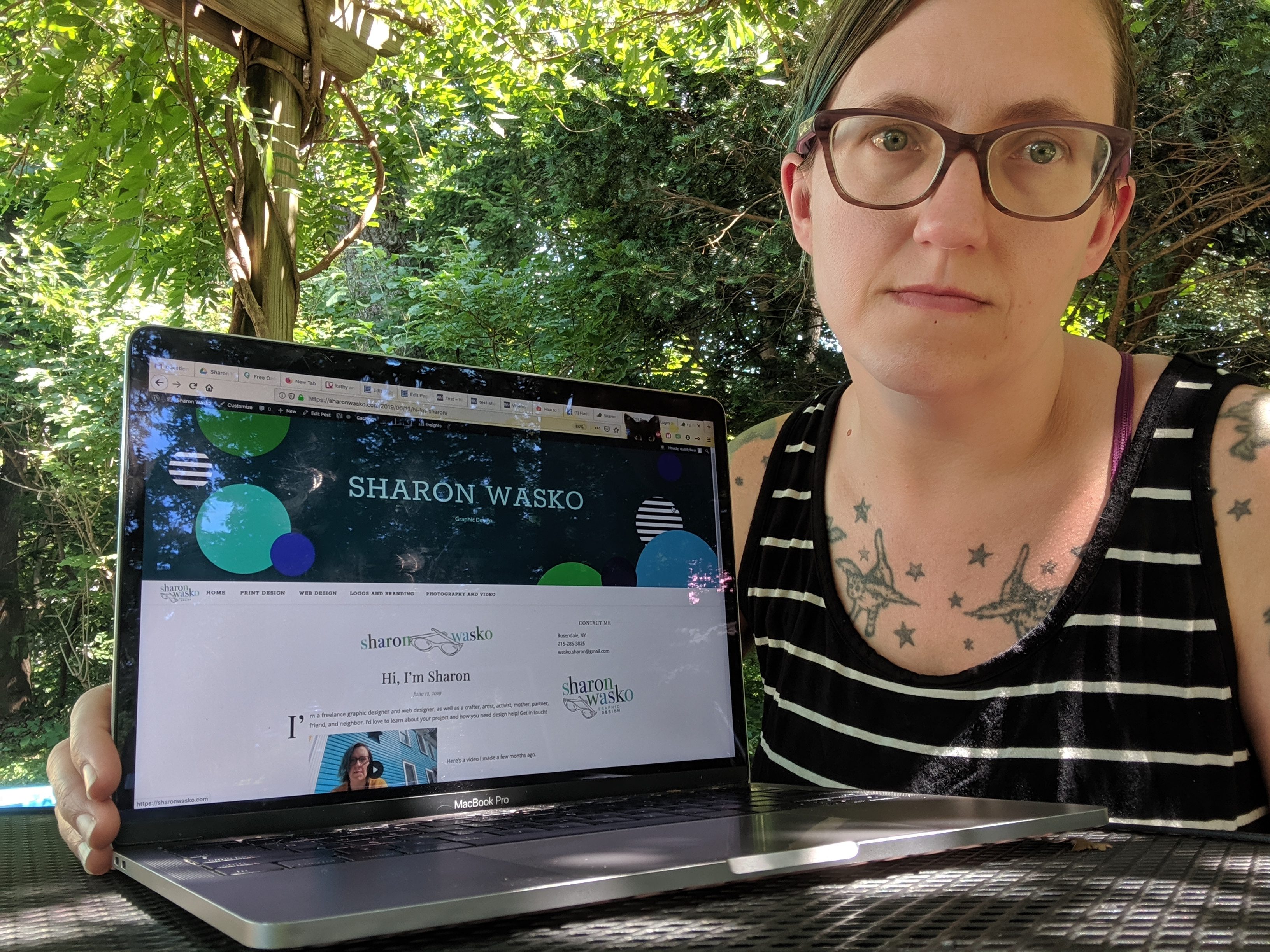
Sharon sitting at an outdoor picnic table with an open laptop that displays her website on the screen.

Sharon Wasko of Rosendale has taken off as a local web and graphic designer thanks to her time at SUNY Ulster learning web design skills. Recently the Blue Stone Press published an article about her success within the community. One of her professors published the print piece on his blog, you can read it here. Some of the classes she took include Graphic Design (Intro through III), Commercial Photography, and Web Design. She thanks her Web Design professor Dina Pearlman; for giving her the knowledge that has been instrumental in the launching of her website and career. Curious what this website looks like? Then give it a click!

SharonWasko.com

Logo with picture of glasses that states: Sharon Wasko Graphic Design
Logo from SharonWasko.com showcasing her love of teal and vintage ideas

It’s an online portfolio of her skills. Including but not limited to graphic & web design, photography, media layout, brand development and logo creation. In the Spring of 2018, she established her company Sharon Wasko Graphic Design, and created this site of her own. Now she has helped a few local companies to do the same. Since then, she’s gained a variety of colorful clients, mostly artists who have a professional passion that mirrors her own.

What’s She Up To Now?

While attending classes, Sharon holds a student aide position in the SUNY Ulster Marketing and Community Relations office. There she helps the webmaster to maintain, update, and add to the school’s main site, sunyulster.edu. She is also currently collaborating on an interactive site to display the school’s renovations. Capital projects, improvements to the school’s physical structures, have been followed and documented with photos. She is helping to create a site where all those improvements are fun and easy to view for all.

All those projects are just a side gig to her own thriving business as a freelance graphic designer. Her responsibilities and skills are ever-changing and evolving, as is natural with web based careers. Her already impressive portfolio is always growing.

A logo created by Sharon from her website

An Arts Education That Led To Web Design

Sharon has gotten her education in her own style. As a part of that she received her BFA before coming to our community college. Resulting in a degree from the College of New Jersey, formerly Trenton State College, with a concentration in painting and a minor in women’s and gender studies. She expressed that her time there differed greatly compared to a two year college. “It was a totally different experience, going to a residential 4-year school, but now there’s a more diverse group of students in my classes” said Sharon. SUNY Ulster’s community atmosphere provided her more freedom within her life. She has still managed to raise two young girls as she begins her business and continues to make it grow.

Another Student Success For The Books!

Among other students who have gone far with their time at SUNY Ulster. Sharon Wasko is now on the list. If you are interested in taking some of these courses, there is a degree program of classes. You can begin you associates degree in the field or just take a course or two, it’s up to you. Click here to learn more about this field and the classes offered.

How Making Art Affects You as a Student

Brushes on a canvas covered in paint

“I don’t listen to what art critics say. I don’t know anybody who needs a critic to find out what art is”.

~Jean-Michael Bassquiat
A piece of art where a woman's face is covered in color as she holds her face with her hands.

It’s the first thing to be underfunded and ignored in terms of educational value. Is this societal disregard for art justifiable? As a matter of fact, no. Having art programs present at educational institutions creates exciting places for learning and discovery. Research by the Americans for the Arts and Vans Custom Culture shows that low income students who are engaged in the arts are more than twice as likely to graduate college compared to their peers with no arts education, proving that creative classes as a part of your education can drastically increase your chances for success. Here’s how:

The Academic Boost of Art

As you can imagine, making art of any kind requires diligent focus and discipline. Which means the practice of turning creativity into a product is enhancing those skills. Focus and discipline are then going to transfer into other aspects of the artist’s life. For example, studying for a final exam is a bit easier when your brain has already been trained to have laser focus and not slack off.

A study on art in schools done in 2006 by Solomon R. Guggenheim Museum study showed a link between arts education and improved literacy skills. During the study, students were working with an artist to make a masterpiece. They then developed better critical thinking skills. By pondering and discussing different pieces and works, these students were establishing vital life skills. This could then be applied to understanding and analyzing literary material later on in different situations.

Outside of School Benefits

hands reach over a desk to sketch an art drawing of a fashion design

Art can benefit you life in more ways than just in the classroom. Creativity can often act as a bridge between two people of different walks of life. All forms of art can help to significantly improve community cohesion. A study done in 2005 by the Rand Corporation showed that art can connect students. These students might otherwise be culturally isolated, to each other and to the world at large.

A study by Anna Bernadska & Kelly Leroux describes the impact of the arts on individual contributions to US civil society. According to which, among adults, arts participation is related to behaviors that contribute to the health of civil society. These contributions include increased civic engagement and greater social tolerance. Put simply, when you create things for others you’re getting more involved with your community. You’re also learning how to better understand and accept thoughts and opinions of others, even if they may not agree with your own.

A man sits at a computer making graphic designs, the desk also has a coffee and a mug of coffee sitting next to the computer.

Art Is Available To You Everywhere

SUNY Ulster offers several types of art degrees such as fashion or advertising design, theater, music, and fine arts. Learn more information on the programs SUNY Ulster offers here. If a full-fledged art degree is not for you, arts classes can be taken with any degree program. They would siply be classified as an elective during any one of your semesters at SUNY Ulster. The next semester coming up is Fall 2019, and there are plenty of art classes to be had, check it out on the website. Some people may even qualify for free tuition with the college scholars program.

Common Grammar Mistakes

Scrabble tiles on a scrabble board

We’re all guilty of making errors from time to time. Some mistakes are more typical than others and can happen to the best of us, even those of us who go to college. This article is a quick run down of some common grammar mistakes that happen pretty often according to both the web and my personal experience; give it a gander.

Type blocks for an old printing press, each of them depicting a different letter. Grammar mistakes were far moer common in the hay day of these tools.
Image by Free-Photos from Pixabay

Let’s talk about what it is first.

Let’s go over what the term grammar means, according to the Cambridge Dictionary. It’s a noun that means “the study or use of the rules about how words change their form and combine with other words to express meaning”. Put simply, it means the correct way to use words in speech. It’s not a simple concept, the English language can be tricky as I’m sure you know. Frequently people who speak English as their first and only language are known to fumble their words. Getting to know a few frequently occuring misused terms could save you from your own fumble some day. In both speech and writing, correct use can give you more opportunities and better impressions.

A close up of a page from a dictionary

1. An Affect vs. The Effect

The word Affect is almost always used as a verb (an action word) while the word Effect is a noun (a person, place, or thing) and means the result. To put it another way, the Effect a.k.a. consequence or outcome is what happened because something was Affected, a.k.a. impacted, influenced or changed. A good example of this from Writer’s Digest uses someone who likes to be a pirate. “Acting like a pirate has had a negative effect on my social life”. Where effect is a noun. Or “the eye-patch affected my vision” where affect is a verb because it’s doing something. It may seem confusing at first, since one letter makes all that difference and they are sort of related as words. However, it’s not as difficult as you might think.

2. Than vs. Then

Probably the most typical of common grammar mistakes to make, this one is an easy fix. The trouble most people have knowing when to use then or than is remembering which is which. Avoid this grammar faux pas by remembering that than is a comparison and then is talking about time.

An example would be when you prefer one fruit over another, let’s say apples versus oranges. You like apples more than oranges, or you may prefer apples less than oranges. When you compare something to another thing, including people or places, you use than.

For the latter, an example would be going over a schedule. Let’s say this Saturday you have a family fun day planned; you’ll go to the beach, get some lunch, and then go to the circus. We’re discussing the timetable of events and when things are happening so we use then.

A person holds a book by the edge of one cover, making the other cover and the pages fall down in front of the camera.
Photo by Nicole Honeywill on Unsplash

3. Is It To or Too?

This is a fierce competitor for most common mistake, since we use these words so often. Let’s make it easy and get it right from now on, more knowledge equals less confusion. When we only use one O we are talking about movement of some kind. Whether it be moving through time, space, or the matrix. For example: you go to the grocery store, and when you’re done, you go back to your home.

The double O version is exclusively used for additional information and should, at all times, be replacable with as well. It is usually placed at the end of a sentence or list. For example, if you’re writing a grocery list you may decide you need: cherries, ketchup, bread, and eggs too. You can tell it’s correct because if I had written -eggs as well– it still works.

4. The Rest of Those Pesky Homophones

A picture breaking down one of the most common grammar mistakes, the difference between they're, their, and there.
Courtesy of Reddit.com

A homophone is a word that sounds like another word but has a different meaning. Number one of this post is considered a homophone, and I bet you didn’t even realize!

One of the ones we see most frequently is they’re, their, and there. If you glue this helpful infographic someone made into your head, you should do fine. To reiterate what it says: they’re means they are, there is talking about a location, and their is reffering to a person

In the same ballpark are the words your and you’re. The rules above apply to this so like I said before, glue that picture to your brain and this one is easy. You’re is a contraction of the words you are, saying someone is known a certain way or is doing an action of some kind. “You’re doing a great job at this!” is an example of this contraction. Your refers to a possession or belonging, for example: “is that your car?”. A good way to double check this one is to ask yourself if you are would make also sense, if it wouldn’t, use the other form of the word.

A red pen sits on top of a graded paper, where all common grammar mistakes are marked up.
Image by Anne Karakash from Pixabay

Don’t Let Common Grammar Mistakes Get You Down

Take control of the way you communicate by learning the ins and outs of the English language, that sneaky trickster. These mistakes are easy to make and finagle their way into everyday life. Instead of feeling bad about it, we’re getting ahead; that’s the spirit!

The Secret To An Awesome Website: Design Your Dreams With UI & UX

Hands reach over a desk that is scattered with markers, pens, papers, and a smart phone that lay on front of a computer screen. The papers show scribbled designs of buttons and maps.

Everything we use is designed by someone. The clothes you wear, the car you drive, your coffeemaker, and all the websites you visit. The practice of designing for different things goes by various names. However, when it comes to a computer website design, we use the terms UI & UX, meaning User Interface & User Experience. Whether or not this sounds familiar to you, you more than likely encounter it everyday. I’m going to explain both of them quite briefly as it’s a complex and exciting thing that you may just need to take a whole class in to fully understand, but more on that later.

UX – User Experience

A smart phone, half of which only shows outlines and the other half of which shows buttons, image, and colors. UI UX
Source: http://netaq.ae E solution blog.

The two jobs go hand in hand but are two different things. One relies on the other to function properly. User Experience usually comes first and deals with mechanics of a webiste, how it functions and feels to a user. It is a structure or foundation for the site that should optimize how a person feels about a company. A website with a good UX design should feel smooth and easy to interact with. A good designer takes into account how a user thinks and architects information in a way that is easy to find. On the other hand a website with bad UX is: hard to use, confusing to navigate, and clunky feeling in general. If you’re intrigued, here’s a preview of a cool book all about User Experience by Jesse James Garrett.

UI – User Interface

User Interface design is making the aesthetic elements of that website. UI designers manage everything visual in regard to appearance and how that affects the user’s feel for the site. Meaning colors, theme design, the look of the menus and can include logos, buttons, scrolling and other interactive elements. It’s an important part of the job that can influence a user, usually a customer, and what their opinion is of that brand that’s being represented by the webite. If you’re looking for more info on that check out this full explanation of the UI, UX, and the difference between them by Emil Lamprech.

UX and UI design are specialized trades that can involve marketing, computer science, research, some sociology and analytical skills. It’s knowledge that few have; and those who do are able to apply it to all kinds of situations, and clients.

An arm holds up a piece of paper with dsigns for an iPhone blueprint
Image by William Iven from Pixabay

Why It Matters

Good user experience and design can impact an organization in so many ways. It’s beneficial for the obvious reasons; people spend more time (and maybe money) on your site when it is alluring to see and fun to use. Plus more people While also being beneficial in the long-term, especially for certain feilds such as education. Studies have shown that learning institutions who utilize modern user experience design strategies can better support current student learning styles. A website or application should be a good reflection on a company that makes them stronger. Having a good UX and UI design is important, if not integral, in making a company shine amongst all the competition out there. To increase sales and growth continually is no easy feat, and with these skills it’s quite literally made into a science.

Alright, now it’s later.

“I’m In!” You Say, “Teach Me More!”

Gladly. Your complete guide to UI & UX is right here. SUNY Ulster is holding a class all about this speciallized knowledge. It’ll take place at our Stone Ridge campus for the Fall 2019 semester. It’s an elective for the web development degree program, but anyone who’s qualified with the basics can take it.

Choosing The Right Classes For Your Future.

A bright red apple sits atop a stack of three hard cover books, we cannot see their titles or covers. This display sits atop a table in front of a smoky grey background.

Some people dive into college with set intentions, knowing exactly what they will choose and graduate with, and that’s great! Then there’s the rest of us. It can be hard to fill up your semester’s class schedule. Especially when you aren’t sure where your time and energy would best be spent.

The big idea is to go to college and get a degree. That will give your career (and income) the kick start or boost that you want, right? That initiative alone is all you need to get started. The rest is figuring out what it is you want to study. Then finding a way to make it happen. As they say, where there’s a will there’s a way!

Students with undeclared majors are more common than you might think. The amount of choices can be overwhelming. Courses are often offered on hundreds of different subjects with varying levels of expertise. Some classes are reserved for specific students while others require more courses to be taken first. Navigating the sea of learning can be daunting!

A black and white image of someone's upper abdomen in a sweatshirt as they hold up a large piece of paper over their face depicting a large white question mark.

A study on the “Developmental Disconnect in Choosing a Major” states that an estimated 20 to 50 % of students enter college as “undecided” and an estimated 75 % of students change their major at least once before graduation (Gordon, 1995). So don’t worry, you’re definitely not alone. Turns out a lot of people get frustrated when spinning that big wheel of life. Fortunately, reality doesn’t have to play out like a game show and we have the power to choose the right courses to lead to ultimate success.

It’s completely okay to start without knowing where to begin, most people do!

A very generic picture of a stack of five thick textbooks on a white background

When first starting out, make sure to take some general education (often called “gen ed” on campuses) credits. Every student is required to take these courses regardless of major. They consist of basic knowledge stuff any collegian should know like psychology, algebra, history, etc. It can be a win-win situation; getting these classes out of the way will free up time later on for the good stuff. Not to mention there is potential to fall in love with an area of research.

An extra literature or writing class is always helpful to have under your belt. These skills are used in every class and you’ll want to hone them early on. While signing up for those general classes, be sure to review the college catalog and pick a few courses that seem fun or interesting to take. Once you start those and learn more about them from a professor, you may have found your major!

Background: A man stands in front of a wall almost covered in various pieces of visual art. He seems to be lecturing as he holds his hands in to his chest as if ready to throw them open, next to him appears to be a television. Foreground: Students sit with their head faced away from the camera, watching the man talk, we see the back of their heads.
courtesy of: 祝 鹤槐

An uncommon resource that not everyone thinks of is the professor of the class you might register for. You could always reach out to them and ask any questions you may have that an adviser can’t answer. They are typically happy to help and tend to respond pretty quickly in my experience.

It’s time to plan ahead!

Planning a semester schedule for college classes can be a tricky task. Some people prefer to have all their classes back to back in one or two days a week to coincide with other nonacademic schedules. Some prefer to have only a class or two every day to spread out the work load and study time. As long as you don’t sign up for courses that overlap or occur at the same time, you should be fine. Most colleges have advisers that would make sure that a scheduling faux pas wouldn’t happen anyway. If you have room in your schedule throw in some bonus microcredentials. Make sure to consider factors like distance from your house and your method of transportation. Schedules can be changed in the first few weeks of classes, but planning ahead, so that the first schedule you make will be a good fit, is important and saves a lot of undue hassle.

A weekly planner lays open in a table, the book lays atop a sheer piece of toole next to a scented wax melter and a handful of pens and markers. The book is littered with small posted notes and drawn on with a highlighter over all dates. The right page underneath the weekend says in bold "be happy and smile"
Photo by Bich Tran from Pexels

A good way to make sure you have the most options and opportunities available to you is to register as early as you can. More classes will be presented with available seats for students like you!

A woman stands with her hands held out, throwing glitter at the camera. She holds her head up high and wears a large smile, a graduation cap, and what appears to be a doctors jacket.

Memory Skills Booster Tips for Anyone

A woman sits at a desk biting a pencil as she looks at a computer screen

First of all, why do we forget?

a bulb sits on a blackboard with a cloud drawn around it, a metaphorical representation of the skill of memory

There are a handful of reasons why we forget things that we want to remember. None of them make it any less annoying during an exam; when you can’t think of the answers that you know you’ve studied. Or when you forget your grocery list and go home without all the ingredients you need to cook dinner. A common ground we all can relate to is the desire to improve our memory skills.

Nevertheless there are four major ways your brain tosses aside information. All of which lead to the loss of a memory. Sometimes you don’t store the memory properly from the get-go, and other times you simply can’t retrieve the memory when you try to recall it. Interference from past memories can also make you forget. Sometimes we even actively try to forget things that are upsetting or traumatic.

Don’t Forget Nutrition Plays A Key Role

A person seasoning a pan of raw fish containing a lot of omega-3s that are good for memory skills

As you can imagine, a healthy brain leads to better memory skills. There are a lot of foods out there that are beneficial to your brain, containing a lot of omega-3s. Omega-3 is a fatty acid that your body can’t produce on it’s own but can help your health. The body uses it in all kinds of functions like keeping the brain and heart healthy and lowering your risk of dementia and arthritis. This essential element of your diet can be found in most fish and some fat rich plants such as salmon, anchovies, and chia seeds. If you’re curious about other sources of Omega-3s, here are 12 foods that are very high in Omega-3.

Techniques to Boost Your Memory Skills

We have often have trouble remembering certain things because they just seem like unrelated bits of information that we may not need. However there are a few tried and true methods of improving your memory skills to do just that. Some of the most highly recommended memory boosting methods are based on giving structure to those random bits of information that you need to study and memorize.

When it comes to brain training there are a few different methods to be used, which one you like is all about what you’re trying to learn along with what feels right. One popular method recommended by memory champions like Boris Nikolai Konrad is known as the Method of Loci.
The “method of loci”—sometimes called the Memory Palace—is a systematic memory technique that dates back to the days of ancient Greece.

This method involves boosting your ability to remember a list of information, like a list of terms for language or science studies. This is done by using your spacial memory of your house or your body. The things you want to remember are given specific places or parts . Then to recall them you go through the mental version of the house or the list of body parts and find the memories where you left them.

Another method that’s based on visualization is the peg system. For this one you are supposed to envision your need-to-learn study topics. Once you’ve got it you can imagine you’re placing a picture of them on a series of pegs. Sort of like hanging pictures on a long wall in a row, inside your head. After studying the picture and which number peg it is for a while, you can recall them much better than by typical studying practices.

The Memory Skills Difference May Be In A Pen

A student writes in a notebook, using a pen and paper can boost memory skills.

When you use a pen and paper to write something down it’s much more retainable than typing it. This study shows it can be much more effective to write something down as opposed to typing it. Writing leads to better memory retention and better understanding of the information and context. The reason why is that typing tends to lead to less memory making and more mindless processing. So if you’re really trying to learn from that lecture, try swapping your laptop out for a notebook.

Time is too precious to spend learning something just to let it slip away. Make sure to take some time everyday to boost your brain power. In return you’ll better retain and improve your memory. You might be surprised at how much information you can retain when you really work for it.

A clock sits next to a cup of coffee, representing that good time management and caffeine can be used to boost memory skills.