
Start Your Own Business After Your Studies

A person sits at a desk with a laptop, two books and a cell phone on the table

Originally Written by

Kayleigh Alexandra
Microstartups.org

Starting a business is a goal that lots of students share while they are getting their degree. Some have the fire and motivation to make their dream business a reality. Students who complete college to continue onto the path of entrepreneurship are bold path blazers, at least they have to be to make it out there.

After trials and tribulations, the excitement of learning, the stress of exams, and the enrichment of social exploration, your studies will inevitably come to an end (as all good things do). For many, this stage of life is intimidating, if not terrifying. The familiar foundation disappears from beneath your feet, and you drop into uncharted waters — unsure where to go.

Still, it isn’t a time for fear or despair. It’s a time for exploration! Everything prior to that point is preparation intended to build your mind and spirit. Making you into someone with the strength and character to earn the kind of life you want. You’ve already shown you have what it takes to get ahead when you finish your studies.

Your future is for you to decide, so consider all of the available options. Maybe you want a comfortable position, or there’s a company you want to work with. Then set a goal and start moving toward it as soon as possible, maybe now.

Or perhaps you’re like many people today and want to work for yourself; being able to set your own schedule, profit fully from your hard work, and never have to deal with a boss. If so, you’re in luck, because it’s never been easier to start your own business. Read on for some tips on doing just that.

Come Up With A Workable Business Concept

A group of six people sit around chatting about ideas in an office area.

This step is far easier said than done; so much so that plenty of people will never get past it. You need to think of a product or service that you can offer – and profit from selling. You can sell almost anything at a loss, so don’t assume an idea is solid because there’s demand for it. If there’s no potential for profit, it’s pointless to begin going down that path.

A good starting point when selling products is to push two existing concepts together to see what results. For instance, someone at some point had the idea of combining “the internet” and “refrigerators” to get smart fridges. Think about technologies and products already available in your chosen field, and look for gaps between them. You could easily fill those gaps and open up a new mini market.

If you want to offer a service (consulting, perhaps), then you need to pick out a unique selling point (USP) of some sort. What will make people want to work with you specifically? Your level of quality, your affordable rates, or your turnaround time? As you would when choosing products, try to choose a USP that fills a gap in the market.

Investigate Comparable Businesses

A man sits in front of a computer screen with one hand on a notepad

Next, you must conduct some market research to see what relevant types of businesses are already in operation. You’ll need to narrow things down, of course; think about what your studies have primed you to do (and what you want to do). See which brands are succeeding, or failing, doing similar things. Once you’ve picked out some brands, you can use a competitor analysis tool (like this one from Brandwatch) to learn about your ideal audience.

You can start with some simple Google searching. Type in the kind of product or service you’re planning to offer, and run through the top results. Note that your searches will likely be affected by your location, and if you plan to operate locally in another area, add the name of that location to your search. What impresses you about the results? How good or bad are the websites? What about the prices?

A good option here is to survey your target audience on the brands they like and dislike. You can use something like the online sample service from Qualtrics: define your niche, and get an appropriate sample of survey respondents. If you truly don’t feel that you can compete with existing businesses, and you don’t see enough room in the niche for everyone, then rethink your concept. Remember the GIGO principle — garbage in, garbage out. If your concept isn’t viable, then any effort to build a business around it will be an exercise in futility.

Base Your Business Online

A woman sits at a computer with an open book and cup of tea next to her.

Even freelancers used to need conventional offices to appear credible in the eyes of many prospective clients. Full businesses needed large offices, with their reputations often being heavily affected by the quality of their premises. This meant that setting up a business could be extremely expensive, to the point of most being unable to achieve it.

Today, you don’t need an office to run a business, because you can run it completely online. This is particularly true if you want to operate as a freelancer. You can set up a business website and promote your services purely through the internet, then work remotely. If you want to sell products, then it’s easy to move into the ecommerce world. You will admittedly still need to invest in sourcing, storing and shipping the products, admittedly — though there are options in the form of dropshipping and warehousing that can even make that easy.

This doesn’t mean that you have to be online-exclusive, though. Instead, you can view it as a launching pad: if you set up an online retail store that becomes hugely popular, you’ll always have the option of setting up a brick-and-mortar store to expand it. It’s actually fairly convenient at this point: for instance, Shopify has a POS hardware package that can provide the full range of tools needed to run a physical store that shares a back-end with an online store.

Alternatively, if you start making enough money through offering services, you can invest in an office to start building a team around you — or even just hire remote workers and save the office money, because that can work extremely economically when done well.

Promote Through Your Established Business Contacts

A hand holds a smart phone above the ground.

Simply getting your business up and running is just the start. If you want it to succeed, you need to promote it — and since you’re coming off your studies, why not take advantage of the contacts you made throughout that time in education? Whether it’s the friends you made in classes or the teachers who helped you, you have access to smart people with the ability to offer invaluable feedback (and possibly connections of their own). Use LinkedIn to help you piece things together since you’re unlikely to remember everyone.

You might worry about being accused of cronyism, but you’re not manipulating your way into a position of power: you’re just leaning on people who already know and trust you, and there’s nothing wrong with that. In the end, getting opportunities won’t make you a success: if your business can’t deliver results, then no number of connections will help it thrive.

After reading through this piece, do you think you’d want to run your own business? It’s very freeing, but just as stressful, and not for anyone who wants an easy life. If so, follow these suggestions to get started — you just might carve out your career path.

How Playing Sports Affects You As A Student

A baseball field with a background of the shawangunk mountains
A mascot costume head and shoulders of the SUNY Ulster mascot, Senator Sam.

One of the most exciting opportunities at college is the chance to play sports. Students can play sports from volleyball to football and most things in between. Generally teams are broken up by sex and the season runs for about a semester, or around 15 weeks.

There is a full list of SUNY Ulster sports teams on our website, at the bottom of this article, and on your portal. The school’s athletic website can be found here, with all the details to everything SUNY Ulster athletics. In case you didn’t know, our mascot is the beloved Senator Sam, seen above, and all sports teams are known as the SUNY Ulster Senators.

There are plenty of reasons why sports help you stay sharp in mind as well as in body. The mental benefits of sports are numerous; including memory boosting, gaining leadership qualities, and improving self-confidence. There are a few more reasons why athleticism is beneficial to being a student that we’ll go over in more detail; like getting better sleep, reducing stressors, and helping with concentration.

Stress Reducer and Depression Aid

Sports are an all-natural stress reducer that is easily accessible to you and all students. Getting your tension out on a field or a court can be much better than letting it bottle up, or worse, come out in unintentional ways. The brain produces extra serotonin when the body is involved in physical activity. This chemical is known as the happy chemical because it’s most often associated with the good feelings it brings forth. This chemical is complicated and having more of it can positively affect learning, memory, and sleep quality. Exercise and other physical activity will also produce endorphins which can improve the ability to sleep which, in turn, reduces stress.

Two women hold themselves up from the ground by their arms, on yoga mats. They reach out to touch hands.
Photo by Luis Quintero on Unsplash

Athleticism can also reduce depression and is a popular way of managing anxiety disorders, according to the Anxiety and Depression Association of America. A sports player that regularly does conditioning and practice is less likely to suffer mood imbalance. Using working out as a healthy coping mechanism may reduce other unhealthy habits that can lead to more depression. Instead, physically producing those feel good chemicals for yourself can be a positive way of dealing with negative emotion. Compared to other ways of dealing with stress, using exercise to ease symptoms of depression can be the best route to take for a busy student.

Improved Sleep Habits

A head lays on a couch, the body of which is covered with a quilt. We see the back side of the sleeping person.
Photo by Rex Pickar on Unsplash

Though it takes a while to feel the difference, it’s proven that better sleep and regular physical activity are correlated. It makes sense that doing exercise normally can improve your sleep. It does so by increasing the amount of deep sleep you receive. After long periods of regular exercise were added to test subject’s lives, they had more long-wave sleep at night, which is the most restorative form of rest.

Effective rest does the brain good and it’s well known that more sleep is always better for students. A good hard practice session of any sport can be tiring and helpful to get some great sleep! Being well rested can help you remember more and can also prevent bodily stress the next day from being tired.

Concentration & Focus Booster

Getting involved in sports can actually help you focus in the classroom. After children in this study had a daily dose of exercise they showed improved attention spans. Just another one of the ways that physical exercise helps your brain work better. “They became more adept at ignoring distractions, multitasking, and holding and manipulating information in their minds” says neuroscientist Ben Martynoga.

A man sits at a desk covered in office supplies. Behind him are cabinets.
Image by SnapwireSnaps from Pixabay

Sports Are For You! Convinced Yet?

Reach out to a coach on campus, find a gym near you, join a self-defense class, or just jump into the next sports season when it starts! There are far fewer ways that sports could do you wrong than how they could improve your life. The benefit of being an athlete is NOT limited to academia, it could improve multiple facets of your life. It can’t hurt to try, that’s for sure!

I realize that sports aren’t for everyone, and that doesn’t mean that there aren’t other outlets you can try. Getting involved in making some kind of art is always a good idea too, see why.

Girls on a gym court give high fives after a volley ball game

What Sports Opportunities Are Available For You?

SUNY Ulster Senator’s teams include:

  • Baseball
  • Women’s Basketball
  • Men’s Basketball
  • Cross Country
  • Men’s Golf
  • Women’s Soccer
  • Men’s Soccer
  • Women’s Track and Field
  • Women’s Volleyball
  • Wrestling

6 Study Tips for Adult Students

Adult student on campus holding binder

It can be hard to readjust to a studying mindset once you’re out of the habit for a few years, but with a few tips and some helpful resources, you’ll be studying effectively in no time!

Manage Your Time Wisely

Adult students tend to have more work and family obligations than the traditional student, and that can make it difficult to get classwork done. The solution? Plan ahead. Set aside a quiet time and place each day to catch up on your work, even if it’s just to study your notes and complete textbook readings. Start on your assignments as soon as you get them, just in case anything comes up closer to the due date.

Know Your Computer

If you aren’t confident in your computer abilities, then it’s time to learn to use one! Almost every class you take in college will require using a computer for studying and completing assignments, and online classes are, well, fully on a computer. Get familiar now. Learn how to use Microsoft Word, an internet browser, your course sites, and the Portal, at the very least.

Use a Variety of Resources

Remember that you have more than just your textbook if you need assistance. Many services and programs are available through the Macdonald DeWitt Library. Professors will often post extra information, links, and notes for studying on your class Blackboard site, so make sure you check course sites regularly. You can also take a look at some other great online resources we’ve curated for you.

Get Tips for Memorization

There are lots of different methods for learning and memorizing information, including using mnemonics, mapping, and more. Many suggest that physically writing down notes is an effective way to familiarize yourself with information, so don’t be afraid to use a notebook and pen, even if you’re trying to use your computer more often. Check out some of our other tips for boosting your memory skills.

Get Help if You Need It

Remember: there are special resources on campus if you need extra assistance! Visit the Writing Center and Math Center for help with English or math. Tutoring, study help, and other services are available through the Center for Academic Planning & Support (CAPS), formerly known as the Learning Center. If you need assistance with any course, don’t be afraid to reach out to caps@sunyulster.edu or stop by their offices in VAN 247. The staff and peer tutors in these departments are always happy to help!

Maintain a Balance

Don’t forget to take a breather once in a while! It’s easy to feel overwhelmed by your coursework and other responsibilities, which only makes studying that much harder. Take advantage of on and off campus opportunities to relax, and make sure you’re eating right and sleeping well. Keeping your mind sharp will do wonders for your grades!

Success By Design For Sharon Wasko

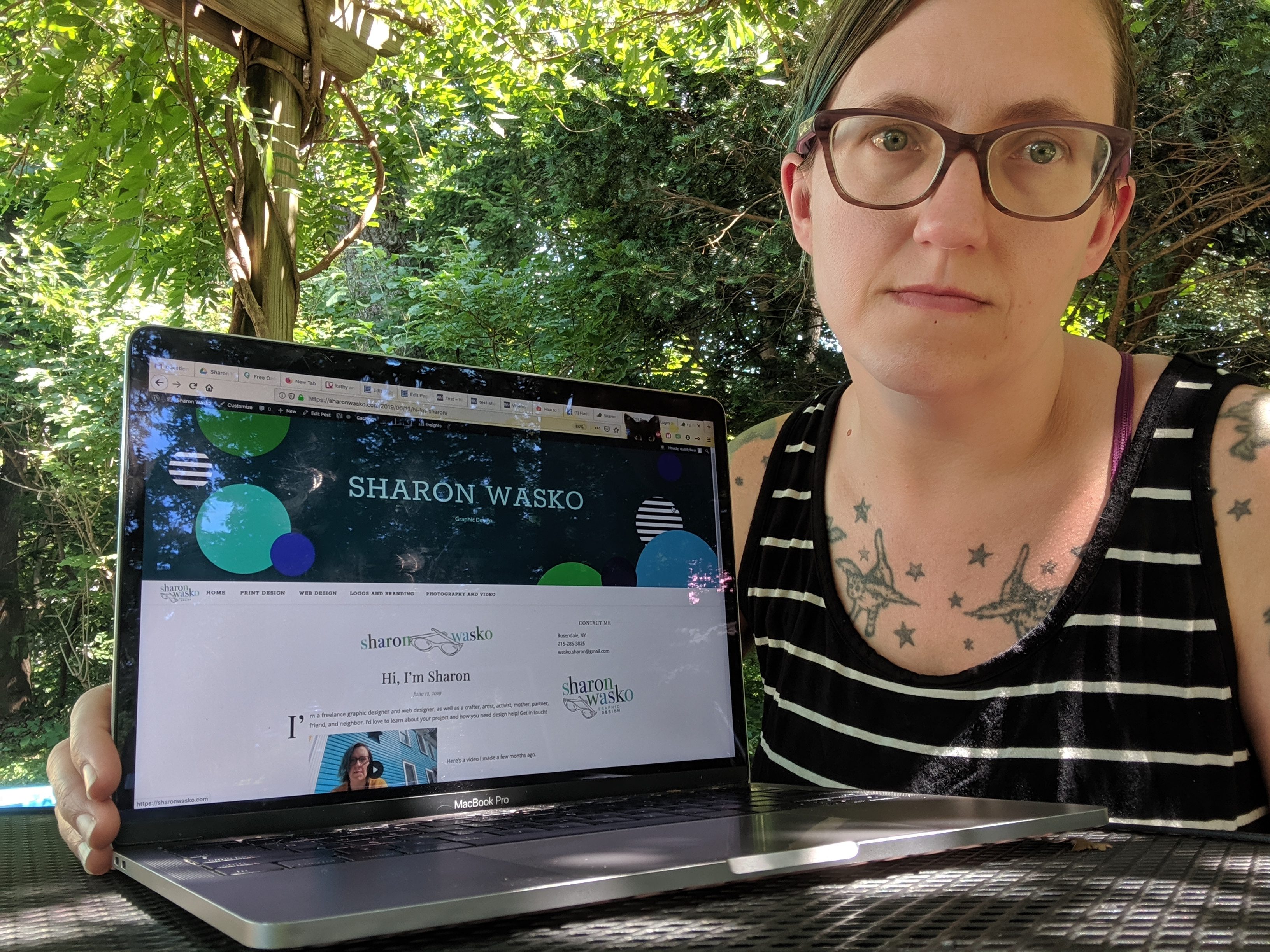
Sharon sitting at an outdoor picnic table with an open laptop that displays her website on the screen.

Sharon Wasko of Rosendale has taken off as a local web and graphic designer thanks to her time at SUNY Ulster learning web design skills. Recently the Blue Stone Press published an article about her success within the community. One of her professors published the print piece on his blog, you can read it here. Some of the classes she took include Graphic Design (Intro through III), Commercial Photography, and Web Design. She thanks her Web Design professor Dina Pearlman; for giving her the knowledge that has been instrumental in the launching of her website and career. Curious what this website looks like? Then give it a click!

SharonWasko.com

Logo with picture of glasses that states: Sharon Wasko Graphic Design
Logo from SharonWasko.com showcasing her love of teal and vintage ideas

It’s an online portfolio of her skills. Including but not limited to graphic & web design, photography, media layout, brand development and logo creation. In the Spring of 2018, she established her company Sharon Wasko Graphic Design, and created this site of her own. Now she has helped a few local companies to do the same. Since then, she’s gained a variety of colorful clients, mostly artists who have a professional passion that mirrors her own.

A chair sits in a pooly lit room against a wall with a small illuminated sign that reads: Think outside the box.
Photo by Nikita Kachanovsky on Unsplash

What’s She Up To Now?

While attending classes, Sharon holds a student aide position in the SUNY Ulster Marketing and Community Relations office. There she helps the webmaster to maintain, update, and add to the school’s main site, sunyulster.edu. She is also currently collaborating on an interactive site to display the school’s renovations. Capital projects, improvements to the school’s physical structures, have been followed and documented with photos. She is helping to create a site where all those improvements are fun and easy to view for all.

All those projects are just a side gig to her own thriving business as a freelance graphic designer. Her responsibilities and skills are ever-changing and evolving, as is natural with web based careers. Her already impressive portfolio is always growing.

A logo created by Sharon from her website

An Arts Education That Led To Web Design

Sharon has gotten her education in her own style. As a part of that she received her BFA before coming to our community college. Resulting in a degree from the College of New Jersey, formerly Trenton State College, with a concentration in painting and a minor in women’s and gender studies. She expressed that her time there differed greatly compared to a two year college. “It was a totally different experience, going to a residential 4-year school, but now there’s a more diverse group of students in my classes” said Sharon. SUNY Ulster’s community atmosphere provided her more freedom within her life. She has still managed to raise two young girls as she begins her business and continues to make it grow.

Another Student Success For The Books!

Among other students who have gone far with their time at SUNY Ulster. Sharon Wasko is now on the list. If you are interested in taking some of these courses, there is a degree program of classes. You can begin you associates degree in the field or just take a course or two, it’s up to you. Click here to learn more about this field and the classes offered.

How to Find Great Connections on LinkedIn

Two people shaking hands with LinkedIn logo over them

LinkedIn serves a special purpose in the world of social media. While sites like Facebook and Instagram primarily connect you with family and friends, LinkedIn is designed to connect you with employers, coworkers, professors, and other professionals in your field. It’s important to have a good mixture in your network, but how do you make that happen? Here’s a few easy ways to get started:

Have a Stand Out Profile

Naturally, one of the most effective ways to be seen by professionals who matter is to have a great profile. Add a professional picture, organize your education and work history, and add a brief summary and headline that showcases what your specialties are. Learn more about how to do that in our post on building a great LinkedIn profile.

Join Groups

… and we’re not talking about the one for your Dr. Who fanclub! Focus on groups with people who have similar education, employment, and career backgrounds to you. A great place to start is your college’s alumni page, since you are likely to find people you know who might have some expertise or job opportunities to share. You should also join ones specific to your niche. Are you a Hudson Valley entrepreneur? Find groups on entrepreneurship and Hudson Valley businesses. Or if you’re a recent Computer Science grad, you can focus on groups working in the same field you want to, like game development or network architecture.

Connect with Employers, Coworkers, Professors, and Students in Your Field

The foundation of your LinkedIn connections should be people you’ve worked with who like and respect you, and who you like and respect in turn. These are the people who will give you positive reviews and interactions, useful feedback, and can alert you (maybe even recommend you!) for employment and engagement opportunities in the future. You can find some of your professors and fellow students by checking out the SUNY Ulster page.

Connect with Other Professionals in Your Field

This one can be a little harder, but it’s certainly not impossible! If you don’t know a professional, you may have to prove to them why they should connect with you. For someone you met at a recent conference or hiring event, you might want to acknowledge where you met and what you discussed. If the person is someone you’ve never interacted with before, but would like to, you might tell them what you enjoyed about a book they published or that you watched/attended a talk they gave. If you have mutual connections with someone, you could ask your mutual to introduce the two of you.

Now Engage!

You’ve got your connections. Great! Now comes the point of actually having them: interaction. If you’ve just connected with an interesting professional, make sure you develop a good relationship with them. Do they post useful information on their status? Be sure to like and comment if you have something to add to the conversation. Similarly, when you have something of value to share or ask, don’t hesitate to share it as a post of your own. Just make sure you keep it professional and relevant to your career!

Get Started Today

By following even a few of these tips, you should see an increase in your accepted connections and have more interaction with the ones you already have! As always, be sure to follow our LinkedIn page. If you’re not sure whether you need a LinkedIn profile or not, check out one of our blog posts that will help you decide.

How Making Art Affects You as a Student

Brushes on a canvas covered in paint

“I don’t listen to what art critics say. I don’t know anybody who needs a critic to find out what art is”.

~Jean-Michael Bassquiat
A piece of art where a woman's face is covered in color as she holds her face with her hands.

It’s the first thing to be underfunded and ignored in terms of educational value. Is this societal disregard for art justifiable? As a matter of fact, no. Having art programs present at educational institutions creates exciting places for learning and discovery. Research by the Americans for the Arts and Vans Custom Culture shows that low income students who are engaged in the arts are more than twice as likely to graduate college compared to their peers with no arts education, proving that creative classes as a part of your education can drastically increase your chances for success. Here’s how:

The Academic Boost of Art

As you can imagine, making art of any kind requires diligent focus and discipline. Which means the practice of turning creativity into a product is enhancing those skills. Focus and discipline are then going to transfer into other aspects of the artist’s life. For example, studying for a final exam is a bit easier when your brain has already been trained to have laser focus and not slack off.

A study on art in schools done in 2006 by Solomon R. Guggenheim Museum study showed a link between arts education and improved literacy skills. During the study, students were working with an artist to make a masterpiece. They then developed better critical thinking skills. By pondering and discussing different pieces and works, these students were establishing vital life skills. This could then be applied to understanding and analyzing literary material later on in different situations.

Outside of School Benefits

hands reach over a desk to sketch an art drawing of a fashion design

Art can benefit you life in more ways than just in the classroom. Creativity can often act as a bridge between two people of different walks of life. All forms of art can help to significantly improve community cohesion. A study done in 2005 by the Rand Corporation showed that art can connect students. These students might otherwise be culturally isolated, to each other and to the world at large.

A study by Anna Bernadska & Kelly Leroux describes the impact of the arts on individual contributions to US civil society. According to which, among adults, arts participation is related to behaviors that contribute to the health of civil society. These contributions include increased civic engagement and greater social tolerance. Put simply, when you create things for others you’re getting more involved with your community. You’re also learning how to better understand and accept thoughts and opinions of others, even if they may not agree with your own.

A man sits at a computer making graphic designs, the desk also has a coffee and a mug of coffee sitting next to the computer.

Art Is Available To You Everywhere

SUNY Ulster offers several types of art degrees such as fashion or advertising design, theater, music, and fine arts. Learn more information on the programs SUNY Ulster offers here. If a full-fledged art degree is not for you, arts classes can be taken with any degree program. They would siply be classified as an elective during any one of your semesters at SUNY Ulster. The next semester coming up is Fall 2019, and there are plenty of art classes to be had, check it out on the website. Some people may even qualify for free tuition with the college scholars program.

Common Grammar Mistakes

Scrabble tiles on a scrabble board

We’re all guilty of making errors from time to time. Some mistakes are more typical than others and can happen to the best of us, even those of us who go to college. This article is a quick run down of some common grammar mistakes that happen pretty often according to both the web and my personal experience; give it a gander.

Type blocks for an old printing press, each of them depicting a different letter. Grammar mistakes were far moer common in the hay day of these tools.
Image by Free-Photos from Pixabay

Let’s talk about what it is first.

Let’s go over what the term grammar means, according to the Cambridge Dictionary. It’s a noun that means “the study or use of the rules about how words change their form and combine with other words to express meaning”. Put simply, it means the correct way to use words in speech. It’s not a simple concept, the English language can be tricky as I’m sure you know. Frequently people who speak English as their first and only language are known to fumble their words. Getting to know a few frequently occuring misused terms could save you from your own fumble some day. In both speech and writing, correct use can give you more opportunities and better impressions.

A close up of a page from a dictionary

1. An Affect vs. The Effect

The word Affect is almost always used as a verb (an action word) while the word Effect is a noun (a person, place, or thing) and means the result. To put it another way, the Effect a.k.a. consequence or outcome is what happened because something was Affected, a.k.a. impacted, influenced or changed. A good example of this from Writer’s Digest uses someone who likes to be a pirate. “Acting like a pirate has had a negative effect on my social life”. Where effect is a noun. Or “the eye-patch affected my vision” where affect is a verb because it’s doing something. It may seem confusing at first, since one letter makes all that difference and they are sort of related as words. However, it’s not as difficult as you might think.

2. Than vs. Then

Probably the most typical of common grammar mistakes to make, this one is an easy fix. The trouble most people have knowing when to use then or than is remembering which is which. Avoid this grammar faux pas by remembering that than is a comparison and then is talking about time.

An example would be when you prefer one fruit over another, let’s say apples versus oranges. You like apples more than oranges, or you may prefer apples less than oranges. When you compare something to another thing, including people or places, you use than.

For the latter, an example would be going over a schedule. Let’s say this Saturday you have a family fun day planned; you’ll go to the beach, get some lunch, and then go to the circus. We’re discussing the timetable of events and when things are happening so we use then.

A person holds a book by the edge of one cover, making the other cover and the pages fall down in front of the camera.
Photo by Nicole Honeywill on Unsplash

3. Is It To or Too?

This is a fierce competitor for most common mistake, since we use these words so often. Let’s make it easy and get it right from now on, more knowledge equals less confusion. When we only use one O we are talking about movement of some kind. Whether it be moving through time, space, or the matrix. For example: you go to the grocery store, and when you’re done, you go back to your home.

The double O version is exclusively used for additional information and should, at all times, be replacable with as well. It is usually placed at the end of a sentence or list. For example, if you’re writing a grocery list you may decide you need: cherries, ketchup, bread, and eggs too. You can tell it’s correct because if I had written -eggs as well– it still works.

4. The Rest of Those Pesky Homophones

A picture breaking down one of the most common grammar mistakes, the difference between they're, their, and there.
Courtesy of Reddit.com

A homophone is a word that sounds like another word but has a different meaning. Number one of this post is considered a homophone, and I bet you didn’t even realize!

One of the ones we see most frequently is they’re, their, and there. If you glue this helpful infographic someone made into your head, you should do fine. To reiterate what it says: they’re means they are, there is talking about a location, and their is reffering to a person

In the same ballpark are the words your and you’re. The rules above apply to this so like I said before, glue that picture to your brain and this one is easy. You’re is a contraction of the words you are, saying someone is known a certain way or is doing an action of some kind. “You’re doing a great job at this!” is an example of this contraction. Your refers to a possession or belonging, for example: “is that your car?”. A good way to double check this one is to ask yourself if you are would make also sense, if it wouldn’t, use the other form of the word.

A red pen sits on top of a graded paper, where all common grammar mistakes are marked up.
Image by Anne Karakash from Pixabay

Don’t Let Common Grammar Mistakes Get You Down

Take control of the way you communicate by learning the ins and outs of the English language, that sneaky trickster. These mistakes are easy to make and finagle their way into everyday life. Instead of feeling bad about it, we’re getting ahead; that’s the spirit!

The Secret To An Awesome Website: Design Your Dreams With UI & UX

Hands reach over a desk that is scattered with markers, pens, papers, and a smart phone that lay on front of a computer screen. The papers show scribbled designs of buttons and maps.

Everything we use is designed by someone. The clothes you wear, the car you drive, your coffeemaker, and all the websites you visit. The practice of designing for different things goes by various names. However, when it comes to a computer website design, we use the terms UI & UX, meaning User Interface & User Experience. Whether or not this sounds familiar to you, you more than likely encounter it everyday. I’m going to explain both of them quite briefly as it’s a complex and exciting thing that you may just need to take a whole class in to fully understand, but more on that later.

UX – User Experience

A smart phone, half of which only shows outlines and the other half of which shows buttons, image, and colors. UI UX
Source: http://netaq.ae E solution blog.

The two jobs go hand in hand but are two different things. One relies on the other to function properly. User Experience usually comes first and deals with mechanics of a webiste, how it functions and feels to a user. It is a structure or foundation for the site that should optimize how a person feels about a company. A website with a good UX design should feel smooth and easy to interact with. A good designer takes into account how a user thinks and architects information in a way that is easy to find. On the other hand a website with bad UX is: hard to use, confusing to navigate, and clunky feeling in general. If you’re intrigued, here’s a preview of a cool book all about User Experience by Jesse James Garrett.

UI – User Interface

User Interface design is making the aesthetic elements of that website. UI designers manage everything visual in regard to appearance and how that affects the user’s feel for the site. Meaning colors, theme design, the look of the menus and can include logos, buttons, scrolling and other interactive elements. It’s an important part of the job that can influence a user, usually a customer, and what their opinion is of that brand that’s being represented by the webite. If you’re looking for more info on that check out this full explanation of the UI, UX, and the difference between them by Emil Lamprech.

UX and UI design are specialized trades that can involve marketing, computer science, research, some sociology and analytical skills. It’s knowledge that few have; and those who do are able to apply it to all kinds of situations, and clients.

An arm holds up a piece of paper with dsigns for an iPhone blueprint
Image by William Iven from Pixabay

Why It Matters

Good user experience and design can impact an organization in so many ways. It’s beneficial for the obvious reasons; people spend more time (and maybe money) on your site when it is alluring to see and fun to use. Plus more people While also being beneficial in the long-term, especially for certain feilds such as education. Studies have shown that learning institutions who utilize modern user experience design strategies can better support current student learning styles. A website or application should be a good reflection on a company that makes them stronger. Having a good UX and UI design is important, if not integral, in making a company shine amongst all the competition out there. To increase sales and growth continually is no easy feat, and with these skills it’s quite literally made into a science.

Alright, now it’s later.

“I’m In!” You Say, “Teach Me More!”

Gladly. Your complete guide to UI & UX is right here. SUNY Ulster is holding a class all about this speciallized knowledge. It’ll take place at our Stone Ridge campus for the Fall 2019 semester. It’s an elective for the web development degree program, but anyone who’s qualified with the basics can take it.

Serve and Protect Your Community with the Criminal Justice A.A.S.

Police Academy graduate receives diploma

If you’re interested in a rewarding career where you can make a real difference in the world, consider earning a Criminal Justice A.A.S.! This program differs from the traditional A.S. program, as it is designed for graduates to go directly into police and security work. The degree is often combined with a 30-credit Police Basic Training program.

According to the U.S. Department of Labor, employment of police and detectives is expected to increase by 7% between 2016 and 2026. The A.A.S. Criminal Justice degree prepares students for this with the knowledge, skills, and abilities necessary for entry-level positions as police officers, corrections and community supervisors, and security guards in the private sector. This program is also ideal for corrections or police professionals already working in their chosen fields who are looking to earn a degree for self-improvement and advancement.

More than 80% of graduates who also completed the Police Basic Training program are currently employed as police or corrections professionals. Completion of both programs leads toward New York State municipal police certification. The combined programs provide an ideal situation where students graduate already prepared for employment, saving their communities significant time and community resources for training.

Many Criminal Justice A.A.S. graduates do exceedingly well as developing professionals and are now in leadership positions. Graduates perform meaningful work in their community while also earning attractive salaries and benefits. Potential earnings in New York State average $78,930 at the 50% mark, which increases if employment is found with state or federal entities.

Sophie Epstein, a recent graduate, says, “I loved the Criminal Justice program at SUNY Ulster. I strongly feel that the program helped to better prepare me for success in both Police Basic Training and my career in law enforcement! The professors teach you so much more than what is in the textbooks – they teach based on their experiences in law enforcement, which made class very enjoyable! I would recommend the program to anyone who is considering entering the law enforcement field, or anyone who is looking to learn more about the criminal justice system!”

5 Tips for Managing Your Finances While in College

Dollar bills sticking out of soil

College is expensive. Even with great scholarships and programs like Excelsior, College Scholars, and federal aid, you still have to pay for housing, food, transportation, textbooks, and more. How can you make sure that you can afford it? Learn about managing finances! Here’s how:

Figure Out Your Budget

Take a realistic look at all your expenses. If this is your second year of college, figure out how much you spent last year, and plan to need at least as much this year, if not a little more. If you haven’t started college yet, just figure out your current budget and research common costs for college for others with your major/living situation. Don’t hesitate to overbudget; it’s better to have too much than too little.

… And Stick to It!

If you can’t pay for it and it’s not in the budget, don’t buy it! Things like new gadgets and electronics, clothes, and getting food and drinks at restaurants should be put on the back burner at this time. Buy used and dependable electronics on eBay, find clothing and room decor at thrift stores, learn to cook, and make your own coffee. These simple changes can save you a lot of money in the long run.

Plan to Save

If you expect to pay out of pocket for tuition at a four year school, start saving now. Every bit you set aside will lower the cost of the loan you have to take out, be it for tuition, housing, or something else. Check out our tips for saving money to get started! Even if you don’t have something you need to save for anyway, try to set aside a little bit as an emergency fund. If you don’t have emergency money and you find yourself in financial trouble while at SUNY Ulster, contact the SUNY Ulster Foundation about Lights for Learning.

Pay Attention to Your Credit Card

Credit cards are usually good. Some offer great rewards programs, and it’s nice not to have to carry a bunch of loose change around all the time. Where you may run into trouble is the “credit” part; just because your card has a super high limit doesn’t mean you should hit it! You should use your credit card just like you would a debit card: be careful where you use it, and don’t spend more than you have available in your bank account. You should be paying off your bill in FULL each month to avoid charges and make the most of your credit card benefits. Doing so will also earn you an excellent credit score for when you actually need to take out a loan or apply for a new apartment.

Manage Your Debt

This is something you want to avoid if it all possible, but you may have to take out a loan, or you may have already accrued some credit card debt. How should you tackle it? It’s recommended that you pay off at least your interest each month, so you prevent unnecessary compounding. Avoid debt by getting scholarships; there’s one for almost everything you could need while a student! Check out SUNY Ulster scholarships whether you’re a new, current, or graduating student, and contact the SUNY Ulster Foundation in Clinton 203 if you need help or have questions!

It can be hard to establish good financial habits, especially if you’re not used to careful budgeting. With a little bit of effort and practice, however, you can achieve all your financial goals and come out ahead!