Help Protect Our Planet with an Environmental Studies Degree

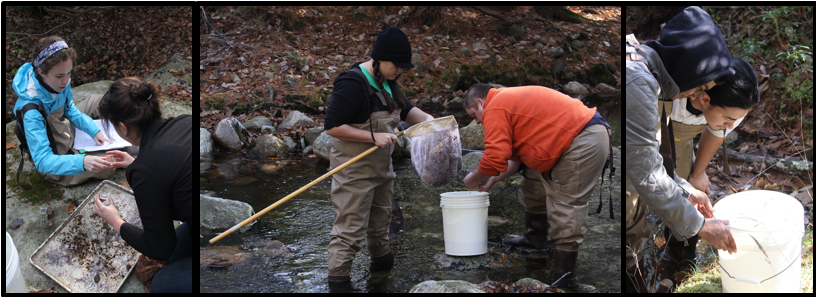
Environmental Studies students working in a stream with nets and buckets

Do you love the outdoors? Are you passionate about nature and wildlife? Would you like to make a difference for the ecosystems that make up our world? If so, an Environmental Studies A.S. degree might be for you!

With environmental issues continuing to grow in severity and importance, Environmental Studies graduates leave Ulster prepared for a field with a steadily expanding job market. Graduates can use their knowledge to help with any issue they’re passionate about, whether that’s food insecurity, climate change, pollution, wildlife endangerment and extinction, resource depletion, or anything else.

Reservoir surrounded by forest at sunset

Graduates have found jobs at the NYC Department of Environmental Protection, the NYS Department of Environmental Conservation, the Ulster County Department of Health, as well as at private companies and local municipalities. The demand for environmental expertise is very high in the Hudson River Valley and Catskills Watershed region, so this career path can be great for students who want to stay local.

In the program, students gain skills in and out of the classroom. Students have the opportunity to explore nature and get hands-on experience as part of their classes. The program includes comprehensive courses in biology, environmental science, mathematics, and chemistry, so students are prepared for a variety of careers in environmental and scientific fields. In addition to the program itself, students can join the SUNY Ulster Environmental Club, which has taken part in several exciting sustainability and restoration activities in the last few years.

Monarch butterfly pollinates a flower

Students can take part in studies relating to stream management, wetlands, forestry, invasive species, pollinators, and fisheries through a variety of field‐based internships. Environmental Studies students also have exclusive access to paid internships with the NYC DEP.

Program graduates who decide to begin working immediately after graduation are qualified for jobs as environmental technicians, laboratory technicians, wetland field technicians, and environmental trainees. For those who want to continue their education, the program prepares students for fields like environmental law and environmental engineering. The program is also a terrific foundation for students who choose to pursue careers in other science fields, such as biology. The program affords easy transfer to schools such as SUNY ESF, SUNY Plattsburgh, and SUNY New Paltz, as well as many private colleges.

Assorted vegetables in a pile

One recent graduate began a very meaningful project for the local community! Michael Burke, a 2018 program graduate, was awarded a 2017 Barnabas McHenry Hudson Valley Award from the Open Space Institute to work with the Rondout Valley Growers Association to address food insecurity in Ulster County. The culmination of his work was a forum on campus in which local organizations and the community were invited to discuss the issue of food insecurity and potential solutions.

Another alum, 2016 program graduate Alex Lemus, transferred to SUNY Albany to study biochemistry and molecular biology. He is now a graduate research assistant at SUNY Albany and is pursuing a doctorate. He has already published his first research article!

Whether your goal is to improve pollution policies, study renewable energy resources, or help wildlife in their natural habitats, an Environmental Studies degree can be the perfect place to start! Learn more about the program by contacting admissions@sunyulster.edu.

6 Study Tips for Adult Students

Adult student on campus holding binder

It can be hard to readjust to a studying mindset once you’re out of the habit for a few years, but with a few tips and some helpful resources, you’ll be studying effectively in no time!

Manage Your Time Wisely

Adult students tend to have more work and family obligations than the traditional student, and that can make it difficult to get classwork done. The solution? Plan ahead. Set aside a quiet time and place each day to catch up on your work, even if it’s just to study your notes and complete textbook readings. Start on your assignments as soon as you get them, just in case anything comes up closer to the due date.

Know Your Computer

If you aren’t confident in your computer abilities, then it’s time to learn to use one! Almost every class you take in college will require using a computer for studying and completing assignments, and online classes are, well, fully on a computer. Get familiar now. Learn how to use Microsoft Word, an internet browser, your course sites, and the Portal, at the very least.

Use a Variety of Resources

Remember that you have more than just your textbook if you need assistance. Many services and programs are available through the Macdonald DeWitt Library. Professors will often post extra information, links, and notes for studying on your class Blackboard site, so make sure you check course sites regularly. You can also take a look at some other great online resources we’ve curated for you.

Get Tips for Memorization

There are lots of different methods for learning and memorizing information, including using mnemonics, mapping, and more. Many suggest that physically writing down notes is an effective way to familiarize yourself with information, so don’t be afraid to use a notebook and pen, even if you’re trying to use your computer more often. Check out some of our other tips for boosting your memory skills.

Get Help if You Need It

Remember: there are special resources on campus if you need extra assistance! Visit the Writing Center and Math Center for help with English or math. Tutoring, study help, and other services are available through the Center for Academic Planning & Support (CAPS), formerly known as the Learning Center. If you need assistance with any course, don’t be afraid to reach out to caps@sunyulster.edu or stop by their offices in VAN 247. The staff and peer tutors in these departments are always happy to help!

Maintain a Balance

Don’t forget to take a breather once in a while! It’s easy to feel overwhelmed by your coursework and other responsibilities, which only makes studying that much harder. Take advantage of on and off campus opportunities to relax, and make sure you’re eating right and sleeping well. Keeping your mind sharp will do wonders for your grades!

Success By Design For Sharon Wasko

Sharon sitting at an outdoor picnic table with an open laptop that displays her website on the screen.

Sharon Wasko of Rosendale has taken off as a local web and graphic designer thanks to her time at SUNY Ulster learning web design skills. Recently the Blue Stone Press published an article about her success within the community. One of her professors published the print piece on his blog, you can read it here. Some of the classes she took include Graphic Design (Intro through III), Commercial Photography, and Web Design. She thanks her Web Design professor Dina Pearlman; for giving her the knowledge that has been instrumental in the launching of her website and career. Curious what this website looks like? Then give it a click!

SharonWasko.com

Logo with picture of glasses that states: Sharon Wasko Graphic Design
Logo from SharonWasko.com showcasing her love of teal and vintage ideas

It’s an online portfolio of her skills. Including but not limited to graphic & web design, photography, media layout, brand development and logo creation. In the Spring of 2018, she established her company Sharon Wasko Graphic Design, and created this site of her own. Now she has helped a few local companies to do the same. Since then, she’s gained a variety of colorful clients, mostly artists who have a professional passion that mirrors her own.

What’s She Up To Now?

While attending classes, Sharon holds a student aide position in the SUNY Ulster Marketing and Community Relations office. There she helps the webmaster to maintain, update, and add to the school’s main site, sunyulster.edu. She is also currently collaborating on an interactive site to display the school’s renovations. Capital projects, improvements to the school’s physical structures, have been followed and documented with photos. She is helping to create a site where all those improvements are fun and easy to view for all.

All those projects are just a side gig to her own thriving business as a freelance graphic designer. Her responsibilities and skills are ever-changing and evolving, as is natural with web based careers. Her already impressive portfolio is always growing.

A logo created by Sharon from her website

An Arts Education That Led To Web Design

Sharon has gotten her education in her own style. As a part of that she received her BFA before coming to our community college. Resulting in a degree from the College of New Jersey, formerly Trenton State College, with a concentration in painting and a minor in women’s and gender studies. She expressed that her time there differed greatly compared to a two year college. “It was a totally different experience, going to a residential 4-year school, but now there’s a more diverse group of students in my classes” said Sharon. SUNY Ulster’s community atmosphere provided her more freedom within her life. She has still managed to raise two young girls as she begins her business and continues to make it grow.

Another Student Success For The Books!

Among other students who have gone far with their time at SUNY Ulster. Sharon Wasko is now on the list. If you are interested in taking some of these courses, there is a degree program of classes. You can begin you associates degree in the field or just take a course or two, it’s up to you. Click here to learn more about this field and the classes offered.

How to Find Great Connections on LinkedIn

Two people shaking hands with LinkedIn logo over them

LinkedIn serves a special purpose in the world of social media. While sites like Facebook and Instagram primarily connect you with family and friends, LinkedIn is designed to connect you with employers, coworkers, professors, and other professionals in your field. It’s important to have a good mixture in your network, but how do you make that happen? Here’s a few easy ways to get started:

Have a Stand Out Profile

Naturally, one of the most effective ways to be seen by professionals who matter is to have a great profile. Add a professional picture, organize your education and work history, and add a brief summary and headline that showcases what your specialties are. Learn more about how to do that in our post on building a great LinkedIn profile.

Join Groups

… and we’re not talking about the one for your Dr. Who fanclub! Focus on groups with people who have similar education, employment, and career backgrounds to you. A great place to start is your college’s alumni page, since you are likely to find people you know who might have some expertise or job opportunities to share. You should also join ones specific to your niche. Are you a Hudson Valley entrepreneur? Find groups on entrepreneurship and Hudson Valley businesses. Or if you’re a recent Computer Science grad, you can focus on groups working in the same field you want to, like game development or network architecture.

Connect with Employers, Coworkers, Professors, and Students in Your Field

The foundation of your LinkedIn connections should be people you’ve worked with who like and respect you, and who you like and respect in turn. These are the people who will give you positive reviews and interactions, useful feedback, and can alert you (maybe even recommend you!) for employment and engagement opportunities in the future. You can find some of your professors and fellow students by checking out the SUNY Ulster page.

Connect with Other Professionals in Your Field

This one can be a little harder, but it’s certainly not impossible! If you don’t know a professional, you may have to prove to them why they should connect with you. For someone you met at a recent conference or hiring event, you might want to acknowledge where you met and what you discussed. If the person is someone you’ve never interacted with before, but would like to, you might tell them what you enjoyed about a book they published or that you watched/attended a talk they gave. If you have mutual connections with someone, you could ask your mutual to introduce the two of you.

Now Engage!

You’ve got your connections. Great! Now comes the point of actually having them: interaction. If you’ve just connected with an interesting professional, make sure you develop a good relationship with them. Do they post useful information on their status? Be sure to like and comment if you have something to add to the conversation. Similarly, when you have something of value to share or ask, don’t hesitate to share it as a post of your own. Just make sure you keep it professional and relevant to your career!

Get Started Today

By following even a few of these tips, you should see an increase in your accepted connections and have more interaction with the ones you already have! As always, be sure to follow our LinkedIn page. If you’re not sure whether you need a LinkedIn profile or not, check out one of our blog posts that will help you decide.

Common Grammar Mistakes

Scrabble tiles on a scrabble board

We’re all guilty of making errors from time to time. Some mistakes are more typical than others and can happen to the best of us, even those of us who go to college. This article is a quick run down of some common grammar mistakes that happen pretty often according to both the web and my personal experience; give it a gander.

Type blocks for an old printing press, each of them depicting a different letter. Grammar mistakes were far moer common in the hay day of these tools.
Image by Free-Photos from Pixabay

Let’s talk about what it is first.

Let’s go over what the term grammar means, according to the Cambridge Dictionary. It’s a noun that means “the study or use of the rules about how words change their form and combine with other words to express meaning”. Put simply, it means the correct way to use words in speech. It’s not a simple concept, the English language can be tricky as I’m sure you know. Frequently people who speak English as their first and only language are known to fumble their words. Getting to know a few frequently occuring misused terms could save you from your own fumble some day. In both speech and writing, correct use can give you more opportunities and better impressions.

A close up of a page from a dictionary

1. An Affect vs. The Effect

The word Affect is almost always used as a verb (an action word) while the word Effect is a noun (a person, place, or thing) and means the result. To put it another way, the Effect a.k.a. consequence or outcome is what happened because something was Affected, a.k.a. impacted, influenced or changed. A good example of this from Writer’s Digest uses someone who likes to be a pirate. “Acting like a pirate has had a negative effect on my social life”. Where effect is a noun. Or “the eye-patch affected my vision” where affect is a verb because it’s doing something. It may seem confusing at first, since one letter makes all that difference and they are sort of related as words. However, it’s not as difficult as you might think.

2. Than vs. Then

Probably the most typical of common grammar mistakes to make, this one is an easy fix. The trouble most people have knowing when to use then or than is remembering which is which. Avoid this grammar faux pas by remembering that than is a comparison and then is talking about time.

An example would be when you prefer one fruit over another, let’s say apples versus oranges. You like apples more than oranges, or you may prefer apples less than oranges. When you compare something to another thing, including people or places, you use than.

For the latter, an example would be going over a schedule. Let’s say this Saturday you have a family fun day planned; you’ll go to the beach, get some lunch, and then go to the circus. We’re discussing the timetable of events and when things are happening so we use then.

A person holds a book by the edge of one cover, making the other cover and the pages fall down in front of the camera.
Photo by Nicole Honeywill on Unsplash

3. Is It To or Too?

This is a fierce competitor for most common mistake, since we use these words so often. Let’s make it easy and get it right from now on, more knowledge equals less confusion. When we only use one O we are talking about movement of some kind. Whether it be moving through time, space, or the matrix. For example: you go to the grocery store, and when you’re done, you go back to your home.

The double O version is exclusively used for additional information and should, at all times, be replacable with as well. It is usually placed at the end of a sentence or list. For example, if you’re writing a grocery list you may decide you need: cherries, ketchup, bread, and eggs too. You can tell it’s correct because if I had written -eggs as well– it still works.

4. The Rest of Those Pesky Homophones

A picture breaking down one of the most common grammar mistakes, the difference between they're, their, and there.
Courtesy of Reddit.com

A homophone is a word that sounds like another word but has a different meaning. Number one of this post is considered a homophone, and I bet you didn’t even realize!

One of the ones we see most frequently is they’re, their, and there. If you glue this helpful infographic someone made into your head, you should do fine. To reiterate what it says: they’re means they are, there is talking about a location, and their is reffering to a person

In the same ballpark are the words your and you’re. The rules above apply to this so like I said before, glue that picture to your brain and this one is easy. You’re is a contraction of the words you are, saying someone is known a certain way or is doing an action of some kind. “You’re doing a great job at this!” is an example of this contraction. Your refers to a possession or belonging, for example: “is that your car?”. A good way to double check this one is to ask yourself if you are would make also sense, if it wouldn’t, use the other form of the word.

A red pen sits on top of a graded paper, where all common grammar mistakes are marked up.
Image by Anne Karakash from Pixabay

Don’t Let Common Grammar Mistakes Get You Down

Take control of the way you communicate by learning the ins and outs of the English language, that sneaky trickster. These mistakes are easy to make and finagle their way into everyday life. Instead of feeling bad about it, we’re getting ahead; that’s the spirit!

The Secret To An Awesome Website: Design Your Dreams With UI & UX

Hands reach over a desk that is scattered with markers, pens, papers, and a smart phone that lay on front of a computer screen. The papers show scribbled designs of buttons and maps.

Everything we use is designed by someone. The clothes you wear, the car you drive, your coffeemaker, and all the websites you visit. The practice of designing for different things goes by various names. However, when it comes to a computer website design, we use the terms UI & UX, meaning User Interface & User Experience. Whether or not this sounds familiar to you, you more than likely encounter it everyday. I’m going to explain both of them quite briefly as it’s a complex and exciting thing that you may just need to take a whole class in to fully understand, but more on that later.

UX – User Experience

A smart phone, half of which only shows outlines and the other half of which shows buttons, image, and colors. UI UX
Source: http://netaq.ae E solution blog.

The two jobs go hand in hand but are two different things. One relies on the other to function properly. User Experience usually comes first and deals with mechanics of a webiste, how it functions and feels to a user. It is a structure or foundation for the site that should optimize how a person feels about a company. A website with a good UX design should feel smooth and easy to interact with. A good designer takes into account how a user thinks and architects information in a way that is easy to find. On the other hand a website with bad UX is: hard to use, confusing to navigate, and clunky feeling in general. If you’re intrigued, here’s a preview of a cool book all about User Experience by Jesse James Garrett.

UI – User Interface

User Interface design is making the aesthetic elements of that website. UI designers manage everything visual in regard to appearance and how that affects the user’s feel for the site. Meaning colors, theme design, the look of the menus and can include logos, buttons, scrolling and other interactive elements. It’s an important part of the job that can influence a user, usually a customer, and what their opinion is of that brand that’s being represented by the webite. If you’re looking for more info on that check out this full explanation of the UI, UX, and the difference between them by Emil Lamprech.

UX and UI design are specialized trades that can involve marketing, computer science, research, some sociology and analytical skills. It’s knowledge that few have; and those who do are able to apply it to all kinds of situations, and clients.

An arm holds up a piece of paper with dsigns for an iPhone blueprint
Image by William Iven from Pixabay

Why It Matters

Good user experience and design can impact an organization in so many ways. It’s beneficial for the obvious reasons; people spend more time (and maybe money) on your site when it is alluring to see and fun to use. Plus more people While also being beneficial in the long-term, especially for certain feilds such as education. Studies have shown that learning institutions who utilize modern user experience design strategies can better support current student learning styles. A website or application should be a good reflection on a company that makes them stronger. Having a good UX and UI design is important, if not integral, in making a company shine amongst all the competition out there. To increase sales and growth continually is no easy feat, and with these skills it’s quite literally made into a science.

Alright, now it’s later.

“I’m In!” You Say, “Teach Me More!”

Gladly. Your complete guide to UI & UX is right here. SUNY Ulster is holding a class all about this speciallized knowledge. It’ll take place at our Stone Ridge campus for the Fall 2019 semester. It’s an elective for the web development degree program, but anyone who’s qualified with the basics can take it.

Serve and Protect Your Community with the Criminal Justice A.A.S.

Police Academy graduate receives diploma

If you’re interested in a rewarding career where you can make a real difference in the world, consider earning a Criminal Justice A.A.S.! This program differs from the traditional A.S. program, as it is designed for graduates to go directly into police and security work. The degree is often combined with a 30-credit Police Basic Training program.

According to the U.S. Department of Labor, employment of police and detectives is expected to increase by 7% between 2016 and 2026. The A.A.S. Criminal Justice degree prepares students for this with the knowledge, skills, and abilities necessary for entry-level positions as police officers, corrections and community supervisors, and security guards in the private sector. This program is also ideal for corrections or police professionals already working in their chosen fields who are looking to earn a degree for self-improvement and advancement.

More than 80% of graduates who also completed the Police Basic Training program are currently employed as police or corrections professionals. Completion of both programs leads toward New York State municipal police certification. The combined programs provide an ideal situation where students graduate already prepared for employment, saving their communities significant time and community resources for training.

Many Criminal Justice A.A.S. graduates do exceedingly well as developing professionals and are now in leadership positions. Graduates perform meaningful work in their community while also earning attractive salaries and benefits. Potential earnings in New York State average $78,930 at the 50% mark, which increases if employment is found with state or federal entities.

Sophie Epstein, a recent graduate, says, “I loved the Criminal Justice program at SUNY Ulster. I strongly feel that the program helped to better prepare me for success in both Police Basic Training and my career in law enforcement! The professors teach you so much more than what is in the textbooks – they teach based on their experiences in law enforcement, which made class very enjoyable! I would recommend the program to anyone who is considering entering the law enforcement field, or anyone who is looking to learn more about the criminal justice system!”

5 Tips for Managing Your Finances While in College

Dollar bills sticking out of soil

College is expensive. Even with great scholarships and programs like Excelsior, College Scholars, and federal aid, you still have to pay for housing, food, transportation, textbooks, and more. How can you make sure that you can afford it? Learn about managing finances! Here’s how:

Figure Out Your Budget

Take a realistic look at all your expenses. If this is your second year of college, figure out how much you spent last year, and plan to need at least as much this year, if not a little more. If you haven’t started college yet, just figure out your current budget and research common costs for college for others with your major/living situation. Don’t hesitate to overbudget; it’s better to have too much than too little.

… And Stick to It!

If you can’t pay for it and it’s not in the budget, don’t buy it! Things like new gadgets and electronics, clothes, and getting food and drinks at restaurants should be put on the back burner at this time. Buy used and dependable electronics on eBay, find clothing and room decor at thrift stores, learn to cook, and make your own coffee. These simple changes can save you a lot of money in the long run.

Plan to Save

If you expect to pay out of pocket for tuition at a four year school, start saving now. Every bit you set aside will lower the cost of the loan you have to take out, be it for tuition, housing, or something else. Check out our tips for saving money to get started! Even if you don’t have something you need to save for anyway, try to set aside a little bit as an emergency fund. If you don’t have emergency money and you find yourself in financial trouble while at SUNY Ulster, contact the SUNY Ulster Foundation about Lights for Learning.

Pay Attention to Your Credit Card

Credit cards are usually good. Some offer great rewards programs, and it’s nice not to have to carry a bunch of loose change around all the time. Where you may run into trouble is the “credit” part; just because your card has a super high limit doesn’t mean you should hit it! You should use your credit card just like you would a debit card: be careful where you use it, and don’t spend more than you have available in your bank account. You should be paying off your bill in FULL each month to avoid charges and make the most of your credit card benefits. Doing so will also earn you an excellent credit score for when you actually need to take out a loan or apply for a new apartment.

Manage Your Debt

This is something you want to avoid if it all possible, but you may have to take out a loan, or you may have already accrued some credit card debt. How should you tackle it? It’s recommended that you pay off at least your interest each month, so you prevent unnecessary compounding. Avoid debt by getting scholarships; there’s one for almost everything you could need while a student! Check out SUNY Ulster scholarships whether you’re a new, current, or graduating student, and contact the SUNY Ulster Foundation in Clinton 203 if you need help or have questions!

It can be hard to establish good financial habits, especially if you’re not used to careful budgeting. With a little bit of effort and practice, however, you can achieve all your financial goals and come out ahead!

Choosing The Right Classes For Your Future.

A bright red apple sits atop a stack of three hard cover books, we cannot see their titles or covers. This display sits atop a table in front of a smoky grey background.

Some people dive into college with set intentions, knowing exactly what they will choose and graduate with, and that’s great! Then there’s the rest of us. It can be hard to fill up your semester’s class schedule. Especially when you aren’t sure where your time and energy would best be spent.

The big idea is to go to college and get a degree. That will give your career (and income) the kick start or boost that you want, right? That initiative alone is all you need to get started. The rest is figuring out what it is you want to study. Then finding a way to make it happen. As they say, where there’s a will there’s a way!

Students with undeclared majors are more common than you might think. The amount of choices can be overwhelming. Courses are often offered on hundreds of different subjects with varying levels of expertise. Some classes are reserved for specific students while others require more courses to be taken first. Navigating the sea of learning can be daunting!

A black and white image of someone's upper abdomen in a sweatshirt as they hold up a large piece of paper over their face depicting a large white question mark.

A study on the “Developmental Disconnect in Choosing a Major” states that an estimated 20 to 50 % of students enter college as “undecided” and an estimated 75 % of students change their major at least once before graduation (Gordon, 1995). So don’t worry, you’re definitely not alone. Turns out a lot of people get frustrated when spinning that big wheel of life. Fortunately, reality doesn’t have to play out like a game show and we have the power to choose the right courses to lead to ultimate success.

It’s completely okay to start without knowing where to begin, most people do!

A very generic picture of a stack of five thick textbooks on a white background

When first starting out, make sure to take some general education (often called “gen ed” on campuses) credits. Every student is required to take these courses regardless of major. They consist of basic knowledge stuff any collegian should know like psychology, algebra, history, etc. It can be a win-win situation; getting these classes out of the way will free up time later on for the good stuff. Not to mention there is potential to fall in love with an area of research.

An extra literature or writing class is always helpful to have under your belt. These skills are used in every class and you’ll want to hone them early on. While signing up for those general classes, be sure to review the college catalog and pick a few courses that seem fun or interesting to take. Once you start those and learn more about them from a professor, you may have found your major!

Background: A man stands in front of a wall almost covered in various pieces of visual art. He seems to be lecturing as he holds his hands in to his chest as if ready to throw them open, next to him appears to be a television. Foreground: Students sit with their head faced away from the camera, watching the man talk, we see the back of their heads.
courtesy of: 祝 鹤槐

An uncommon resource that not everyone thinks of is the professor of the class you might register for. You could always reach out to them and ask any questions you may have that an adviser can’t answer. They are typically happy to help and tend to respond pretty quickly in my experience.

It’s time to plan ahead!

Planning a semester schedule for college classes can be a tricky task. Some people prefer to have all their classes back to back in one or two days a week to coincide with other nonacademic schedules. Some prefer to have only a class or two every day to spread out the work load and study time. As long as you don’t sign up for courses that overlap or occur at the same time, you should be fine. Most colleges have advisers that would make sure that a scheduling faux pas wouldn’t happen anyway. If you have room in your schedule throw in some bonus microcredentials. Make sure to consider factors like distance from your house and your method of transportation. Schedules can be changed in the first few weeks of classes, but planning ahead, so that the first schedule you make will be a good fit, is important and saves a lot of undue hassle.

A weekly planner lays open in a table, the book lays atop a sheer piece of toole next to a scented wax melter and a handful of pens and markers. The book is littered with small posted notes and drawn on with a highlighter over all dates. The right page underneath the weekend says in bold "be happy and smile"
Photo by Bich Tran from Pexels

A good way to make sure you have the most options and opportunities available to you is to register as early as you can. More classes will be presented with available seats for students like you!

A woman stands with her hands held out, throwing glitter at the camera. She holds her head up high and wears a large smile, a graduation cap, and what appears to be a doctors jacket.

Preparing for College as an Adult Student

Adult Student on Computer

If you’re an adult going to college this semester, congratulations! You’ve already taken the first steps toward your future. Now it’s time to get ready. Whether you’re returning to college after a few (or many) years out of academic life or are beginning your college journey for the first time, there are a lot of things to take into consideration when starting. Here’s how to prepare yourself!

Map Your Degree/Certificate Program

Want to stay on track? Even when you know exactly what you’re going for, unexpected things can pop up that make it hard to get all the credits you need. Make a tentative schedule now, before you start, of exactly what courses you need to take and what semester you will take them, based on how many you would like to take per semester and allowing for prerequisites and fall or spring-only classes. If you need help with this, talk to your academic advisor!

Make a List of What You Need to Buy

No matter what your major is, you will need a few things you probably haven’t bought or budgeted for in a while: notebooks or notepaper, pens, pencils, your textbooks (find out which ones you need from your syllabus or by going to SUNY Ulster’s bookstore), a pack to carry everything in, and, if possible, a personal computer or laptop. You may also want to get some hand sanitizer, food for lunches or dinners, and other personal items to take with you. Depending on your classes, you may also need things like specific calculators, special software, tools, or other major-specific supplies. Refer to your syllabus and professor for the specifics of each class!

Prepare a Study Space and Time

As an adult student, you often have responsibilities at work and with your family beyond what a college student straight out of high school would, like a full-time job, children, or aging parents. This makes it all the more important that you set aside a time and place now where you will have as few distractions as possible for studying and writing. While this isn’t foolproof, having a typical schedule and room/cafe/library where you can go get work done will help you stay on track in classes. You can get creative as well, like sitting around the table with your children and doing your homework while they do theirs (provided they aren’t prone to getting distracted).

Plan Finances and Make a Budget

College costs a lot; in addition to your tuition and the items mentioned above, you’ll need to have housing, food, and transportation. If you have children, you may need to pay for childcare. On top of all the additional expenses, you may have less money coming in if you aren’t working as much. Set aside emergency money for things like car and house repairs, and plan out your monthly budget. To help with costs, don’t hesitate to reach out to the Ulster Community College Foundation. They can help you find scholarships that will help!

Get in the Mindset to Learn and Have Fun!

You can do any number of things to physically set up your new college life, but if you have a negative attitude going in, you’ll have a much harder time. Get excited about learning new things, meeting new people, and starting your path to a new career! College has a lot to offer, through intellectual pursuits and new friends to make (yes, you will find plenty of other adult students to connect with and support). It may take a bit to get back into the swing of things at college, but that’s okay. You’ve got this!