Noteworthy Keynote Address by Dr. Ray Raymond
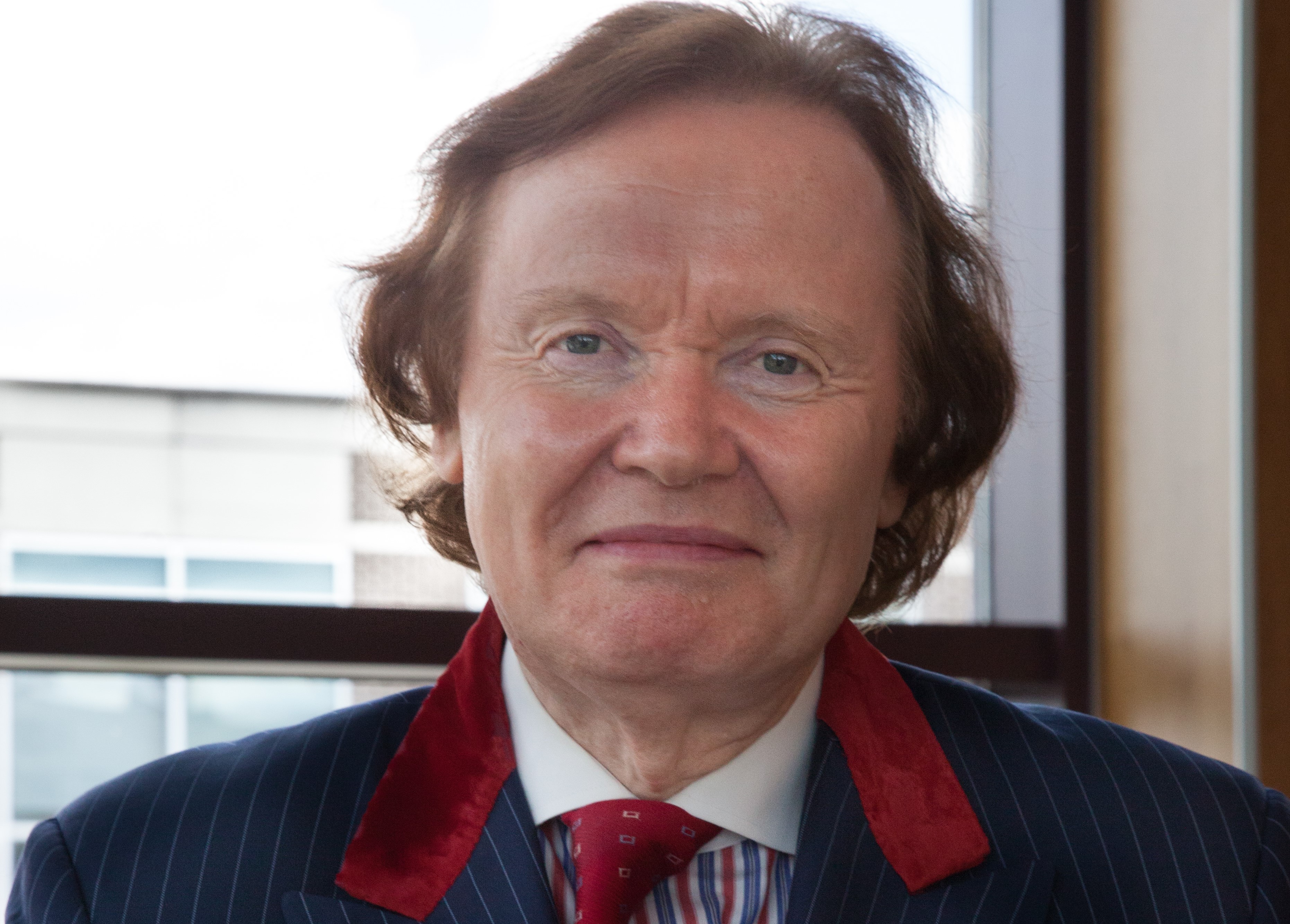
Portrait photograph of Raymond Ray

Dr. Ray Raymond has been a well-known professor at SUNY Ulster since 2005. He teaches government, politics, international relations, and American history. In addition, he is an adjunct professor of comparative politics and international relations at the US Military Academy. He is known for riveting lectures complete with an eloquent English air about them.

Teaching students at SUNY Ulster is one of many commitments Dr. Raymond is regularly engaged in. He is also a regular visiting lecturer at the US Air Force Academy and Fellow of the Pell Center for International Relations and Public Policy. He is also the Director of the Katt Institute for Constitutional Studies. His efforts have been recognized numerous times, including by the Times Herald Record Online.

An Address of Importance

On Saturday, April 13, Dr. Raymond gave the keynote address at the World Affairs Council of the Hudson Valley’s 6th annual student conference. He illuminated the diffusion of power in the international system since the turn of the century and suggested that that US international leadership has to be collaborative, not unilateral.

The outline of an eagle is filled with red and white stripes and a blue pattern containing white stars

Dr. Raymond suggested that the US does not have the power it once did. He also defended the liberal rules-based world order and recommended reforms in the US intelligence process to ensure that we avoid blind spots, in hopes that this will improve our understanding of the new strategic political environment.

Curious about this man and what the feel of his lectures are? Worry not, because he has contributed mini-lectures to AcademicMinute.org which are broadcast on WAMC Public radio from Albany. His broadcasts set out his views on US foreign policy and explain some key points of commitment and co-dependence between the United States and the United Kingdom. Listen to one of his broadcasts below.

The U.K.’s and The U.S.’s Special Relationship

Dr. Raymond’s Background

So where does our noteworthy professor get his skills from?
First, he is a former British diplomat who held a Post-Doctoral Fellowship at Yale University in American History. Secondly, before coming to SUNY Ulster, Dr. Raymond spent twenty years in Her Majesty’s Diplomatic Service as a specialist on the United States. During that time, he analyzed US government and politics, US defense and national security issues as well US trade policy. Between 1997 and 2005, he advised then British Prime Minister Tony Blair on US politics as well as secondary and higher education. He also served as policy adviser and speech writer for High Royal Highness, The Duke of York. In recognition of his diplomatic work, he was honored by Her Majesty Queen Elizabeth II with the Order of the British Empire.

A flag is bisected diagonally, the upper half depicting a partial american flag and the lower half depicting a aprtial uk flag

 As political officer of the British Consulate General, New York he played an integral role in the UK’s response to the terrorist attacks of September 11th, 2001 when 77 British nationals were killed in the World Trade Center. This included organizing events and giving speeches conveying the message to the United States that the United Kingdom would support it fully in the war on terror. One of them was at SUNY Ulster when Dr. Raymond gave the Howard St. John Lecture in late September 2001.

Dr. Raymond’s research  has been published by The Atlantic Council and the National Interest. Currently, Dr. Raymond is working on a new book which will be published late next year by the US Naval Institute Press. It is about five of West Point’s most courageous young officers and their heroic service in Iraq and Afghanistan.  

Political Influence Aside

Dr. Raymond’s top priority has always remained his students, however.  In addition to teaching, he has mentored many SUNY Ulster students long after they graduated, helping them win places and often scholarships at the Fletcher School of Law and Diplomacy at Tufts University, Columbia University, the University of Pennsylvania, Cornell University, and New York University among others.

This influential man also has a high satisfaction rating from his students. He has multiple inspiring reviews on sites such as RateMyProfessors.com. One anonymous reviewer, a political science student, left a rating of five out of five, saying, “Dr. Raymond always remained very professional, and he is thorough. He will explain it a second or third time if needed and always responds to my emails in a timely manner… I personally enjoyed learning from him. A stand up man/professional if there ever was one.”

His Method

A student in cap and gown puts his thumb up with a wide smile

Dr. Raymond says he gets students into history by making it stimulating. He stresses the importance and relevance of political history in ways that ensure students will be able to make an argument using facts long after they’ve forgotten details of the lesson. “If you’re not excited about it yourself, you can’t expect students to be excited,” he commented.

Why You Should Be Using LinkedIn

Cartoon heads connecting to a LinkedIn logo

You’re probably familiar with major social networking sites like Instagram, Twitter, Snapchat, and Facebook. One other platform that you might hear about is LinkedIn. LinkedIn is possibly the most valuable of all the social networking sites when used correctly, as it focuses on something that young adults need when getting a job: connections in their industry. Whether you’re just beginning your college journey or you’re graduating this semester, you should join LinkedIn right away! Here’s just a few reasons why:

Connect with Professionals in Your Field

You may enjoy checking your friends’ stories on Instagram or catching up with far-away family members on Facebook, but in most cases that won’t be too helpful when getting jobs after graduation. That’s where LinkedIn comes in. LinkedIn works similarly to these “just for fun” platforms in its ability to connect, but while it could be awkward to add your boss on Facebook, on LinkedIn, that’s exactly what you SHOULD do. You see, LinkedIn gives you the chance to connect with people who can help you throughout your career, be it old or current bosses and coworkers, professors you established good relationships with, or other professionals you met through networking events in person or online. These are all people you can count on when applying for jobs, and in many cases their shared knowledge pool can help you while you’re employed, too.

Find Jobs or Internships (and Apply for Them!)

LinkedIn has a space in its site just for job seekers. In this area, you can find, view, and even apply for jobs posted on the site. It works like Indeed, Glassdoor, Monster, or any one of the other job seeking sites out there, as you can search for a variety of jobs based on profession and area. If you want jobs to come to you, you can always turn on the “Let Recruiters Know You’re Open” feature.

Get Extra Info for an Interview

As every good job applicant knows, you should do some background research on an organization and your potential boss before the interview. LinkedIn gives the perfect opportunity for that! Find out more about your interviewer or future employer by visiting their LinkedIn page. LinkedIn will alert a person when you view their profile (which isn’t necessarily a bad thing, they often take it as a sign you’re doing your research), but if that makes you nervous, you can always turn on Private Mode.

Keep in Touch with Your Alma Mater

After graduation, it’s easy to get caught up in everyday working life, but it’s good to see what’s going on at your old college so you don’t miss out on job fairs, networking events, and other opportunities geared toward alumni. LinkedIn will help you connect with your college as well as other alumni and students, so you can stay updated with what’s going on and meet others in your field with the same educational background. That’s important, because you never know when you could find a great job just because you went to the same college. When you make an account or update your current one, make sure you follow SUNY Ulster!