Registration is Open for COIL Summer Institute – Join Us!

SUNY Ulster President, Alan Roberts with visiting students from Fatec Americana in Mexico.

Join an International Community of Learners to Explore Innovative Global Business Models at SUNY Ulster’s COIL Summer Institute!

Collaborate Online: June 5 – July 3
+
Learn Face to Face: July 3 – July 14

What is COIL Summer Institute?

SUNY Ulster is offering students and community members the unique opportunity to study both online and on campus in their COIL International Summer Institute – a blended course on innovative global business models. The course entitled, Special Topics in Entrepreneurship – BUS 280 – will run online from June 5th to July 3rd and then on the Stone Ridge Campus from July 3rd to July 14th.

It can be taken for credit or noncredit, and is a blended course in which SUNY Ulster students study together with students from

  • Amsterdam University of Applied Sciences
  • Fatec Americana
  • Universidad La Salle Noroeste ULSA

to explore the entrepreneurial mindset, skills, and techniques required for the development of new and disruptive business models for a global economy.

Study the growing clean energy, sustainability, and high tech industries of the Hudson Valley as well as those from The Netherlands, Mexico and Brazil. Learn about the importance of social entrepreneurship to all businesses in the 21st century.

Work Online: June 5 – July 3

Explore the intercultural competency, business terminology, and background discussions of the entrepreneurial mindset and disruptive business models of thriving and developing businesses such as Uber, Airbnb or MercyVirtual (a telemedicine firm). Learn about the cultural impact of these businesses and the technology that drives these businesses without borders.

Learn Face-to-Face: July 3 – 14

Students from the International colleges will be traveling to SUNY Ulster to join in face-to-face learning:

  • Visit and shadow local Hudson Valley entrepreneurs to learn their stories, understand their entrepreneurial mindsets and business models.
  • Participate in classes and group work focused on international marketing and cross cultural mindset.
  • Take trips to local maker spaces, tech meet-ups and more.
  • Collaborate in cross-cultural teams in a Biz Model Challenge to develop new business ideas/models.
  • Hear speakers from local businesses:
    • Integral Building & Design – Bringing new products, solar, and passive house designs to fruition for efficiency, health and safety
    • Sustainable Hudson Valley – Holistic approach to sustainability from a community standpoint
    • Evolve Media & HV Tech Meet Up – Community of tech professionals breaking down barriers for synergistic connections
    • Hudson River Maritime Museum – Creating community-based business lines unusual for a museum for growth to 5 million dollar organization
    • Fala Technologies – Tool & die company developing innovative partnerships for a manufacturing community that share clients
    • Applestone Meat

Costs:

For Local Students

The cost for this 3 credit course, Special Topics in Entrepreneurship is $794.50 for local students. It includes all tuition, fees, food during the class, a welcome lunch, a farewell dinner celebration, and a SUNY Ulster t-shirt.

For International Students: $2,850

Lodging is single occupancy, food, activities around the Hudson Valley, transportation including to and from the airport.

For more information:

Mindy Kole
Assistant Professor of Business
Director, Darlene L. Pfeiffer Center for Entrepreneurial Studies
kolem@sunyulster.edu

Patrice Macauley
Program Coordinator, Continuing & Professional Education
macauleyp@sunyulster.edu

To Register:

Contact Student Accounts at (845) 687-5099.

What’s After Ulster? How to Find a Transfer College

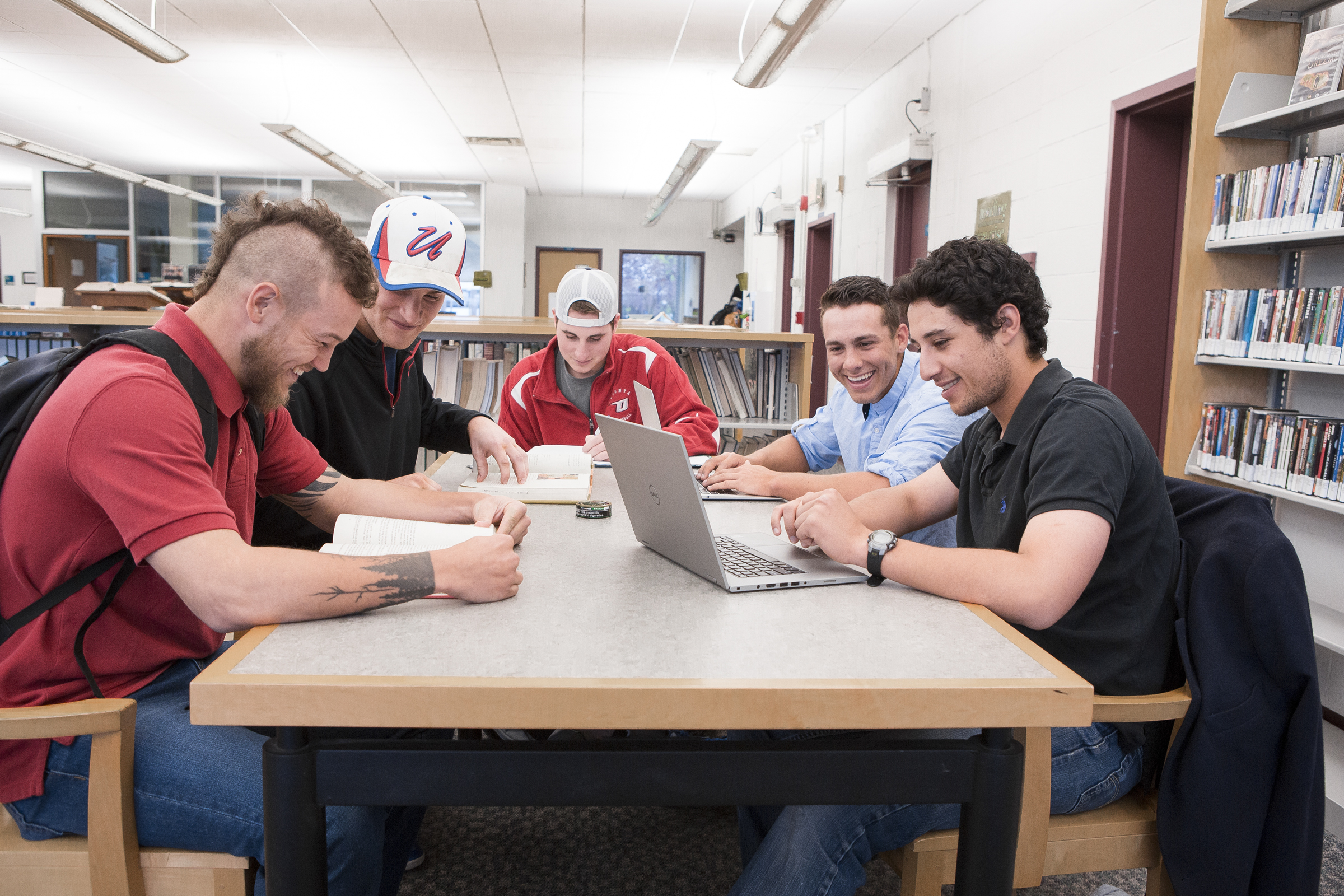
Group of students in cafeteria leaning over a laptop

It’s nearing springtime again, and, for some of you, that means graduation. But then what? If you’re in a program that requires a bachelor’s or higher for employment, it means finding another college. How do you find that college? How do you know if it’s the right one? Even if you have a dream college you know you want to go to, how do you find back-up options? Hopefully, this post will be helpful in getting you started.

Find Out What’s Available

The best way to start is by doing a Google search of colleges good for your desired major. You probably already have a decent idea of what size and location you would like, so just those three parameters can narrow your options down considerably. Once you have a list, talk to people who know the schools about their experiences. They can be friends, family, and advisors or professors from both Ulster and the schools you’re looking at. Ask people you might not think to ask, like the school’s alumni, employers in your chosen field, and people who transferred out of the school (that’s a big one, find out why they did). Remember not to depend on one particular person’s testimony too much when making decisions though, since in the end the choice is about you and your needs.

The Big Questions

There’s many important things to keep in mind when finding a school and applying, and many are the same as what you already discovered at Ulster: How much will it cost? How much financial aid will you get? Are there scholarships? If you’re a commuter, how much does a parking permit cost? How will your classes from Ulster transfer into the other school’s program? Are the professors good? What are the classes like? How difficult is it to get in? How much will it cost just to apply? By the time you get through them all, you will probably want to throw the whole idea of transferring out the window, but you don’t have to! Colleges will be more than happy to answer all of your questions and assist you with the process. Often they have brochures and tours that will help answer most, if not all, of these questions. If some branches of the college’s admissions department are less helpful than others, don’t be afraid to push for information. It’s your money and your time that will be on the line; you deserve answers.

Does the School Really Fit?

You’ve done your research. You know how good the school is for your major, you’ve talked to a few people who know the school, maybe you’ve even gone and talked to some admissions people. Now here comes a really important part: finding out if the school suits YOU. It doesn’t matter if you’re taking all online classes, going as a commuter, or living on campus, you need to know more about the school itself. Visit! Sometimes, a school will just feel right (or very not). Colleges offer guided tours around campus, both one-on-one and in a group. Many schools offer a shadow program, where you can follow a student around for a day and attend classes with them. This is obviously the ideal situation, as it will give you a real idea of what classes, students, and professors are like at your school. A school can sound great on paper and in pictures, but when you’re actually there, you might find that the “great professors” might be very boring and stuffy, the “83,000 square foot library” could have an exceptionally small amount of books, and the “welcoming commuter lounge” could be a barren corner of the basement that frequently gets used for testing. Know before you commit!

Crunch Time! The College Application

Once you’ve found a few schools you know you’ll be happy attending, it’s time to start applying! Fun fact: did you know there’s an easy, free application that you use as an Ulster graduate when applying to any of the SUNY schools? If a SUNY school is on your list to apply to, that will prove an excellent savings. Don’t forget to apply to several; even if it seems expensive in the moment. Not only could you not be accepted to your favorite one, in addition, after accepting an offer from one, you could still find out that it’s the wrong choice during the enrollment stage. Leave options for yourself.

Remember the Value of Your Decision

Lastly, my personal tip as a transfer student may seem a bit obvious, but I’ll tell it anyway. Try your best to find and go for a place you truly want to attend. In the end, it’s years of your life that you can’t get back. And college should be so much more than just getting that piece of paper at graduation; during your junior year, senior year, and beyond, it’s the opportunities through internships, travel, networking with professors and students, and just plain old friendships that make college great. These things can change the course of your life. Do your best to make a decision that counts.

You’re Not Alone!

No matter what stage of the transferring process you’re in, don’t forget that we have a SUNY Ulster Transfer Office devoted to helping you succeed! Contact Kate Smith at smithk@sunyulster.edu for more information, and stop by her office in Vanderlyn 128C to get help with any transfer problems or concerns you may be having.


Fun Facts About Summer Sessions

Student drawing tree outside

Even though it’s still chilly outside, it’s already time to start thinking about the summer! That’s right, registration is now open for Summer Sessions here at SUNY Ulster, so here’s some interesting facts about these mini-semesters that can help you decide if they might be a good fit for you.

It’s Not Like Summer School in 10th Grade

Let’s dispel this common misconception right away, because you might be thinking, “Summer classes? But I passed all my courses!” The truth is, taking summer classes in college often has very little to do with how well you did in past semesters. Granted, it’s a great way to catch up if you didn’t do well in a past class and want to improve your grade, but most people taking summer courses do it for other reasons. In fact, many students (myself included) have had difficulties with scheduling at one point or another and will need a few extra credits to graduate on time. A summer class or two can make all the difference when it comes to your graduation date, whether that means graduating on time or a semester or two early, and thus affects getting into a 4-year school or joining the workforce. Of course, there are many other great reasons to take summer classes too, such as…

You Can Get a Head Start on College

If you’ve just finished high school and can’t wait to start your college career, summer sessions can be a fantastic way to begin. You have a variety of prerequisites to choose from, and you can try online or in class to see what styles work well for you. By starting early, you’ll have an advantage over all the other freshmen who show up that fall and have yet to adjust to new types of classes, the heavier workload, and meeting new friends and professors.

There’s Lots of Class Options

Not only do you have a number of core classes to choose from, there’s also prerequisites and major courses for many fields being offered. This summer, there’s over 80 different options for classes and times available, so there’s a decent chance you will find something you need at a time that works for you. Not only that, there’s an almost equal number of online and on-campus classes, one of the few times this happens. Take advantage of it!

Not An Ulster Student? No Problem!

Many colleges (particularly other SUNY schools) recommend taking summer classes at a community college to accumulate credits at a good price for when you return to your own school in the fall. So if you’re back in the area for summer, or even halfway across the country with access to the internet, you can take advantage of Ulster’s Summer Sessions. Just be in contact with your school to make sure all requirements will be fulfilled first!

Weather (Shouldn’t) Be An Issue

If you prefer in-class courses but often have travel difficulties, summer classes can be a relaxing change. Just like the rest of the year, there are classes in Stone Ridge and at the KCSU, but you really shouldn’t have to worry about driving in snowstorms or waiting for the bus in sub-zero weather to get to them. Additionally, many students say they enjoy the energy in summer classes, since the weather is brighter and classes tend to be smaller, and classmates and professors tend to spend more time together and get to know each other better.

It Keeps You in the Studying Mindset

Okay, this could be either good or bad, but if you’re like most people, that break from homework in the summer makes it all the harder to go back to school in the fall. Summer sessions minimize that and keep you in the class-attending, homework-accomplishing mood we all have to be in to finally graduate. Summer sessions can be difficult, due to the condensed time frame they often work in, as they typically run for 8 weeks instead of 15. This can be a benefit, however, since it keeps you in the mindset needed to get work done and can help you get through a dull course or prerequisite quickly, so that next fall you can start taking more fun classes!

Look at the full list of classes offered this summer, with their session dates and online/in-class options, here. If you find a good fit, register today!


Men’s Basketball Team Excels in the 2016-17 Season

Basketball player making shot

The SUNY Ulster Men’s Basketball team has had a number of success stories this year! The team has a record of 10-11 wins, the most wins they have had in over a decade. They rank nationally at #9 in three-pointers made per game, and two leading scorers on the team, freshmen Shawn Jansen and Tyreik Johnson, are averaging 16 points per game. The team beat 4-time NJCAA champions Sullivan recently, 88-83. Attend their final upcoming home games; they play on February 8th vs. United States Military Academy Prep School at 7pm, the 11th vs. Paul Smith’s College at 1pm, and the 14th vs. Johnson at 7pm.

Here’s a few pictures of our all-star players in action.  Go Senators!


5 Tips for Succeeding in Online Classes

Students using computers in the Hasbrouck lab

In college, few things bring out more polarized emotions than online classes. Whether you love them or hate them, there comes a point in nearly everyone’s college career when it makes sense to take at least one, be it to catch up on necessary classes over break or to streamline a class schedule. A number of people consider them very easy; others find them impossible. In the end, the same rules apply to them as to any other college course; it’s mostly dependent on the professor, the class, and the student. However, no matter your particular situation, you can succeed!

#1: Plan Ahead

More often than not, the reason students fail an online class is the same as why they fail their regular classes: they didn’t set aside enough time for the work. With an online class, you have to find out when things are due and prepare for them in a timely manner. Find out at the beginning of the semester what days big projects will be due, and write the dates down in a planner. Then look at your own schedule and find a time each week when you can work at smaller projects that occur regularly. And there will be smaller projects! Since there is no in-class lecture, professors have to find other ways to make sure students learn the material, and this is often done through weekly quizzes or forum posts. These will probably be due on a specific day each week, and you will not want to miss them.

#2: Understand the Course Website

Personally, I’ve been through three different online learning platforms. They’ve all functioned differently. They all look different. Worst of all, none of them have ever worked properly, and I’ve lost countless essays, posts, and quizzes into the digital abyss. But guess what? Learning both the platform and your specific course’s site is half the battle. Test all tabs and links to make sure you can access them; sometimes it can be a problem with your computer, and sometimes it’s an uploading error, but the important thing is to find out if something is unavailable as soon as possible, so the situation can be corrected and your work can be submitted on time. Of course, plan to upload a bit before the due date (or hour, let’s be realistic here) so there will be time to resolve technical problems. Additionally, make sure you know where your professor keeps links for assignments and lectures so you won’t miss important information.

#3: Purchase (And Use) All Required Outside Materials

Basically, if your online class recommends a textbook, get the textbook. Professors usually use a combination of their own lessons and textbook material, and the emphasis is almost always on the information in the textbook when it comes to quizzes and forums. It pays off to use your textbook in the end. The same also applies to outside resources such as software and study guides, since it’s quite likely they will be utilized at some point during the course.

#4: Keep an Orderly Study Space

Just like for all other classes, it’s important to have a stable, quiet space to work and study in. For online classes, this is twice as important, since you are both learning the information and working on assignments in this area. You’ll be spending a lot of time in your work space, so make sure it’s as neat and comfortable for you as possible. Keep your textbook and planner here in a prominent place so they won’t get lost or forgotten.

#5: Check All Work

Online courses are often writing-heavy, since there are usually forum posts and papers that take the place of classroom discussion. Since you have the opportunity, make sure you check your writing for grammatical errors and message clarity. A quick proofread can make all the difference to your professor and earn you a much better grade. Checking also applies to uploading; make sure your essay or post shows up on the site after you’ve uploaded it. The only thing worse than uploading poor work is finding out you didn’t upload anything at all!

Like with any college class, a bit of self-reliance and proactivity does a great deal to help you get A’s. If you treat your online class with the same importance as on-campus classes, you will do just fine. And enjoy it! After all, who doesn’t like earning college credit while curled up in pajamas at home?

Fun Electives Offered This Spring

People observing the night sky

Are you looking for an intriguing and fun elective to fill up your schedule or fulfill a requirement? Though it sometimes takes a bit of searching to find, Ulster offers a number of unique and innovative courses to bring some excitement into your semester. Here’s just a few you can sign up for this spring!

History of Rock Music – MUS 175

Personally, I’ve seen enough students with band-related apparel to safely say that many of you love rock music. Why not learn more about it in this informative class that covers every aspect of the genre? You get to learn about the history of rock music from its pre-50s roots to today, including its social causes and effects, style trends, and the backgrounds of many performers and songwriters who worked within it. Every other aspect of the business is covered too, as the course description says other topics are “language geared towards the non-musician musical features of rock: instrumentation, melodic/harmonic/rhythmic details, performance styles, lyrics, visual aspects (personal appearances, album covers, etc.), and production/recording techniques.” Of course, you get to listen to a great deal of music, both in and out of the classroom. What could beat receiving college credit for listening to music you already love? Professor Gregory Dinger, who teaches the class, says “The students are assigned a lot of listening outside of class, and we do some playful things in class like “create” appropriate song titles or group names.  Some of the written assignments include “Your Favorite and a Least Favorite Song,” reactions to a reading on the “Negative Reactions to early Rock & Roll,” and interviewing someone (of the right age) as to who they preferred in the 1960s:  The Beatles or The Rolling Stones.”

Feature Journalism – COM 201

If you like writing, this is the course for you. Although it’s a 200-level Communications course, this class can be taken by anyone who has taken ENG 102. Students get to learn about many aspects of the journalism industry, including the development and research, writing, and editing processes used to create feature stories for newspapers and magazines. Best of all, students in the class staff the campus newspaper and contribute articles for credit. Anyone interested in writing or journalism can benefit from this experience and exposure! Professor Robert Pucci, who teaches this class, offers, “The feature journalism class gives the student an opportunity to experience the working environment of a freelance article writer. Students research markets, target publications, write query letters and complete three magazine articles geared to their interests. In the past feature articles written for the class have appeared in local publications.”

Solar System Astronomy – AST 102

Who doesn’t love looking at the stars? The astronomy course here at Ulster offers not only the opportunity to attend a night sky observation (with a telescope and professional input!), but also the chance to learn more about the fascinating world outside our planet of moons, asteroids, meteors, and comets. Professor Steven Schimmrich, who teaches the class, says, “Students learn to use a freeware program called Stellarium which allows you to view the night sky from any location on Earth at any date or time which allows them to predict when and where to observe planets and other celestial objects. Students are introduced to the latest data being returned from NASA missions to various planets, moons, asteroids, and comets in our solar system.” The history of the solar system up through the current search for extraterrestrial life and new planets is also covered. This course is designed for all majors, and actually fulfills a Natural Science elective you might need for graduation.

Register Today!

If you can fit one in, it’s always good to have a class to take purely for the joy of learning! Read more about the courses and find out what requirements they fulfill by clicking on the names above. Be sure to register for these and your other classes before they fill up!

Meet our Student Admissions Ambassadors

Here at SUNY Ulster, we have an elite team of student ambassadors that are in charge of portraying the persona of the student community. They are in charge of helping prospective and new students gain special insight into the SUNY Ulster experience through a student’s own perspective. Student Ambassadors are available to help a prospective student make an informed decision about the college, by sharing their own personal experiences with them.

Being a Student Admissions Ambassador will help a SUNY Ulster student earn valuable experience to boost their resume, help them develop excellent communication and leadership skills, make important connections for their future, get SUNY Ulster gear to wear for Admissions events, and most importantly, get to know other SUNY Ulster students. One of the most attractive benefits of being a Student Admissions Ambassador is that one can serve as an Admissions Tour Guide and receive payment in the summer for service.

In order to become a Student Admissions Ambassador, one must have excellent communication skills in one-on-one and group settings, good listening skills, be organized, possess excellent time management skills, and be able to work with a diverse group of students with different needs. They should have a positive attitude, be outgoing, enthusiastic, dependable15281014_10207618412525417_617954290_n, and in good academic standing. Anyone can be a Student Admissions Ambassador, from someone with a history in community service and volunteerism to having a strong interest in public relations and marketing. They serve as volunteers at various Admissions events, are able to help staff with recruitment efforts at local college fairs and community events, contribute to social networks, set up to assist prospective student, participate in open houses, lead campus tours for prospective students and visitors, and best of all, earn college credit as an intern.

It’s a great way to become involved right off the bat and immerse the average student in the college experience, as well as the local community. They meet on Wednesdays at 1pm in the Dining Hall. In order to become more involved myself, I met with one of the Student Ambassadors in person and asked her about the experience. Mariana Mena, an outstanding student athlete who has won Scholar Athlete of the Year, majors in Independent Studies and is due to graduate this upcoming spring of 2017. When asked why she likes the experience, she said, “It’s allowed me to learn a lot about communicating with others, and I overcame my shyness when it comes to talking to strangers. It taught me great leadership qualities, and allowed me to become more aware of the events around campus. Personally, getting involved with open houses was fun, and you could see the appreciation in people’s faces when they got to learn about the school through a student’s perspective.” She encouraged me to join as well, because SUNY Ulster gives you an opportunity to learn about college life before you move onto a huge college, get involved and educated, and allows you to meet people you probably wouldn’t have classes with. Best of all, it looks great on a college resume!

To learn more about becoming a Student Admissions Ambassador, contact Lucia Pecore at pecorel@sunyulster.edu.

If you want to talk to a Student Ambassador firsthand, Mariana Mena can be contacted at menam44@my.sunyulster.edu.

And, if you want to schedule a campus tour with a Student Admissions ambassador, go to the Visit page on our website to set up an appointment.

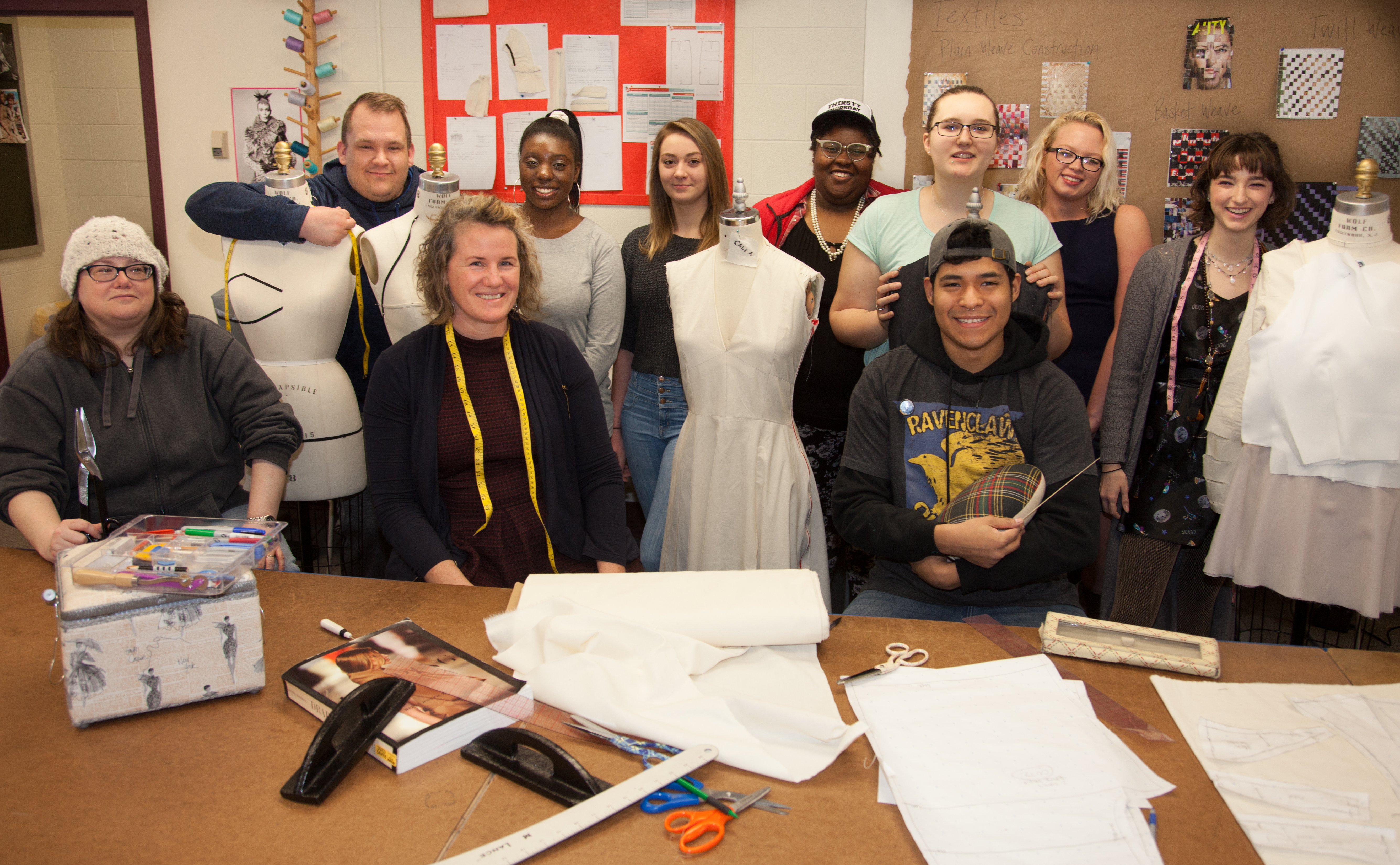
SUNY Ulster Students Work with Local Designers, Host Special Fashion Event

Students and models looking at camera

31043996405_692f88f0a9_kStudents in the fashion, entrepreneurship, and music departments successfully planned and produced their very own fashion show this past week! Members of the Introduction to Fashion and Introduction to Entrepreneurship classes collaborated to create outfits and plan Fashion & Entrepreneurship: Stories and Role Models, a fashion show and informative discussion held on Wednesday, November 16, at the Stone Ridge campus. The event highlighted the designs, merchandise, and entrepreneurial stories of seven fashion companies from the local community. The designers and companies who worked with the students included Leong Ong, Pool 28, LLC; Cal Patch, Hodge Podge Farm; Karina Cousineau, Karina Dresses; Margrit Wenzel, LGND Supply Co; Beth Petramale, Next Boutique; Ryan Roche, Ryan Roche Fashion; and Kelly Lyndgaard, Unshattered. A following panel discussion with the business owners offered wisdom and advice for the up-and-coming designers and entrepreneurs, as well as the public.

31043857995_68d4e19a5c_kTo create the show, the Fashion and Entrepreneurship students were put into teams and received valuable experience while they studied the work of the fashion companies, met with the business owners, held interviews about their designs and companies, and planned the fashion show. The students compiled what they learned about each company into a story that they shared at the show. Designs were showcased using students as models. A group of students studying Music Entrepreneurship designed the music for the event, and students planned and implemented the marketing for the fashion show.

Assistant Professor Mindy Kole, Director of the Darlene L. Pfeiffer Center for Entrepreneurial Studies, was enthusiastic about
the event and its importance to Ulster: “Projects like Fashion & Entrepreneurship: Stories and Role Models are what set SUNY Ulster apart from other colleges and universities. Here at SUNY Ulster, students don’t just learn about entrepreneurship and fashion from lectures and textbooks, they learn by30929930491_a1047e69e5_k immersing themselves in the real world, they learn by doing and spending time with experts.  Students actually practice skills and the characteristics of an entrepreneurial mindset through projects like this. This is truly the SUNY Ulster way.”

We commend the SUNY Ulster students for all their hard work, and thank the business owners for their support and participation!
31043970495_c5db2a60c1_k31008238336_49219590a4_k

31044016315_011f472e7f_k

30929983901_579e946119_k

30901857372_5aef826efb_k30901604872_f46e2f60cd_k

Get Ahead with Winternet Classes

Girl Working at Laptop in Library Smiling at Camera While Doing Homework

As the days grow shorter and the last leaves fall, college students have two important issues to deal with: surviving the upcoming finals and planning spring schedules. Nick gave us some final exam tips a few months ago, but we haven’t talked much about class planning until now. If you think you might be behind on some credits, or if you’d like to get ahead, Winternet courses can be a great option!

Winternet classes, for those not familiar with them, are online, full-credit classes that you can take for a three-week span between Christmas and the start of the spring semester. You’re probably asking yourself, “Why would anyone want to use up their winter break by taking more classes?” Well, there’s a few great reasons to do so. If you’re like many students, you have at least a couple of grades on your transcript that aren’t that great. Perhaps you’ve switched majors and ended up with a few classes that didn’t transfer into your new program. Maybe you have a cap on how many classes you want to deal with in a semester. No matter your situation, you know the extra classes are going to affect graduating on time. So, what can be done?

Online Winternet Courses for 2018-19Winternet offers a solution: take a class or two to get back on track. Most classes offered for Winternet can be applied toward at least one general education requirement. Look at the list on the left. Almost everyone at Ulster ends up taking Western Civilization, so getting that out of the way over winter break frees up more space in future semesters for classes which may be offered infrequently. Also, if any of these classes are not enjoyable to you, there is the added benefit of powering through them and getting done in a short amount of time. Would you rather sit in a class you find boring for 15 weeks, or work through it online in 3? This is also true if you have taken one of these courses in the past and not gotten a passing grade; if you already know the information, but didn’t have enough time to devote to the class while dealing with your other courses, a Winternet class can be a good way to quickly review and get through with a better grade.

I personally recommend that anyone needing to take Information Literacy do so through a Winternet course. Info Lit is a one credit class that’s required for almost everyone, and it’s a lot easier to take online rather than taking it on campus while also working on five other classes. I took mine over my freshman winter break, and not only was it enjoyable, it also gave me a head start when I took English 102 in the spring, the class for which it is a pre- or co-requisite. It doesn’t just benefit you; professors will appreciate that you already know good research and citation strategies!

Worrying about extra semesters and late graduation isn’t fun, and Winternet offers a potential solution. Registration has already begun for this year’s Winternet courses, so if these classes fit your requirements, register online today!

Katherine Dubosh, Double Graduate

Katherine Dubosh standing on Campus in graduation cap

For 2016 graduate Katherine Dubosh, a college degree came before a high school diploma! That’s because she graduated from Rondout Valley High School with honors in June, over a month after turning her high honors tassel at SUNY Ulster.

Katherine decided to attend Ulster in the 10th grade. Lucia Pecore, SUNY Ulster Assistant Director of Admissions, remembers being skeptical about Katherine’s application two years ago, but she quickly realized that this ambitious student was determined to get her Associate’s degree when she graduated from high school. Katherine has not regretted her decision. She says, “Attending SUNY Ulster is one of the best decisions I made for myself in high school.”

“Being in high school and college was definitely a challenge. I think the biggest challenge was time management, especially during my junior year. I stayed in high school until 2:20 and then took night and online classes during my free time.” Katherine told us. Despite the difficulties she experienced while maintaining her busy schedule, Katherine says she was elated to cross the commencement stage on May 18th, adding, “I felt like my hard work had finally paid off.”

Katherine is attending SUNY New Paltz  for their pre-med program, which involves a 7 year BS/DO degree.  We wish this motivated alumna all the best for her future at New Paltz and beyond!