Writing A Great College Transfer Essay

Hands typing on a laptop

Many upcoming graduates are trying to get into their desired four-year schools before their last semester at Ulster begins. While GPAs and letters of recommendation are important, the deciding factor in students getting accepted is the admissions essay. Considering that many students may have never written one before, here are a few tips on how to craft an essay that will earn that coveted acceptance letter.

Focus On the Main Prompt

Many admissions essays have one or more prompts for you to answer. If there isn’t a main prompt, typically you should address why the college is right for you. To help with this, be sure you stick to the required word count. If there isn’t one given, a common range is 250-1000, with the ideal being 400-700. Organize by paragraphs appropriately. No matter what the prompt is, you should be able to make it unique to you and your experiences.

Write in a Natural and Engaging Way

The people reading your admissions essay will naturally expect professionalism and proper grammar, but remember that you also need to make your essay unique and absorbing. This shouldn’t read like a term paper. Use conversational, effective language. It should sound natural and showcase you in some way. Remember, you’re essentially selling your value as a student to them. Use description and examples to engage the readers. Personal anecdotes relevant to the prompt, especially in the introduction, can be a great way to hook the readers and give them a good picture of you. Be honest about why you want to attend and why you think their school is right for you.

Revise, Edit, Proofread

You can’t be too careful with this part of the writing process, as you know already as a college student. If you’ve let your writing flow and stuck to the prompt, you will often have to trim off a number of words. Edit your essay to be impactful and to the point. It’s then important to proofread, since you will be expected to have mastered English 101 style during your time at Ulster. Asking someone else (or multiple people) to proofread the paper and give you their opinion can also be helpful.

Tips For Transferring from Community College to University

Diorama of a college campus

Right now, many of you are getting ready to graduate and then go on to a four-year school. You might be feeling overwhelmed by the selection and application process, but even if you haven’t been planning your transfer since you started here, there’s still time and plenty of options! Read on to learn about what you can do (starting now, before your last semester begins!) to ensure the next two years are as successful as your time at Ulster has been.

Talk with Your Advisor and the Transfer Advisor

No matter when you plan on graduating, it’s wise to have a conversation with both your individual advisor and Ulster’s transfer advisor, Kate Smith. Discuss your options, make sure your credits are on track, and get tips from both advisors on what schools could be good for you and your major. This can get you started on the decision-making process and can offer good leads to schools you may not have considered. Remember, academic advisors are available during their office hours year-round; you don’t have to wait for the narrow window of registration to have a chat with them about your plans! In fact, they often prefer you don’t wait until then. To get in touch with the transfer advisor, email smithk@sunyulster.edu or stop by her office in VAN 119M.

Find Some Great Schools

If you aren’t sure yet where you want to go, do some research! For further tips on how to find your match, check out this post on discovering your perfect school. Most importantly, be sure you check each school out carefully. You should always visit if you can. Remember to apply to several schools you’re interested in attending, so you have some options when the time comes to make your decision.

Make Sure Your Credits Transfer

Ulster has articulation agreements with many schools and also offers SUNY Guaranteed Admission to schools within the SUNY and CUNY systems. That said, you should still check to make sure your credits transfer properly! Knowing ahead of time if one school on your list will take an extra semester to graduate from can make a huge difference in your decision (and save you time and money). You can often find lists on school websites of class credits from other institutions that transfer to theirs. You can also ask someone at the transfer school to look over your credits to get a more personal analysis.

Know What Financial Aid Will Be Available

While it’s easy to find the annual tuition cost at an institution, that price doesn’t figure in your financial aid, including federal aid and transfer scholarships you may receive if eligible. Make sure you know how much you will be getting beforehand, so you know what, if any, you will realistically be paying out of pocket during your time at the school. If they are not offered up front, ask someone at the transfer school about scholarships you can apply for. And don’t forget to apply for scholarships here before you go! Scholarships offered through the Ulster Community College Foundation can usually be sent to other schools if the student is in their final semester at SUNY Ulster and intends to transfer.

What’s After Ulster? How to Find a Transfer College

Group of students in cafeteria leaning over a laptop

It’s nearing springtime again, and, for some of you, that means graduation. But then what? If you’re in a program that requires a bachelor’s or higher for employment, it means finding another college. How do you find that college? How do you know if it’s the right one? Even if you have a dream college you know you want to go to, how do you find back-up options? Hopefully, this post will be helpful in getting you started.

Find Out What’s Available

The best way to start is by doing a Google search of colleges good for your desired major. You probably already have a decent idea of what size and location you would like, so just those three parameters can narrow your options down considerably. Once you have a list, talk to people who know the schools about their experiences. They can be friends, family, and advisors or professors from both Ulster and the schools you’re looking at. Ask people you might not think to ask, like the school’s alumni, employers in your chosen field, and people who transferred out of the school (that’s a big one, find out why they did). Remember not to depend on one particular person’s testimony too much when making decisions though, since in the end the choice is about you and your needs.

The Big Questions

There’s many important things to keep in mind when finding a school and applying, and many are the same as what you already discovered at Ulster: How much will it cost? How much financial aid will you get? Are there scholarships? If you’re a commuter, how much does a parking permit cost? How will your classes from Ulster transfer into the other school’s program? Are the professors good? What are the classes like? How difficult is it to get in? How much will it cost just to apply? By the time you get through them all, you will probably want to throw the whole idea of transferring out the window, but you don’t have to! Colleges will be more than happy to answer all of your questions and assist you with the process. Often they have brochures and tours that will help answer most, if not all, of these questions. If some branches of the college’s admissions department are less helpful than others, don’t be afraid to push for information. It’s your money and your time that will be on the line; you deserve answers.

Does the School Really Fit?

You’ve done your research. You know how good the school is for your major, you’ve talked to a few people who know the school, maybe you’ve even gone and talked to some admissions people. Now here comes a really important part: finding out if the school suits YOU. It doesn’t matter if you’re taking all online classes, going as a commuter, or living on campus, you need to know more about the school itself. Visit! Sometimes, a school will just feel right (or very not). Colleges offer guided tours around campus, both one-on-one and in a group. Many schools offer a shadow program, where you can follow a student around for a day and attend classes with them. This is obviously the ideal situation, as it will give you a real idea of what classes, students, and professors are like at your school. A school can sound great on paper and in pictures, but when you’re actually there, you might find that the “great professors” might be very boring and stuffy, the “83,000 square foot library” could have an exceptionally small amount of books, and the “welcoming commuter lounge” could be a barren corner of the basement that frequently gets used for testing. Know before you commit!

Crunch Time! The College Application

Once you’ve found a few schools you know you’ll be happy attending, it’s time to start applying! Fun fact: did you know there’s an easy, free application that you use as an Ulster graduate when applying to any of the SUNY schools? If a SUNY school is on your list to apply to, that will prove an excellent savings. Don’t forget to apply to several; even if it seems expensive in the moment. Not only could you not be accepted to your favorite one, in addition, after accepting an offer from one, you could still find out that it’s the wrong choice during the enrollment stage. Leave options for yourself.

Remember the Value of Your Decision

Lastly, my personal tip as a transfer student may seem a bit obvious, but I’ll tell it anyway. Try your best to find and go for a place you truly want to attend. In the end, it’s years of your life that you can’t get back. And college should be so much more than just getting that piece of paper at graduation; during your junior year, senior year, and beyond, it’s the opportunities through internships, travel, networking with professors and students, and just plain old friendships that make college great. These things can change the course of your life. Do your best to make a decision that counts.

You’re Not Alone!

No matter what stage of the transferring process you’re in, don’t forget that we have a SUNY Ulster Transfer Office devoted to helping you succeed! Contact Kate Smith at smithk@sunyulster.edu for more information, and stop by her office in Vanderlyn 128C to get help with any transfer problems or concerns you may be having.


Fine Arts Student Wins Scholarship to SVA

Chelsea Stingel standing in front of painting of flowers

From a young age, Chelsea Stingel wanted to be an artist. But she knew that to get into one of the leading art schools in the country that offered larger scholarships, she would have to build her portfolio.

SUNY Ulster’s Fine Arts Program helped her do just that, earning Stingel a $45,000 scholarship to the School of Visual Arts (SVA) in Manhattan.

Through the college’s new capstone art classes – Advanced Studio 1 and 2 – Stingel got the time to devote to working on independent portfolio pieces in a mentoring environment with professors and peers, which she says made all the difference for her to reach her transfer goals.

SUNY Ulster added the advanced studio offerings two years ago, after hearing feedback from the top art schools that said its students were producing high-quality work but weren’t doing enough independent projects.

Taught by adjunct arts instructor Chris Seubert and Art Department Chair Iain Machell, students learn how to photograph their work (with photographic equipment supplied by a Title 3 mini-grant), create an online portfolio, write an artist’s statement, and create a successful transfer portfolio and application for a four-year college. They also have the opportunity to work with faculty at the Woodstock School of Art through a partnership. Other community colleges now are creating similar portfolio-building classes.

After graduating in May with her Associate’s in Fine Arts, Stingel will enter SVA as a junior in Illustration and have about half of her tuition paid for by the scholarship over three years. She was awed by the artwork she saw at Acceptance Day and is looking forward to the once-in-a-lifetime opportunity to learn from gifted working artists in NYC.

Stingel will pursue a Bachelor’s in Fine Arts in illustration and aspires to work in the commercial side of art doing commissions for movies or games.

The Saugerties resident originally chose SUNY Ulster to make the transition to college life easier and excelled in the fine arts program here.

“I was really impressed with the art program at SUNY Ulster,” she says. “The professors are helpful with our work and easy to talk to outside of class.”

Stingel’s self-portrait currently is on show at the SUNY Spring 2015 Student Art Exhibition at the Plaza Gallery, SUNY Plaza in Albany. This is an exhibition that highlights the projects of art and design programs throughout the SUNY system. Her art work won a further accolade and has been selected for the Best of the Year SUNY Student Art exhibition that will take place at the NY State Museum in Albany in June.

Vassar Program Bound Student Finds New Opportunites

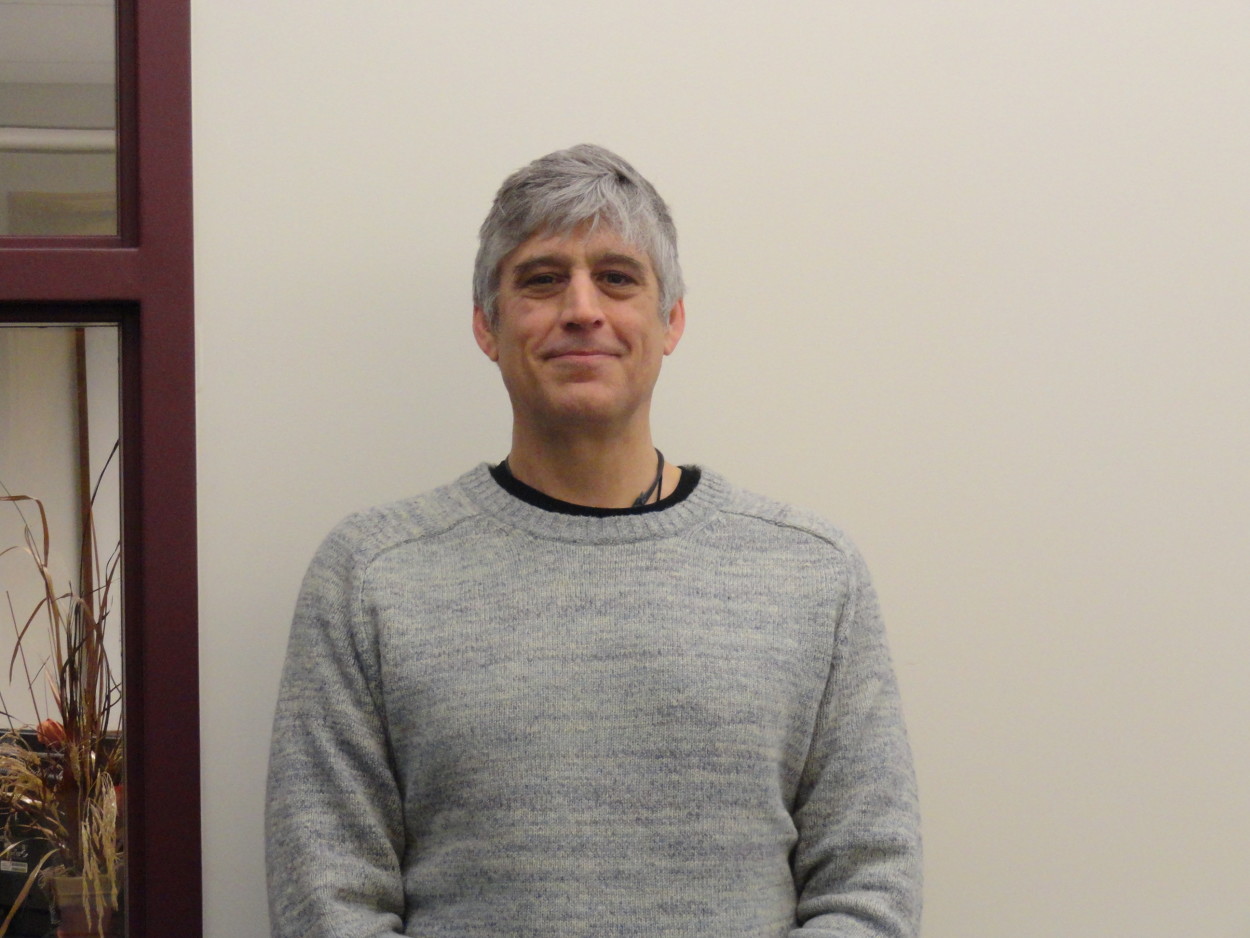
Michael Mulvey stands in front of white wall

“At SUNY Ulster, I found dedicated professors and TRIO counselors who have taken an interest in my personal well-being and academic success. There’s so much that can be gained in an environment like this,” Michael Mulvey, Media and Communications, Honor’s program, expected graduation spring 2016


Michael Mulvey never dreamed of the future he now sees for himself just two years. A first-time college student at the age of 55, Mulvey of Woodstock will be spending part of this summer at Vassar College as part of the highly selective “Exploring Transfer Program.”

Mulvey learned of his acceptance into the prestigious program on another milestone day – the one-year anniversary of his release from NY state prison on a repeat DWI offense.

Mulvey’s own experiences with the penal/treatment program set him on a path of redemption and personal re-invention that began with pursuing an associate’s at SUNY Ulster.

Now an honors student on the President’s List studying Media and Communications with a concentration in film and video production, Mulvey is seizing every opportunity put before him – and he’s found plenty in this diverse community college setting.

From dedicated and motivating instructors who took a personal interest in his success to pursuing his musical interests in playing bass in the SUNY Ulster Jazz Band, Mulvey has flourished in the small close-knit environment.

A high school dropout, he received student support to get his basic college requirements fulfilled for admissions and credits the counselors at TRIO Student Support Services for their tremendous support.

For his accomplishments, he also has received a TRIO award for student excellence.

Seeking Legal and Social Justice

When SUNY Ulster’s Honors Program coordinator Jennifer Kaufman, put the Vassar program before her students to apply, Mulvey was immediately intrigued by a course being offered on “Legal Justice, Social Justice: The Politics of Imprisonment.”

The essay about his own experiences flowed easily and formed an early idea for a thesis. A recovering alcoholic who struggled with dependency issues while on disability as an operating engineer in New York City’s building trade, Mulvey believes the state should devote more resources to education than prisons.

His goal is to apply what he learned as a negotiator and shop steward during 25 years in the labor movement to the political process as a media consultant and filmmaker. “I see new media and Social Media platforms as grass roots political mobilization tools with the ability to reinforce the social contract and invigorate our faltering democracy,” he says.

Mulvey credits Dr. Ray Raymond, Associate Professor of Government and History, as serving as his academic advisor and a mentor. He aspires to transfer to a four-year college to pursue Communications and Government, and apply his knowledge to the American political process.

Vassar Opportunity

The Vassar Exploring Transfer program is designed to introduce first-generation community college students from underrepresented populations to the possibilities of transfer to a wide range of four-year colleges and universities.

Over five weeks, Mulvey will take six credits of interdisciplinary liberal arts courses and live in the residence hall at the Poughkeepsie liberal arts campus. His scholarship completely covers tuition, room, board, books and all other supplies.

Mulvey wants to help other college students to focus on the opportunities before them while they can, and also serve as positive role model for his 22-year-old daughter, Alexandra. “As a parent, I can show her how people can redeem themselves when they make mistakes,” Mulvey says.

“Start here, go far is a motto for anyone at any place in their life,” he says.