

Choosing The Right Classes For Your Future.

A bright red apple sits atop a stack of three hard cover books, we cannot see their titles or covers. This display sits atop a table in front of a smoky grey background.

Some people dive into college with set intentions, knowing exactly what they will choose and graduate with, and that’s great! Then there’s the rest of us. It can be hard to fill up your semester’s class schedule. Especially when you aren’t sure where your time and energy would best be spent.

The big idea is to go to college and get a degree. That will give your career (and income) the kick start or boost that you want, right? That initiative alone is all you need to get started. The rest is figuring out what it is you want to study. Then finding a way to make it happen. As they say, where there’s a will there’s a way!

Students with undeclared majors are more common than you might think. The amount of choices can be overwhelming. Courses are often offered on hundreds of different subjects with varying levels of expertise. Some classes are reserved for specific students while others require more courses to be taken first. Navigating the sea of learning can be daunting!

A black and white image of someone's upper abdomen in a sweatshirt as they hold up a large piece of paper over their face depicting a large white question mark.

A study on the “Developmental Disconnect in Choosing a Major” states that an estimated 20 to 50 % of students enter college as “undecided” and an estimated 75 % of students change their major at least once before graduation (Gordon, 1995). So don’t worry, you’re definitely not alone. Turns out a lot of people get frustrated when spinning that big wheel of life. Fortunately, reality doesn’t have to play out like a game show and we have the power to choose the right courses to lead to ultimate success.

It’s completely okay to start without knowing where to begin, most people do!

A very generic picture of a stack of five thick textbooks on a white background

When first starting out, make sure to take some general education (often called “gen ed” on campuses) credits. Every student is required to take these courses regardless of major. They consist of basic knowledge stuff any collegian should know like psychology, algebra, history, etc. It can be a win-win situation; getting these classes out of the way will free up time later on for the good stuff. Not to mention there is potential to fall in love with an area of research.

An extra literature or writing class is always helpful to have under your belt. These skills are used in every class and you’ll want to hone them early on. While signing up for those general classes, be sure to review the college catalog and pick a few courses that seem fun or interesting to take. Once you start those and learn more about them from a professor, you may have found your major!

Background: A man stands in front of a wall almost covered in various pieces of visual art. He seems to be lecturing as he holds his hands in to his chest as if ready to throw them open, next to him appears to be a television. Foreground: Students sit with their head faced away from the camera, watching the man talk, we see the back of their heads.
courtesy of: 祝 鹤槐

An uncommon resource that not everyone thinks of is the professor of the class you might register for. You could always reach out to them and ask any questions you may have that an adviser can’t answer. They are typically happy to help and tend to respond pretty quickly in my experience.

It’s time to plan ahead!

Planning a semester schedule for college classes can be a tricky task. Some people prefer to have all their classes back to back in one or two days a week to coincide with other nonacademic schedules. Some prefer to have only a class or two every day to spread out the work load and study time. As long as you don’t sign up for courses that overlap or occur at the same time, you should be fine. Most colleges have advisers that would make sure that a scheduling faux pas wouldn’t happen anyway. If you have room in your schedule throw in some bonus microcredentials. Make sure to consider factors like distance from your house and your method of transportation. Schedules can be changed in the first few weeks of classes, but planning ahead, so that the first schedule you make will be a good fit, is important and saves a lot of undue hassle.
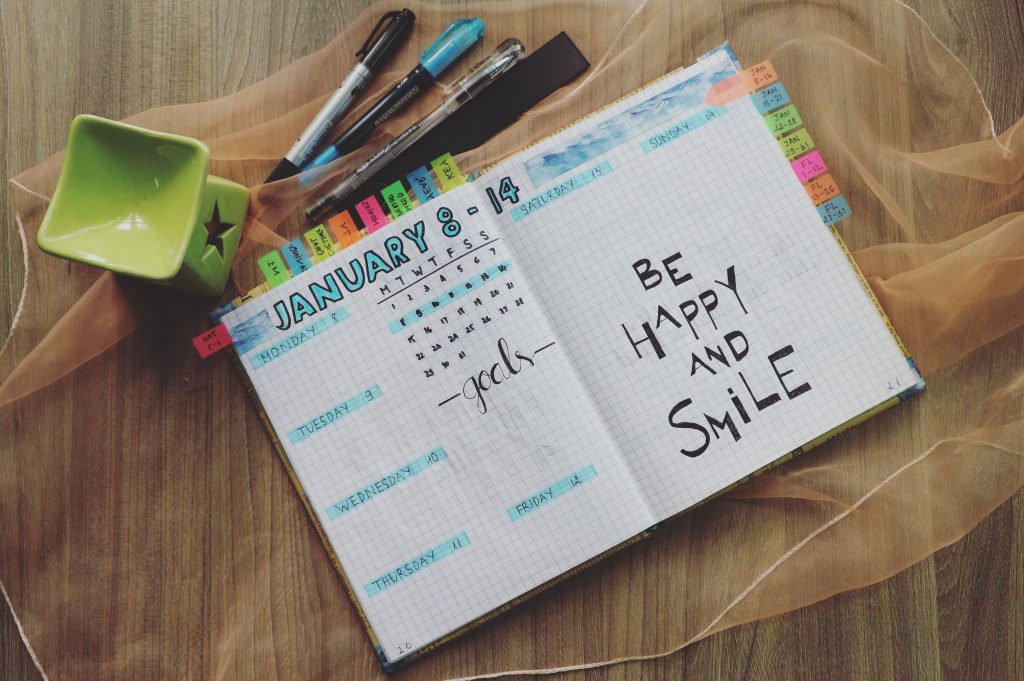
A weekly planner lays open in a table, the book lays atop a sheer piece of toole next to a scented wax melter and a handful of pens and markers. The book is littered with small posted notes and drawn on with a highlighter over all dates. The right page underneath the weekend says in bold "be happy and smile"
Photo by Bich Tran from Pexels

A good way to make sure you have the most options and opportunities available to you is to register as early as you can. More classes will be presented with available seats for students like you!


A woman stands with her hands held out, throwing glitter at the camera. She holds her head up high and wears a large smile, a graduation cap, and what appears to be a doctors jacket.

Preparing for College as an Adult Student

Adult Student on Computer

If you’re an adult going to college this semester, congratulations! You’ve already taken the first steps toward your future. Now it’s time to get ready. Whether you’re returning to college after a few (or many) years out of academic life or are beginning your college journey for the first time, there are a lot of things to take into consideration when starting. Here’s how to prepare yourself!

Map Your Degree/Certificate Program

Want to stay on track? Even when you know exactly what you’re going for, unexpected things can pop up that make it hard to get all the credits you need. Make a tentative schedule now, before you start, of exactly what courses you need to take and what semester you will take them, based on how many you would like to take per semester and allowing for prerequisites and fall or spring-only classes. If you need help with this, talk to your academic advisor!

Make a List of What You Need to Buy

No matter what your major is, you will need a few things you probably haven’t bought or budgeted for in a while: notebooks or notepaper, pens, pencils, your textbooks (find out which ones you need from your syllabus or by going to SUNY Ulster’s bookstore), a pack to carry everything in, and, if possible, a personal computer or laptop. You may also want to get some hand sanitizer, food for lunches or dinners, and other personal items to take with you. Depending on your classes, you may also need things like specific calculators, special software, tools, or other major-specific supplies. Refer to your syllabus and professor for the specifics of each class!

Prepare a Study Space and Time

As an adult student, you often have responsibilities at work and with your family beyond what a college student straight out of high school would, like a full-time job, children, or aging parents. This makes it all the more important that you set aside a time and place now where you will have as few distractions as possible for studying and writing. While this isn’t foolproof, having a typical schedule and room/cafe/library where you can go get work done will help you stay on track in classes. You can get creative as well, like sitting around the table with your children and doing your homework while they do theirs (provided they aren’t prone to getting distracted).

Plan Finances and Make a Budget

College costs a lot; in addition to your tuition and the items mentioned above, you’ll need to have housing, food, and transportation. If you have children, you may need to pay for childcare. On top of all the additional expenses, you may have less money coming in if you aren’t working as much. Set aside emergency money for things like car and house repairs, and plan out your monthly budget. To help with costs, don’t hesitate to reach out to the Ulster Community College Foundation. They can help you find scholarships that will help!

Get in the Mindset to Learn and Have Fun!

You can do any number of things to physically set up your new college life, but if you have a negative attitude going in, you’ll have a much harder time. Get excited about learning new things, meeting new people, and starting your path to a new career! College has a lot to offer, through intellectual pursuits and new friends to make (yes, you will find plenty of other adult students to connect with and support). It may take a bit to get back into the swing of things at college, but that’s okay. You’ve got this!

Memory Skills Booster Tips for Anyone

A woman sits at a desk biting a pencil as she looks at a computer screen

First of all, why do we forget?

a bulb sits on a blackboard with a cloud drawn around it, a metaphorical representation of the skill of memory

There are a handful of reasons why we forget things that we want to remember. None of them make it any less annoying during an exam; when you can’t think of the answers that you know you’ve studied. Or when you forget your grocery list and go home without all the ingredients you need to cook dinner. A common ground we all can relate to is the desire to improve our memory skills.

Nevertheless there are four major ways your brain tosses aside information. All of which lead to the loss of a memory. Sometimes you don’t store the memory properly from the get-go, and other times you simply can’t retrieve the memory when you try to recall it. Interference from past memories can also make you forget. Sometimes we even actively try to forget things that are upsetting or traumatic.

Don’t Forget Nutrition Plays A Key Role

A person seasoning a pan of raw fish containing a lot of omega-3s that are good for memory skills

As you can imagine, a healthy brain leads to better memory skills. There are a lot of foods out there that are beneficial to your brain, containing a lot of omega-3s. Omega-3 is a fatty acid that your body can’t produce on it’s own but can help your health. The body uses it in all kinds of functions like keeping the brain and heart healthy and lowering your risk of dementia and arthritis. This essential element of your diet can be found in most fish and some fat rich plants such as salmon, anchovies, and chia seeds. If you’re curious about other sources of Omega-3s, here are 12 foods that are very high in Omega-3.

Techniques to Boost Your Memory Skills

We have often have trouble remembering certain things because they just seem like unrelated bits of information that we may not need. However there are a few tried and true methods of improving your memory skills to do just that. Some of the most highly recommended memory boosting methods are based on giving structure to those random bits of information that you need to study and memorize.

When it comes to brain training there are a few different methods to be used, which one you like is all about what you’re trying to learn along with what feels right. One popular method recommended by memory champions like Boris Nikolai Konrad is known as the Method of Loci.
The “method of loci”—sometimes called the Memory Palace—is a systematic memory technique that dates back to the days of ancient Greece.

This method involves boosting your ability to remember a list of information, like a list of terms for language or science studies. This is done by using your spacial memory of your house or your body. The things you want to remember are given specific places or parts . Then to recall them you go through the mental version of the house or the list of body parts and find the memories where you left them.

Another method that’s based on visualization is the peg system. For this one you are supposed to envision your need-to-learn study topics. Once you’ve got it you can imagine you’re placing a picture of them on a series of pegs. Sort of like hanging pictures on a long wall in a row, inside your head. After studying the picture and which number peg it is for a while, you can recall them much better than by typical studying practices.

The Memory Skills Difference May Be In A Pen

A student writes in a notebook, using a pen and paper can boost memory skills.

When you use a pen and paper to write something down it’s much more retainable than typing it. This study shows it can be much more effective to write something down as opposed to typing it. Writing leads to better memory retention and better understanding of the information and context. The reason why is that typing tends to lead to less memory making and more mindless processing. So if you’re really trying to learn from that lecture, try swapping your laptop out for a notebook.

Time is too precious to spend learning something just to let it slip away. Make sure to take some time everyday to boost your brain power. In return you’ll better retain and improve your memory. You might be surprised at how much information you can retain when you really work for it.

A clock sits next to a cup of coffee, representing that good time management and caffeine can be used to boost memory skills.