How to Master the Class Registration Process

Register Now - Ask your Advisor About Online Registration

Every spring and fall, current returning students must register for the next semester’s classes here at SUNY Ulster. It’s not hard to do once you’ve got the hang of it! Here are some key tips to keep in mind as you prepare to register, and how to prepare for the upcoming semesters class load.

 First Things First: Make an Appointment with Your Advisor.

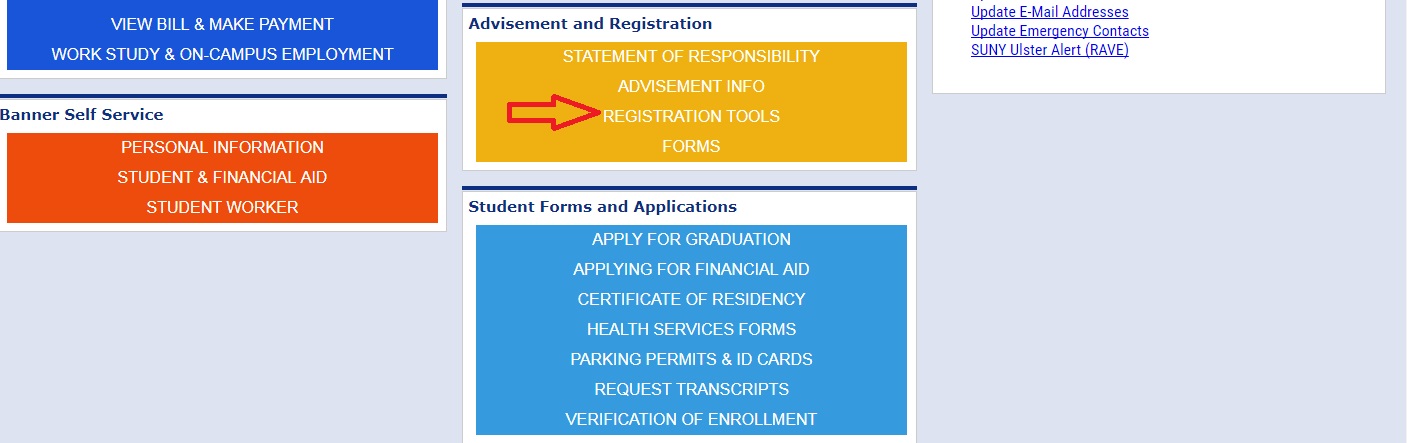
  • You can find your Advisor by visiting My.SunyUlster.edu
  • Next click Student Resource Tab.  

  • Scroll down the page until you get to Registration Tools and CLICK

Still Need Help?

Get registration assistance by phone at 845-687-5075.

Email: reginfo@sunyulster.edu

Your academic Advisor may let you know where or how they prefer for you to sign up for your registration appointment. For example some Advisors will provide an appointment signup sheet with their various available time slots, others will have you sign up via an online appointment calendar.

Before Your Appointment: Make a Plan!

There are a few things that you can do in preparation for your upcoming meeting to make sure it goes as smoothly as possible, and has limited confusion.

  • Check to see what is required for the upcoming semester and compare this what classes you still  need against the upcoming academic class schedule! http://apps.sunyulster.edu/courses/ 
  • It is also helpful to make a mock schedule (or even 2) to bring to your upcoming appointment!

After Your Appointment: Set reminders for yourself!

  • In your planner, or calendar in your phone mark the start date reminder of any online courses or accelerated courses you may be taking. (It can be easy to forget when you aren’t physically attending class about particular dates.)
  • Also set a reminder at a closer date for you to closely see what books are required for your upcoming classes!

Stories of SUNY Ulster — Marla Gruner: Family Woman, Educator, Library Scientist

The Stories team recently got an opportunity to conduct an interview with SUNY Ulster’s own charismatic librarian: Marla Gruner. Invariably seated at the help desk, Marla is known for her pleasant helpfulness and the sagacity of her assistance. Entering her office, we are delighted to the smell of fresh coffee, photographs of her two adorable children, and a glowing presence ready to talk.

“I was an English major in college, and I realized there wasn’t a whole lot I could do with an English degree *Laughs*. So I thought, what are my options? I talked to my advisors and they were iffy about it, and I think I took a career quiz and found out that I could go on and get my masters in library science very easily, and I had also worked in a public library when I was in high school and I liked it! It’s not a thrilling story or anything, I was just fortunate enough to have a direct line to working in this field, sort of a straight path…Mostly it’s the people here that I like working with, there are a lot of energetic, fun people to work with. It’s a small community, and unfortunately a lot of people come here from disadvantaged circumstances, so I really enjoy being able to help them in any way; be it finding a book or navigating the site…I’m teaching at F.Y.E. this semester, so I feel like I’m really able to branch out, talk to people and meet more students — that’s one thing about the library is you don’t always necessarily get to know the students very well, you don’t see them as much as their professors might per se. I feel like this is a great opportunity to know more students better…So, yeah, I just really like the community college environment and feel, and with my job specifically, I’m able to do a lot of things in the library, whereas at a larger institution, there might be like ten librarians. So I get to do the job of ten *Smiles*, but in all seriousness it is wonderful and I enjoy it.”

Interesting Tidbit: When asked about the slow decline of the print book and nationally declining book circulation rates, Marla says she is not concerned. She envisions the library of the future as more of a meeting place and help center, as well as a massive digital database. Forever the optimist, Marla is as much a librarian as she is a friend to the campus at large. The next time you find yourself in the library, keep an eye out for Marla and her infectious smile!

Considering Becoming a Teacher? Now is a Great Time to Start.

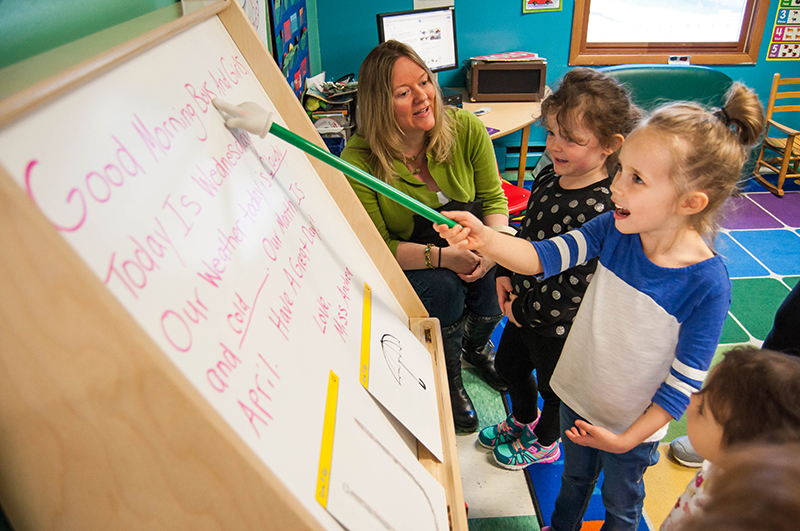
Child pointing at board while teacher looks on

If you’ve ever considered majoring in childhood or adolescent education, now is an excellent time to enter the field. There is a great need right now for teachers, as many public schools, both locally and nationwide, are experiencing a shortage of qualified teachers. This is because many longtime teachers are of retirement age and fewer college students are pursuing teaching degrees. The New York Board of Regents is even planning to lower the passing score on the edTPA, a test potential New York teachers must pass to get a teaching certificate. While there are increasingly fewer teachers, this shortage is causing some districts to increase classroom sizes, which lessens the individual attention some students may need to grasp classroom material.

Math, special education, and science teachers are commonly reported as being needed most, but humanities, including English and foreign languages, are also understaffed. New York is among those particularly in need of math, science, and foreign language teachers. On a brighter note, New York teachers are some of the best paid in the nation, and potential teachers planning to stay in-state can make a good living as well as have fulfilling careers.

Teaching careers can be rewarding. Teachers have the opportunity to make a difference in children’s lives by introducing them to new ideas and information that helps them throughout their lives. Teaching is often considered a great way to give back to the local community, due to helping students in the moment and ultimately being an investment in the students’ and area’s future. While traditional students are typically thought of for these types of degrees, teaching can also be a great option for adult students, particularly parents who know how to work with children already and can enjoy having summers free to be with their own children.

If teaching seems like a good fit for you, you can explore your options affordably here at SUNY Ulster. We offer four education degree pathways: Math and Science B-6 and 7-12 and Humanities & Social Science B-6 and 7-12. Each of these degree programs are specialized for what students would like to teach one day, such as Earth Science, English, Math, and History, as well as an option to seamlessly transfer into SUNY New Paltz.

Tips to Fighting Procrastination This Semester.  

Woman's hands typing on a laptop

Procrastination is the mindset of “Have fun now, worry about it later” that plagues countless individuals. As the semester moves forward it may feel as if countless due dates, and exam dates continue to fill up your calendar. Here at SUNY Ulster we want our students to have all the necessary tools to fight procrastination and have their most successful semester yet! Here are some tips to help you to get the job done!

Don’t be afraid to ask for help.

http://gph.is/1cAzJ3x

At some point of working on a project it may feel as if all the information you have compiled is no longer making sense, BUT HELP IS AVAILABLE.  In addition to asking your professors for addition support there are resources all across campus that are designed to help you succeed in all your classes!

For additional help you can visits these locations:

The Learning Center (VAN 247)

The Peer Tutor Program (VAN 247)

The Gary and Janaki Patrik Math Center (ALG 122)

The Writing Center (DEW 110)


Create a Personalized Plan.

http://gph.is/2glNKt6

Creating a personalized road map to the completion of each assignment is one way to put yourself on task to complete your assignment by section and avoid procrastination.For example I divide my projects into levels of Priority. From there I work on the most crucial elements of my project first moving from phase to phase following the personalized plan I have created to completion!


Limited Distractions.

http://gph.is/2erodvg

In today’s world we are surrounded by distractions all day long. Whether it be apps on our phones, the latest Netflix binge, and basically anything other than sitting down and working on the project at hand. If you are looking for a place to tune out your distractions and get work done you may want to check out the library on campus. The Dewitt Library has incredible resources that you mat reference while you work as well as its various levels of peace and quiet to maximize your focus!

Library Hours:

Monday-Thursday: 8am-7 pm

Friday: 8am-4 pm

Saturday: 9 am-3 pm

Sunday: Closed

Remember to Reward Yourself.

http://gph.is/1P1itTu

I have saved the best tip for last! One of the things that I do when I have a large assignment due is during my initial creation of my “personalized progress plan” I always take a moment to set up what or how I plan to reward myself once I have completed the final task! Whether it be to see a movie, buy a new piece of clothing, or treating yourself to your favorite meal don’t forget to reward your hard work!

10 Tips For First Semester Success

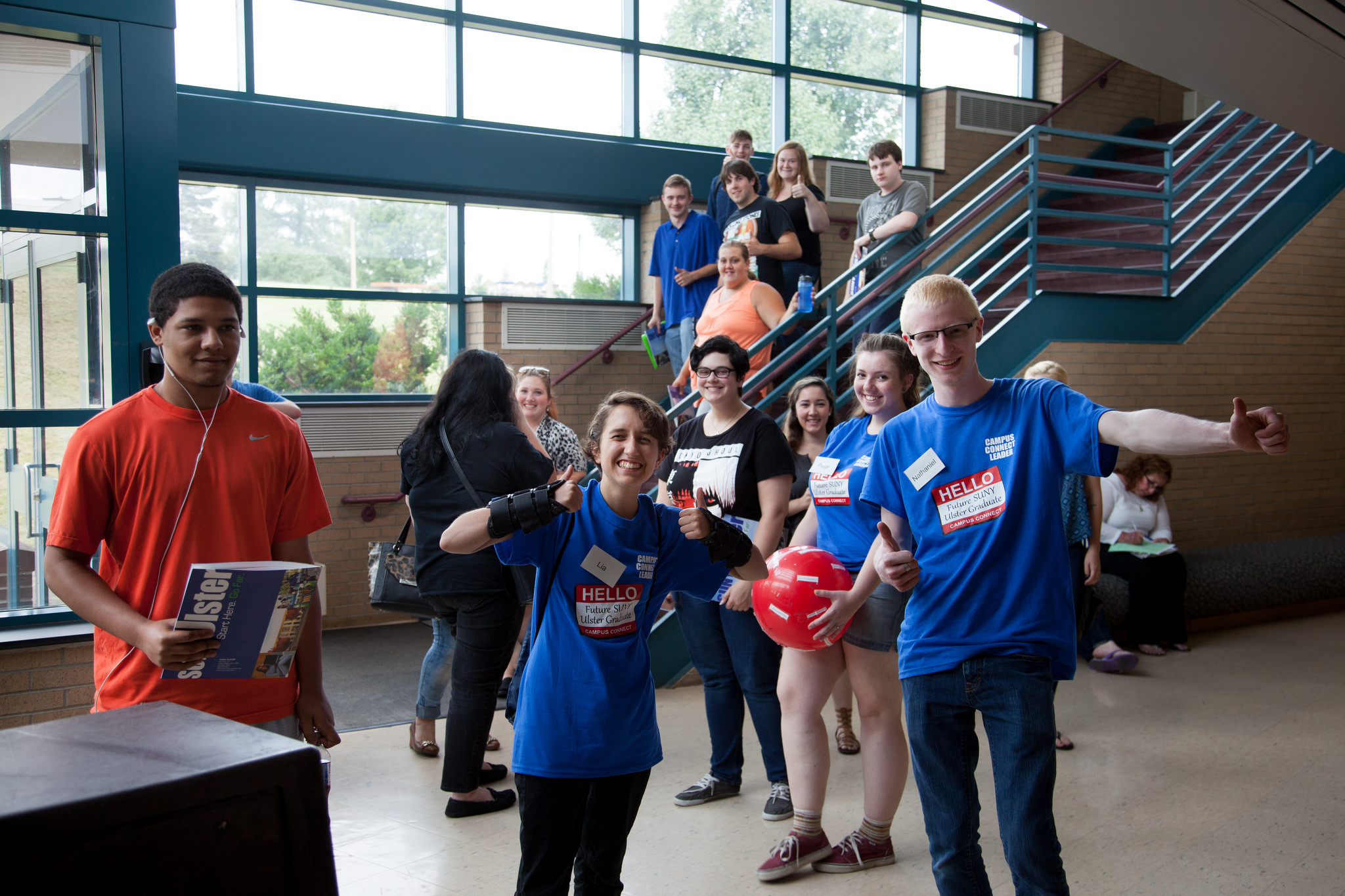
Campus Connect leaders giving a thumbs up with new students

Welcome, SUNY Ulster incoming freshmen! Many of you are probably both excited and nervous about your first semester at college. With a little effort, your first semester (and all of the following) can be successful. Here’s a few tips to help you on your way!

#1: Check Your SUNY Ulster Email

Once you’re enrolled, all important emails from Ulster will come to your @my.sunyulster.edu address. It’s how your professors get in touch with you, as well as one major way to get campus alerts and financial aid notifications. Other students and staff will often use it to contact you as well. Faculty are legally bound to contact you through Ulster email, so do your part and help them (and yourself, since nobody wants to show up for a cancelled class) by checking it at least once a day.

#2: Attend Campus Connect

This one is mandatory, actually, but there’s a reason it is! Campus Connect is the SUNY Ulster orientation, and it offers the opportunity you need to find out all about being an Ulster student, from where different offices are to what career and internship options are available. It’s also a great way to meet the SUNY Ulster community. When you attend, you should also plan to look around campus and find the rooms your classes will be in this semester.

#3: Understand Your Finances

Federal financial aid is a big part of everyone’s SUNY Ulster life, but what about all the other resources? Think about financing beyond just FAFSA, because there’s also local scholarships, the College Scholars Program, and, now, the Excelsior Scholarship. Don’t miss out on any opportunities! Plan ahead; even though federal aid may cover Ulster at the moment, if you transfer to another school, scholarships can be extremely helpful.

#4: Explore Ulster and Portal Resources

Make sure you know where everything is! Campus Connect is an excellent start, but take some time during your first few weeks of class to explore the campus and browse the portal. You can find a lot on the portal and Blackboard if you figure out how to navigate them and get a general idea of where everything is, which is especially important for taking online classes. Touring the campus is important for knowing where you can get food, hang out, use computers, and get information from different offices.

#5: Create A Schedule and Get Organized

If you have a schedule that includes both classes and work, make sure you budget your time! It’s recommended that you set aside 2-3 hours each week for every credit hour to give yourself time for assignments and studying. That’s 30-45 hours a week beyond classes, jobs, and family time if you take the average workload of 15 credits. For the first semester, it’s especially important to have this time available, since you’re still finding your own speed with college work. If you plan to set this much time aside and use it wisely, you should find yourself on track throughout the semester.

#6: Attend Class and Pay Attention

Establishing good habits when you begin college will benefit you for the remainder of your college life. Possibly the most important habit you can adopt is to attend class and pay attention. Students who drop out tend to not have attended their class, or, if they do attend, spend the entire class period using their phone. Remember that doing these things frequently not only gets you dropped from the class, but also means you’re missing important material that will be in essays and exams. Paying attention usually means better grades, and getting better grades means many more opportunities are available to you. Focus on your class for the hour that you’re in it.

#7: Get Involved

Make friends early on! There’s so much to be said for having a few people that you love to spend time with at Ulster. On a winter morning when it’s 5 degrees outside and the thought of your math class isn’t quite incentive enough to get out of bed, knowing you get to see your friends can be the push you need. Joining a SUNY Ulster club and participating in campus activities is a great way to meet new friends. You can also just start a conversation with someone in class or a group that looks interesting in the cafeteria. There’s plenty of options if you make an effort!

#8: Try to Plan for the Future

Obviously, your first order of business is to get acquainted with SUNY Ulster life, but it’s never to early to explore career and internship opportunities. At the very least, get to know your advisor, and be ready to plan next semester’s classes.

#9: Connect with Your Professors

Your professors aren’t just there to teach classes and go home. Most will have office hours you can go to when you need help for a class. If it’s a professor in your major, connecting is twice as important, since they can advise on job opportunities, colleges, and anything else related to your career. One or two will end up giving you your letter of recommendation if you transfer, so get to know them early on.

#10: Have Fun!

This goes without saying, but it’s important to enjoy your time at Ulster. College isn’t endless studying and suffering; you’ll meet interesting people and learn really cool things in classes and on campus. Relax once in a while and just enjoy being a student!

The Pfeiffer Technology & Innovation Lab at SUNY Ulster

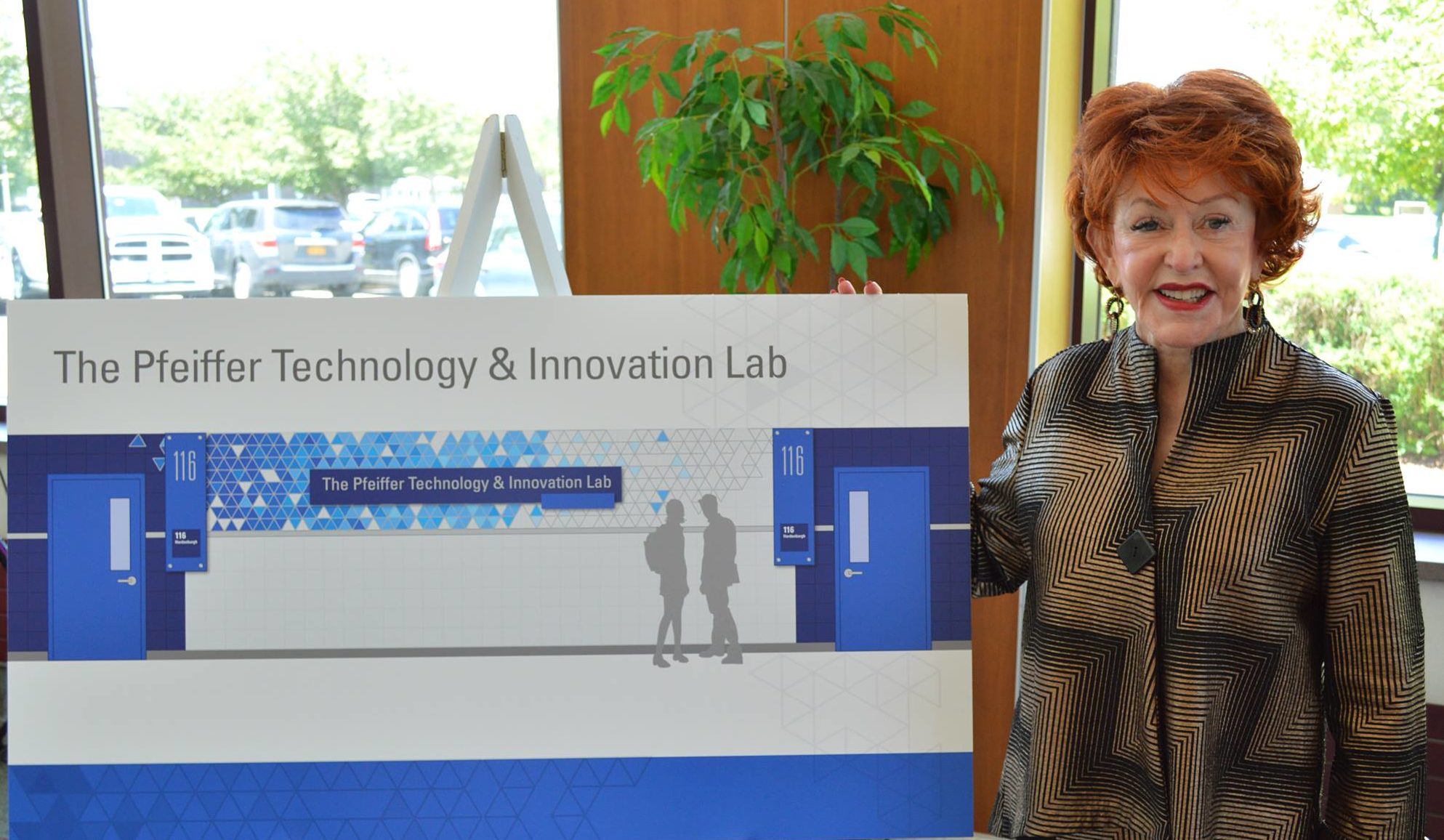
Pfeiffer lab sign with Darlene Pfeiffer

A new technology lab is being constructed this summer at SUNY Ulster! Located off of the student lot section of Hardenbergh, renovated labs and classrooms will be receiving state-of-the-art equipment that can be utilized by both students and industry members, particularly those in STEM fields such as engineering and advanced manufacturing, AutoCAD, 3D printing and web development. Instruction will be available to SUNY Ulster students. This new lab will be named the Pfeiffer Technology & Innovation Lab, after Ulster County resident and Foundation Board Vice Chair Darlene L. Pfeiffer.

Three labs are getting a thorough renovation: the drafting lab, electronics lab, and mechanical lab. The drafting lab will receive dual monitor computers, and the room will be split into two separate labs as well as a 3D printing lab. Industrial technology, drafting, computer, graphic design, art, and fashion students will be able to take advantage of the improved drafting labs, and the 3D printing lab may be open for use, eventually, to all students. The electronics lab will receive new electronic benches, and the mechanical lab (which will be renamed the Mechatronics and Mechanical Engineering Lab) will receive new work benches as well as a private outside entrance for industry partners.

In addition to the labs, two classrooms are getting renovated. The computer classroom will receive 18 new computers with Programmable Logic Controller (PLC) software. Training units for PLC are being ordered to create a PLC lab, as well. The classroom without computers (located off the current mechanical lab) will be renovated to allow students to learn in the classroom section and then do hands-on experiments in the lab. Both of these classrooms will be available for use by any department.

Renovations are scheduled for completion by August 28th, timely for the start of fall classes. Barbara Reer, Director of Technology Education Programs, states, “We want students and faculty alike to embrace these labs, which will aid in current programs, and hopefully help foster new programs.”

Floor plan for the Pfeiffer Technology & Innovation Lab

First Year Experience at Ulster

All About FYE 101 the new student's passport to ulster success

This fall, SUNY Ulster is offering its first round of First Year Experience (FYE 101) classes. The course is designed to give new students the tools and resources they need to help transition from high school or the workforce to college life. It also introduces students to a number of career-building and community opportunities Ulster offers. The course, which will be offered on campus and online by several different Ulster professors, will try to give new students a well-rounded understanding of college as they prepare to Go Far. Since everyone first entering Ulster with less than 30 credits will be taking this class, here’s some more information about what new students will be learning about.

Ulster Navigation

The first few months at a new campus can seem completely overwhelming, especially if you’re new to taking college classes. FYE will try to ease this problem for new students. Aspects of FYE will cover not only the support and informational services available on campus, but also how to use different items of Ulster tech that can be difficult to adjust to, such as Blackboard and the portal. Common college terms and requirements will be covered, such as the pros and cons of online, blended, and on campus classes, transfer and career planning options, and elective choices. The course also covers the social aspects of college, like clubs, activities, and other campus opportunities for work and play.

Communication Skills 

Clear communication is vital to college success, since it impacts every aspect of college (and graduate) life. From the emails students write to professors to word choice in an important essay, the way students communicate their thoughts becomes a deciding factor in the grades they receive, the financial awards they are offered, and their job prospects after college. FYE will help students consider factors that can improve their message content and delivery, as well as those that should be avoided.

Career and Finance Planning

Most first-time college students don’t know what they want to do career-wise, let alone know how to fund it. As a community college, Ulster is built around helping students discover what career paths might interest them. FYE will introduce not only the online and on campus resources for planning, but begins the process in class, by helping students identify career paths they might be interested in and the steps they would need to take to achieve them, including financial planning!

Study Strategies

From the Ulster placement tests to the last final exam before graduation, students find that tests are an all too frequent part of academic life. FYE will explain a number of options for study success, including methods for note-taking, studying, and test-taking, as well as how to select the method that best fits the individual student. Students will also learn how to manage the stress and anxiety that tends to come with these aspects of college life.


College Finals Week: No-Fail Ways to Banish Stress

Woman looking anxious with the word stress above her head

With the school year coming to an end and the promise of long, sunny days on the horizon, it’s common for a lot of us college students to get ahead of ourselves and slack off a little towards the end of the semester. The dark and dreary cloud that is “College Finals Week” is enough to vanquish even the most dedicated student. Stress is inevitable, and there might even be tears (especially if you’re opening your textbook for the first time this semester). However, there is no need to fret. Here are six ways you can combat stress during the next two weeks, to ensure a less anxiety-ridden week of cramming for exams, and get the A+ that you so desperately need.

Stress Tip #1: Go To the Study Session/Office Hours

It may not seem important (especially since you could just spend that extra time studying on your own), but study sessions are important because they’re run by your professor and you can count on the teacher to go over the material on the test, as opposed to sitting in the library, staring at your notes and wondering which topics are important. Office hours are even more important because they allow you to have one-on-one time with your professor to go over the most puzzling topics or review a subject over and over without holding back a group session or study group. Be sure to ask what the format of your exam will be. You’d be surprised how much less stress you’ll have when you know exactly what will be on the exam!

Stress Tip #2: Make a Study Plan/Time Block

For the love of all that is holy, make a plan of attack for college finals…and stick to it. It’s so easy to put off tasks until the next day (because how much longer will Gilmore Girls be on Netflix, really) but if you block out your time for the next week, and assign certain tasks to certain blocks, and stick to them, you’d be surprised at how much you get done. For instance, every day I allow myself one hour to review the material and do homework for each class I’m taking. Following that, I’ll then dedicate an extra hour a day to the class that I have an impending test in. You should take note that when you start a task, you should do ONLY that task for the time you’ve allotted yourself. This is a surefire way to focus and get it done.

Stress Tip #3: Go to Bed!

Getting enough sleep is honestly the most important thing when it comes to doing well on your finals. Sleep is vital to survival and it helps the nervous system function properly. Studies reveal that when animals and people fail to get enough sleep concentration, coordination, memory, and mood suffer. You should aim to get at least 7-9 hours of sleep a night. When you get enough sleep, not only do you need less coffee, but you also will do better on your exams. Studies have also shown that getting a full eight hours of sleep after learning a new task, such as a finger-tapping exercise or after studying a long list of words can boost recall the next day. Even a one-hour nap can improve performance on certain tasks, so if an all-nighter is mandatory, try to fit in a nap.

Stress Tip #4: Turn Off Social Media

All Millennials know that social media websites and apps like Facebook (appropriately titled Face Crack by my mom) and Twitter, will suck your soul and your free time away from you. Not only that, but if you get distracted checking a notification during the time that you’re supposed to be studying, the whole afternoon is lost. You might start off the day reviewing your Calculus I notes, but by the end of the hour, you’re watching the Top 20 Cutest Cats Falling off Tables. How you migrated from Instagram to Youtube without a direct link….no one knows. Do yourself a favor and turn off your phone (or at least the notifications to all distracting apps) and if you have access to “Parental Controls” (all MacBook users do), then get your study buddy (or parent) to set some limits for you. Also, cancel your Netflix subscription for the month. Use that money to buy a stress ball.

Stress Tip #5: Eat Nutritious Food (a.k.a. Not refined shugah)

Healthy Food = Healthy Brain. Make sure to eat plenty of foods that are high in nutrients and low in processed crap. Food is considered medicine in a lot of cultures! So, yes, you can really eat your way to health, but you have to stay away from “death in a plastic wrapper”. You know the deal. That means lots of greens, raw fruits and veggies, healthy fats (like nuts and seeds), whole grains, and lean meats. There will be more info on this topic in another blog post, so stay tuned!

Stress Tip #6: Take a Break!

Sometimes, all you need is to just close your books, go outside, and take a break. College finals stress is one of those tricky things, where you feel like you’ll only get rid of it once you complete the task that is stressing you out in the first place. However, that isn’t always the case. If stress is the thing that is keeping you from finishing the stressful task, it always helps to stop what you’re doing and take a break. This can be anything from taking a nap, to going outside and tossing a football around (or, if you can’t throw – lying in the sun.) All of these things will shift your focus out of that internal hole for doom that you put yourself into, and give you some perspective. Often times, I do this when I get the infamous “Writer’s Block.” It’s inevitable, and won’t go away until you close your computer and distract yourself with a different activity. Often times, once you’ve immersed yourself in something else, inspiration strikes!


Registration is Open for COIL Summer Institute – Join Us!

SUNY Ulster President, Alan Roberts with visiting students from Fatec Americana in Mexico.

Join an International Community of Learners to Explore Innovative Global Business Models at SUNY Ulster’s COIL Summer Institute!

Collaborate Online: June 5 – July 3
+
Learn Face to Face: July 3 – July 14

What is COIL Summer Institute?

SUNY Ulster is offering students and community members the unique opportunity to study both online and on campus in their COIL International Summer Institute – a blended course on innovative global business models. The course entitled, Special Topics in Entrepreneurship – BUS 280 – will run online from June 5th to July 3rd and then on the Stone Ridge Campus from July 3rd to July 14th.

It can be taken for credit or noncredit, and is a blended course in which SUNY Ulster students study together with students from

  • Amsterdam University of Applied Sciences
  • Fatec Americana
  • Universidad La Salle Noroeste ULSA

to explore the entrepreneurial mindset, skills, and techniques required for the development of new and disruptive business models for a global economy.

Study the growing clean energy, sustainability, and high tech industries of the Hudson Valley as well as those from The Netherlands, Mexico and Brazil. Learn about the importance of social entrepreneurship to all businesses in the 21st century.

Work Online: June 5 – July 3

Explore the intercultural competency, business terminology, and background discussions of the entrepreneurial mindset and disruptive business models of thriving and developing businesses such as Uber, Airbnb or MercyVirtual (a telemedicine firm). Learn about the cultural impact of these businesses and the technology that drives these businesses without borders.

Learn Face-to-Face: July 3 – 14

Students from the International colleges will be traveling to SUNY Ulster to join in face-to-face learning:

  • Visit and shadow local Hudson Valley entrepreneurs to learn their stories, understand their entrepreneurial mindsets and business models.
  • Participate in classes and group work focused on international marketing and cross cultural mindset.
  • Take trips to local maker spaces, tech meet-ups and more.
  • Collaborate in cross-cultural teams in a Biz Model Challenge to develop new business ideas/models.
  • Hear speakers from local businesses:
    • Integral Building & Design – Bringing new products, solar, and passive house designs to fruition for efficiency, health and safety
    • Sustainable Hudson Valley – Holistic approach to sustainability from a community standpoint
    • Evolve Media & HV Tech Meet Up – Community of tech professionals breaking down barriers for synergistic connections
    • Hudson River Maritime Museum – Creating community-based business lines unusual for a museum for growth to 5 million dollar organization
    • Fala Technologies – Tool & die company developing innovative partnerships for a manufacturing community that share clients
    • Applestone Meat

Costs:

For Local Students

The cost for this 3 credit course, Special Topics in Entrepreneurship is $794.50 for local students. It includes all tuition, fees, food during the class, a welcome lunch, a farewell dinner celebration, and a SUNY Ulster t-shirt.

For International Students: $2,850

Lodging is single occupancy, food, activities around the Hudson Valley, transportation including to and from the airport.

For more information:

Mindy Kole
Assistant Professor of Business
Director, Darlene L. Pfeiffer Center for Entrepreneurial Studies
kolem@sunyulster.edu

Patrice Macauley
Program Coordinator, Continuing & Professional Education
macauleyp@sunyulster.edu

To Register:

Contact Student Accounts at (845) 687-5099.

Fun Facts About Summer Sessions

Student drawing tree outside

Even though it’s still chilly outside, it’s already time to start thinking about the summer! That’s right, registration is now open for Summer Sessions here at SUNY Ulster, so here’s some interesting facts about these mini-semesters that can help you decide if they might be a good fit for you.

It’s Not Like Summer School in 10th Grade

Let’s dispel this common misconception right away, because you might be thinking, “Summer classes? But I passed all my courses!” The truth is, taking summer classes in college often has very little to do with how well you did in past semesters. Granted, it’s a great way to catch up if you didn’t do well in a past class and want to improve your grade, but most people taking summer courses do it for other reasons. In fact, many students (myself included) have had difficulties with scheduling at one point or another and will need a few extra credits to graduate on time. A summer class or two can make all the difference when it comes to your graduation date, whether that means graduating on time or a semester or two early, and thus affects getting into a 4-year school or joining the workforce. Of course, there are many other great reasons to take summer classes too, such as…

You Can Get a Head Start on College

If you’ve just finished high school and can’t wait to start your college career, summer sessions can be a fantastic way to begin. You have a variety of prerequisites to choose from, and you can try online or in class to see what styles work well for you. By starting early, you’ll have an advantage over all the other freshmen who show up that fall and have yet to adjust to new types of classes, the heavier workload, and meeting new friends and professors.

There’s Lots of Class Options

Not only do you have a number of core classes to choose from, there’s also prerequisites and major courses for many fields being offered. This summer, there’s over 80 different options for classes and times available, so there’s a decent chance you will find something you need at a time that works for you. Not only that, there’s an almost equal number of online and on-campus classes, one of the few times this happens. Take advantage of it!

Not An Ulster Student? No Problem!

Many colleges (particularly other SUNY schools) recommend taking summer classes at a community college to accumulate credits at a good price for when you return to your own school in the fall. So if you’re back in the area for summer, or even halfway across the country with access to the internet, you can take advantage of Ulster’s Summer Sessions. Just be in contact with your school to make sure all requirements will be fulfilled first!

Weather (Shouldn’t) Be An Issue

If you prefer in-class courses but often have travel difficulties, summer classes can be a relaxing change. Just like the rest of the year, there are classes in Stone Ridge and at the KCSU, but you really shouldn’t have to worry about driving in snowstorms or waiting for the bus in sub-zero weather to get to them. Additionally, many students say they enjoy the energy in summer classes, since the weather is brighter and classes tend to be smaller, and classmates and professors tend to spend more time together and get to know each other better.

It Keeps You in the Studying Mindset

Okay, this could be either good or bad, but if you’re like most people, that break from homework in the summer makes it all the harder to go back to school in the fall. Summer sessions minimize that and keep you in the class-attending, homework-accomplishing mood we all have to be in to finally graduate. Summer sessions can be difficult, due to the condensed time frame they often work in, as they typically run for 8 weeks instead of 15. This can be a benefit, however, since it keeps you in the mindset needed to get work done and can help you get through a dull course or prerequisite quickly, so that next fall you can start taking more fun classes!

Look at the full list of classes offered this summer, with their session dates and online/in-class options, here. If you find a good fit, register today!