The Pfeiffer Technology & Innovation Lab at SUNY Ulster
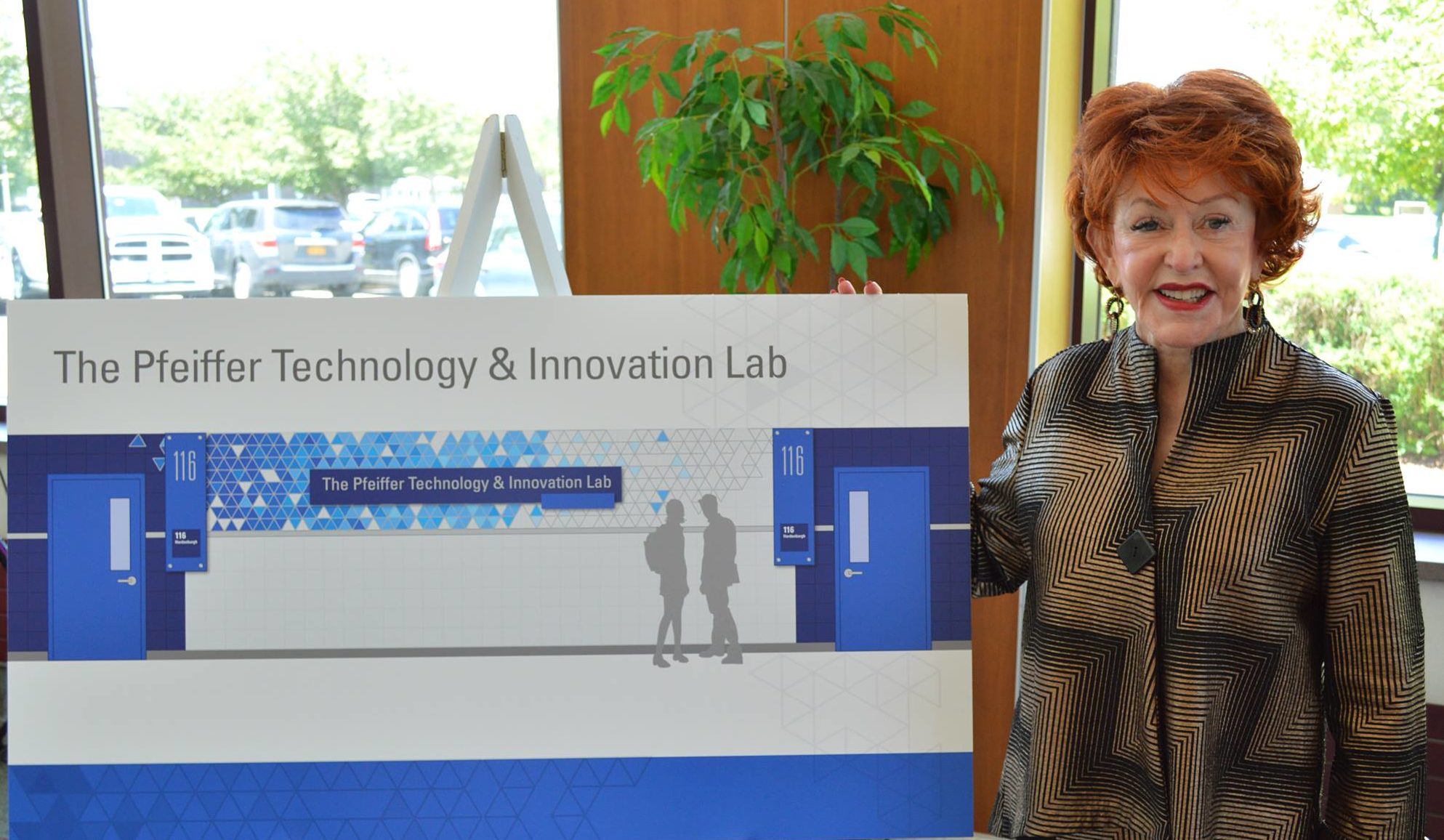
Pfeiffer lab sign with Darlene Pfeiffer

A new technology lab is being constructed this summer at SUNY Ulster! Located off of the student lot section of Hardenbergh, renovated labs and classrooms will be receiving state-of-the-art equipment that can be utilized by both students and industry members, particularly those in STEM fields such as engineering and advanced manufacturing, AutoCAD, 3D printing and web development. Instruction will be available to SUNY Ulster students. This new lab will be named the Pfeiffer Technology & Innovation Lab, after Ulster County resident and Foundation Board Vice Chair Darlene L. Pfeiffer.

Three labs are getting a thorough renovation: the drafting lab, electronics lab, and mechanical lab. The drafting lab will receive dual monitor computers, and the room will be split into two separate labs as well as a 3D printing lab. Industrial technology, drafting, computer, graphic design, art, and fashion students will be able to take advantage of the improved drafting labs, and the 3D printing lab may be open for use, eventually, to all students. The electronics lab will receive new electronic benches, and the mechanical lab (which will be renamed the Mechatronics and Mechanical Engineering Lab) will receive new work benches as well as a private outside entrance for industry partners.

In addition to the labs, two classrooms are getting renovated. The computer classroom will receive 18 new computers with Programmable Logic Controller (PLC) software. Training units for PLC are being ordered to create a PLC lab, as well. The classroom without computers (located off the current mechanical lab) will be renovated to allow students to learn in the classroom section and then do hands-on experiments in the lab. Both of these classrooms will be available for use by any department.

Renovations are scheduled for completion by August 28th, timely for the start of fall classes. Barbara Reer, Director of Technology Education Programs, states, “We want students and faculty alike to embrace these labs, which will aid in current programs, and hopefully help foster new programs.”

Floor plan for the Pfeiffer Technology & Innovation Lab

Eva Santos’ Research Project at Purchase

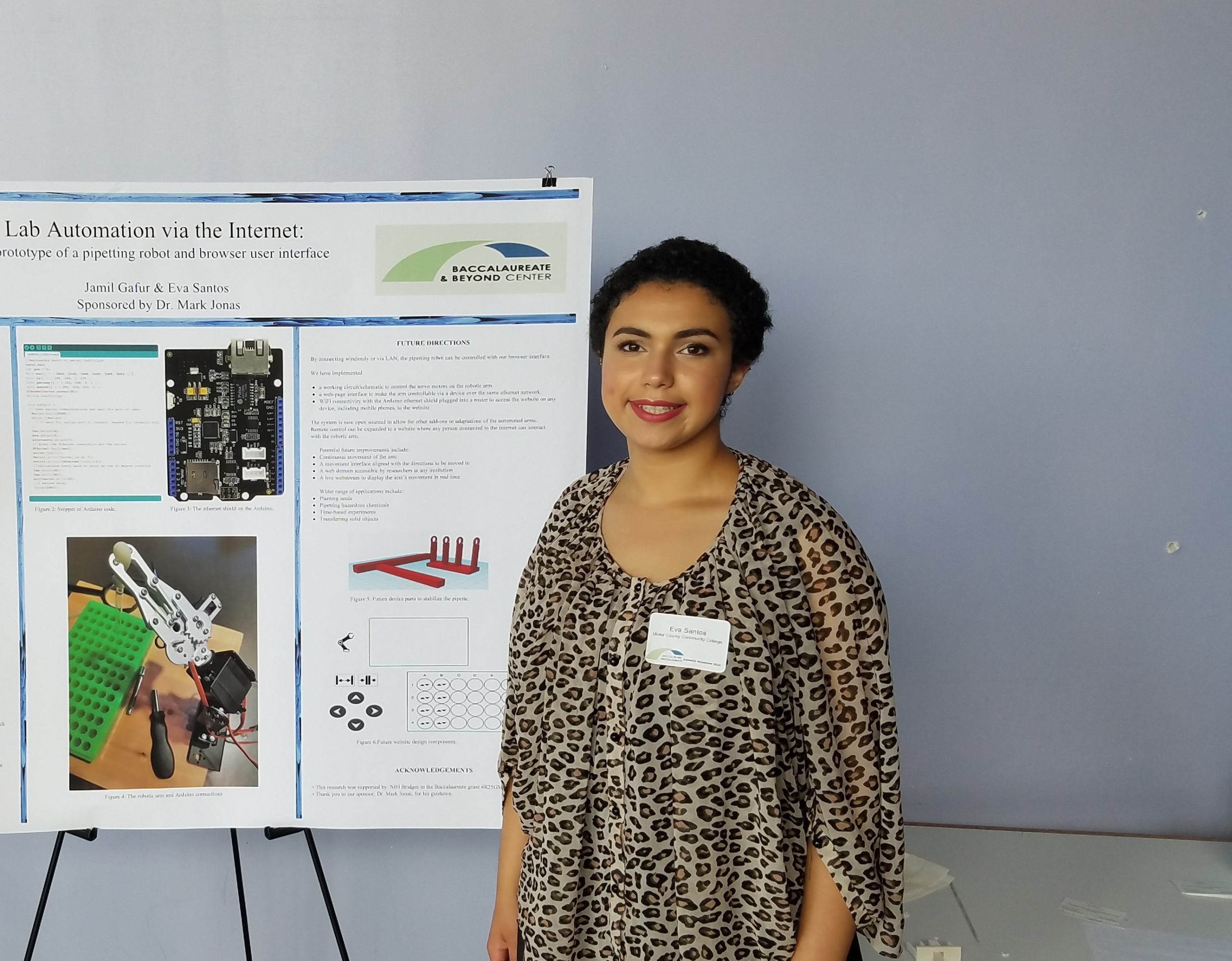
Eva Santos with project plan

Eva Santos, a SUNY Ulster college scholar and student aide, recently participated in the Bridges to the Baccalaureate Program at SUNY Purchase. The computer science major is one of two students from Ulster to be accepted into the Purchase program, which was just opened to our campus STEM community this past year. The Bridges six-week program, designed for underrepresented students from local community colleges, gives budding scientists in fields like computer science, biology, and psychology the chance to network with others in their field and complete a scientific research project under the supervision of a faculty member.

copy-of-20160620_103819She first discovered the program through posters around campus, as well as from the Honors and STEM departments on campus. After applying and getting accepted, Eva got to spend late May through early July living at Purchase, working on her research project with fellow program members, who were grouped into teams by major. Under the direction of their faculty sponsor, Dr. Mark Jonas, they developed their project, titled “The Effect of Carbon Dioxide on Climate Change”, which was designed to discover the effects of excess carbon dioxide on the genetic expression in fruit flies and specific plant types. While the main portion of the experiment was based in the biology field, Eva and a fellow computer science major in the group were given the task of creating a remote-controlled robotic arm for accomplishing specific tasks, like planting seeds. The idea behind this, and robotics in science experiments in general, is to reduce the effects of human interaction and lessen the possibility of error, an obvious goal for all research projects.

Closeup of Eva's project, the robotic arm.
Closeup of Eva’s robotic arm.

The project was a great success. The robotic arm could complete the basic functions it was assigned wirelessly, which was the primary goal, and could be adapted to do even more with additional time. The main project, with the plants and flies, was also successful. Their findings showed a significant change in one group, a 5-10 day longer bolting time for the plants whose parents were exposed to greater amounts of carbon dioxide. This difference was large enough that it could be researched further.

Eva says she enjoyed the program, although it was tough to complete the work in the short amount of time they had. She was intrigued by the experience and is interested in getting involved in another program somewhere next summer, after she graduates from Ulster. We wish this talented student all the best for her future projects!


Alumna Got her STEM Start at SUNY Ulster

Alethea Shuman stands next to lamp

Alethea Shuman ‘2010, Drafting and Design,
Phi Theta Kappa

Close relationships with her professors kept Alethea (Schaeffer) Shuman coming back to SUNY Ulster – even after she transferred to RPI.

Starting when the Stone Ridge resident took classes during high school to when she graduated with a drafting and design associate’s degree with distinction in 2010, Alethea has had a special connection with the faculty here that she hasn’t experienced at other colleges.

“I had such a good experience at SUNY Ulster,” she says. “I really connected with the professors and they prepared me for RPI. I didn’t make as close of connections anywhere else.”

After earning a bachelor’s in mechanical engineering at Rensselaer Polytechnic Institute in 2013, Alethea landed her first full-time job in the field at Selux, a design and innovative leader in the development of high-end architectural lighting systems in Highland.

Starting as a design engineer, she was promoted to engineering lead and now manages a team of drafters, design and manufacturing engineers tasked with developing and pricing custom products for customers’ unique needs.

While working full-time at Selux, she also is pursuing her master’s in engineering management online at Clarkson University.

Over the years, Alethea has returned to SUNY Ulster to take classes because of the “amazing professors,” crediting Drafting Professor Sal Ligotino for giving her the drafting background she needed to succeed at RPI and Math Professor Jules Albertini for the strong math basis for engineering.

As a woman working in the expanding STEM field, Alethea offers this advice: “Females shouldn’t be intimidated. There are challenges but nothing that can’t be overcome and it’s worth it.”