Vassar Program Bound Student Finds New Opportunites
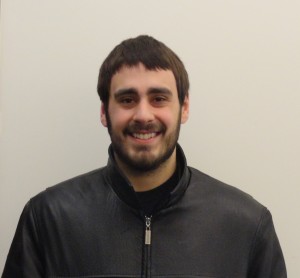
Michael Mulvey stands in front of white wall

“At SUNY Ulster, I found dedicated professors and TRIO counselors who have taken an interest in my personal well-being and academic success. There’s so much that can be gained in an environment like this,” Michael Mulvey, Media and Communications, Honor’s program, expected graduation spring 2016


Michael Mulvey never dreamed of the future he now sees for himself just two years. A first-time college student at the age of 55, Mulvey of Woodstock will be spending part of this summer at Vassar College as part of the highly selective “Exploring Transfer Program.”

Mulvey learned of his acceptance into the prestigious program on another milestone day – the one-year anniversary of his release from NY state prison on a repeat DWI offense.

Mulvey’s own experiences with the penal/treatment program set him on a path of redemption and personal re-invention that began with pursuing an associate’s at SUNY Ulster.

Now an honors student on the President’s List studying Media and Communications with a concentration in film and video production, Mulvey is seizing every opportunity put before him – and he’s found plenty in this diverse community college setting.

From dedicated and motivating instructors who took a personal interest in his success to pursuing his musical interests in playing bass in the SUNY Ulster Jazz Band, Mulvey has flourished in the small close-knit environment.

A high school dropout, he received student support to get his basic college requirements fulfilled for admissions and credits the counselors at TRIO Student Support Services for their tremendous support.

For his accomplishments, he also has received a TRIO award for student excellence.

Seeking Legal and Social Justice

When SUNY Ulster’s Honors Program coordinator Jennifer Kaufman, put the Vassar program before her students to apply, Mulvey was immediately intrigued by a course being offered on “Legal Justice, Social Justice: The Politics of Imprisonment.”

The essay about his own experiences flowed easily and formed an early idea for a thesis. A recovering alcoholic who struggled with dependency issues while on disability as an operating engineer in New York City’s building trade, Mulvey believes the state should devote more resources to education than prisons.

His goal is to apply what he learned as a negotiator and shop steward during 25 years in the labor movement to the political process as a media consultant and filmmaker. “I see new media and Social Media platforms as grass roots political mobilization tools with the ability to reinforce the social contract and invigorate our faltering democracy,” he says.

Mulvey credits Dr. Ray Raymond, Associate Professor of Government and History, as serving as his academic advisor and a mentor. He aspires to transfer to a four-year college to pursue Communications and Government, and apply his knowledge to the American political process.

Vassar Opportunity

The Vassar Exploring Transfer program is designed to introduce first-generation community college students from underrepresented populations to the possibilities of transfer to a wide range of four-year colleges and universities.

Over five weeks, Mulvey will take six credits of interdisciplinary liberal arts courses and live in the residence hall at the Poughkeepsie liberal arts campus. His scholarship completely covers tuition, room, board, books and all other supplies.

Mulvey wants to help other college students to focus on the opportunities before them while they can, and also serve as positive role model for his 22-year-old daughter, Alexandra. “As a parent, I can show her how people can redeem themselves when they make mistakes,” Mulvey says.

“Start here, go far is a motto for anyone at any place in their life,” he says.

Engineering Student Wins Clarkson Transfer Scholarship

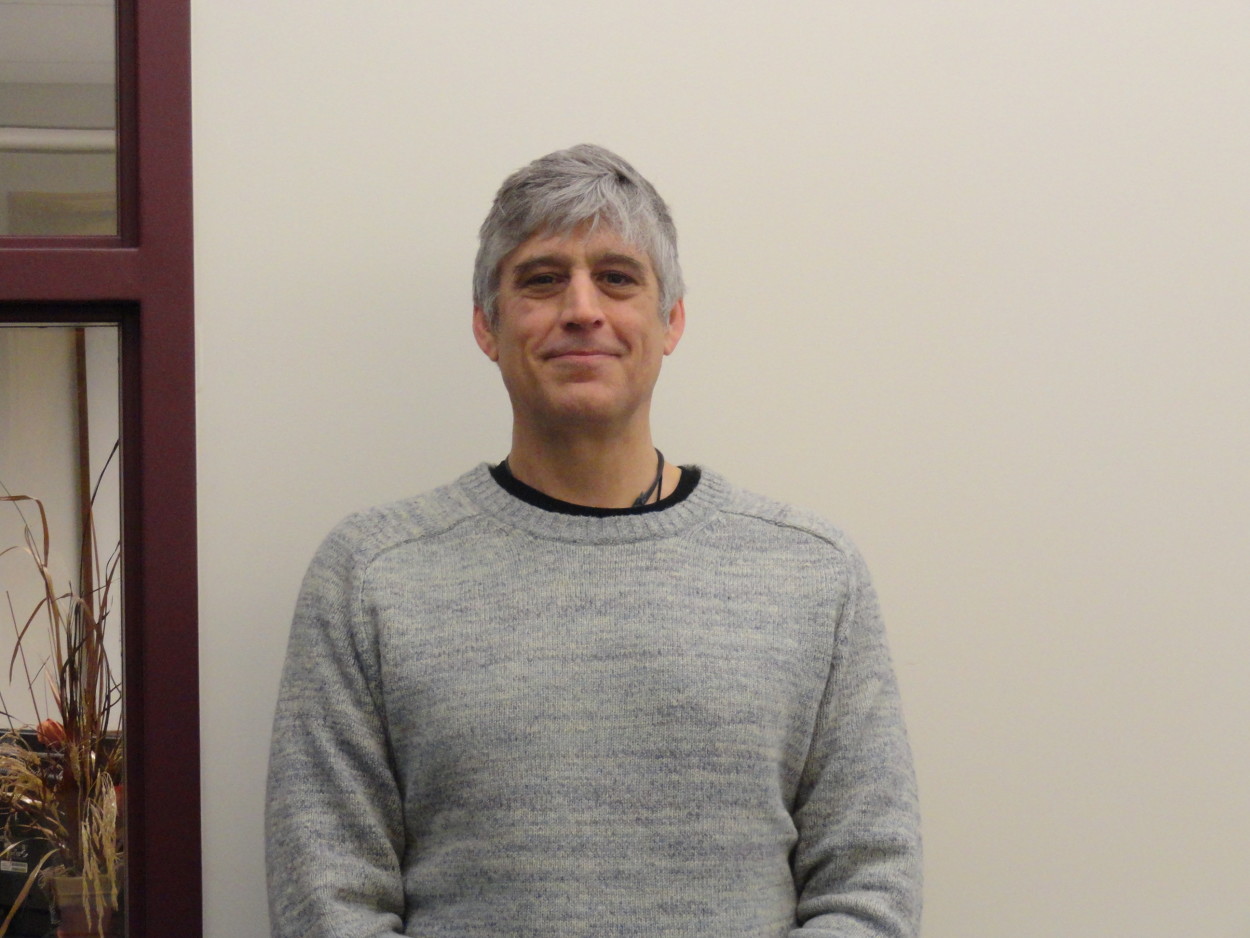
Jacob Berryann stands in front of white wall

Starting at SUNY Ulster has paid off big for Jacob Berryann who has earned Clarkson University’s Transfer Leadership Award, the University’s highest honor.

The excelling engineering student from Kerhonkson will receive $15,000 per year to attend the tech university in Potsdam. Berryann says he was initially speechless and then ecstatic when he learned of the award.

Berryann credits Director of Transfer Kate Smith for opening his eyes to considering transferring to Clarkson or Rensselaer Polytechnic Institute (RPI), and his engineering professors, including Dr. Robert Cassidy, for giving him a good foundation in organic chemistry needed for his future studies in chemical engineering.

“A lot of students look past community colleges,” he says. “Community colleges are an experience you can’t get anywhere else. There’s a close atmosphere at SUNY Ulster and it’s easy to connect with anyone on campus.”

Berryann is looking forward to getting good exposure to the chemical and biomedical engineering fields at Clarkson and wants to one day own his own plant or business. He also aspires to play lacrosse at the college.

Both Berryann and his older sister, Kelsey, came to SUNY Ulster through the College Scholars Program that provided full-tuition for ranking in the top 10 percent of their graduating classes at Rondout Valley High School. Alum Kelsey, 2012, transferred to SUNY Cortland and is pursuing a teaching career.

A member of Phi Theta Kappa, Berryann was involved with the chess, math and physics clubs. He also has volunteered at the Rochester Reformed Church, where he sings in the church choir, and coaches boys and girls in the Kerhonkson Basketball Association (KBA).


Getting through Finals -10 Tips for Success

Woman working at finals

Yes, it’s about that time, finals! As a college student, finals are stressful and important. We’re hoping though, these ten tips below, help you be more prepared and less stressed during finals time.

1. Lower your commitments. Don’t take on any extra commitments and even put off any unnecessary social obligations or family commitments. Let your schedule have as much free time as possible within the two weeks leading up to finals. You’ll find you have a lot easier time studying if you make extra time for it. If you’re working, try if at all possible to take 10 days off for final exam period (or at least trim your work schedule). Even a few strategically placed extra hours can make the difference between doing just OK on finals and doing a really great job.

2. Understand your study needs. Some students think they should spend equal amounts of time preparing for each of their finals. Instead, distribute your study time to how hard the final is likely to be and how well you already know the material.

Insider tip: When figuring out when to start studying, count up from the day the study questions are handed out (or if your prof doesn’t do this, a week before the exam) to the day the exam will take place. “Seven days? Then divide the course into sevenths and study two weeks’ worth of lectures each day.”

3. Figure out what’s covered. One of the most important things you need to be clear about is what materials are going to be tested on the final. Are readings and discussion sections included, or is the final going to focus almost exclusively on material from the lectures? Is the final going to concentrate on materials since the midterm or is it going to be a comprehensive or cumulative final? Knowing the extent and the limits of the exam will make it much easier to organize and structure your studying.

4. Find out if you’re answering the big question or a series of smaller questions. Professors have two strategies when making up finals. Some design a single, big question or two; others give a series of more focused questions, each covering some single issue in the course. Before you start studying, make sure you’ve figured out your professor’s test-construction strategy.

5. Understand when to do group study. Many students believe (mistakenly) that a study group always is the best advantage: more brain power plus peer pressure to crack the books. This works well when your study partners are at least as smart as you. Exam time isn’t charity time.

6. Read the instructions—and make a plan. When you get to the exam and get your test sheet, take the time to carefully survey the format of the test. How many questions are you being asked to answer? Is there a choice? How much does each part count? Then make a (tentative) plan—right up front, before you start working—of how much time you’re going to devote to each question.

Insider tip: Don’t waste too much time outlining your answers, writing down formulas you’ve memorized, or (when given a choice) starting a question and then stopping and starting another question. You’re being graded on the quality of your answer, not on notes to yourself or false starts.

7. Be sure to expand your answers fully. Many students don’t realize that, on essay exams, part of what’s being graded is how well you develop and explain your answer, not just how correct it is. Consider explaining your points in more detail so that someone unfamiliar with the answer would know, just from what you say, what the answer is.

8. Don’t panic too soon. In three hours, you’ll probably be confronted with a number of questions of varying degrees of difficulty. There are bound to be ups and downs—times you’re feeling better, and worse, about how the test is going. Ignore such instantaneous feedback. Most tests are designed to have some harder questions, and in any case, such self-evaluation is often wrong.

9. Pace yourself. Two or three hours is a long time. Think of the final exam as a work session, divided into a number of sub-sessions. Take a few minute break between each question or part. Approach each question separately from the rest.

10. Stay until the end. It’s amazing to see, but many students leave before the exam is over. That’s never a good thing to do, since there are always problems to be checked over or essays to be added to or proofread. Even making a single correction to a problem, or adding a single point to an essay (don’t be afraid to pencil a paragraph into the margin or on top of the page), can spell the difference between a good grade and a not-so-good grade.