Guide to Surviving Midterm Week.

Man working at homework on desk

It may seem hard to believe, but Midterm Week here on campus is quickly approaching!

Over the next few days, you may find yourself wondering how you may ever survive all the projects, and studying that needs to be completed within such a specific span of time!

To survive what may seem like “Midterm Madness” we have put together some of our top tips that can help you get ahead of the game and dominate anything that comes your way!  

Attend Study Sessions.

Attending study sessions is a great way to get a professional and in-depth look at what the upcoming midterm topics. Professors are likely to let similar questions to those on your exams slip during these sessions, and that is an excellent opportunity for you to get a full study experience!

Meet With Your Professors.

Taking advantage of your professors’ office hours as the mid-term looms closer may allow for you get a full analysis on what areas you need to work on, and you may also be able to gauge what topics will be focused on by listening closely to what topics your professor focuses on during your meeting. You can find your professors schedules on their syllabuses, or posted on their office doors.

Stay Healthy.

You may be tempted to pull an all-nighter and spend little to no time preparing healthy food options for yourself. As you increase your brain activity even further this time more than ever your body requires sleep, and nutritious food to keep a clear mind!

Manage Your Time.

As previously stated in our blog post “How to Fight Procrastination this Semester” creating a customized study plan may be an essential part of your success during midterm week. A HUGE part of this is time management- the recommended study session from University of Guelph Learning Commons is studying for 1 hours with a 5-10 break in between.

Stories of SUNY Ulster — Marla Gruner: Family Woman, Educator, Library Scientist

The Stories team recently got an opportunity to conduct an interview with SUNY Ulster’s own charismatic librarian: Marla Gruner. Invariably seated at the help desk, Marla is known for her pleasant helpfulness and the sagacity of her assistance. Entering her office, we are delighted to the smell of fresh coffee, photographs of her two adorable children, and a glowing presence ready to talk.

“I was an English major in college, and I realized there wasn’t a whole lot I could do with an English degree *Laughs*. So I thought, what are my options? I talked to my advisors and they were iffy about it, and I think I took a career quiz and found out that I could go on and get my masters in library science very easily, and I had also worked in a public library when I was in high school and I liked it! It’s not a thrilling story or anything, I was just fortunate enough to have a direct line to working in this field, sort of a straight path…Mostly it’s the people here that I like working with, there are a lot of energetic, fun people to work with. It’s a small community, and unfortunately a lot of people come here from disadvantaged circumstances, so I really enjoy being able to help them in any way; be it finding a book or navigating the site…I’m teaching at F.Y.E. this semester, so I feel like I’m really able to branch out, talk to people and meet more students — that’s one thing about the library is you don’t always necessarily get to know the students very well, you don’t see them as much as their professors might per se. I feel like this is a great opportunity to know more students better…So, yeah, I just really like the community college environment and feel, and with my job specifically, I’m able to do a lot of things in the library, whereas at a larger institution, there might be like ten librarians. So I get to do the job of ten *Smiles*, but in all seriousness it is wonderful and I enjoy it.”

Interesting Tidbit: When asked about the slow decline of the print book and nationally declining book circulation rates, Marla says she is not concerned. She envisions the library of the future as more of a meeting place and help center, as well as a massive digital database. Forever the optimist, Marla is as much a librarian as she is a friend to the campus at large. The next time you find yourself in the library, keep an eye out for Marla and her infectious smile!

10 Tips For First Semester Success

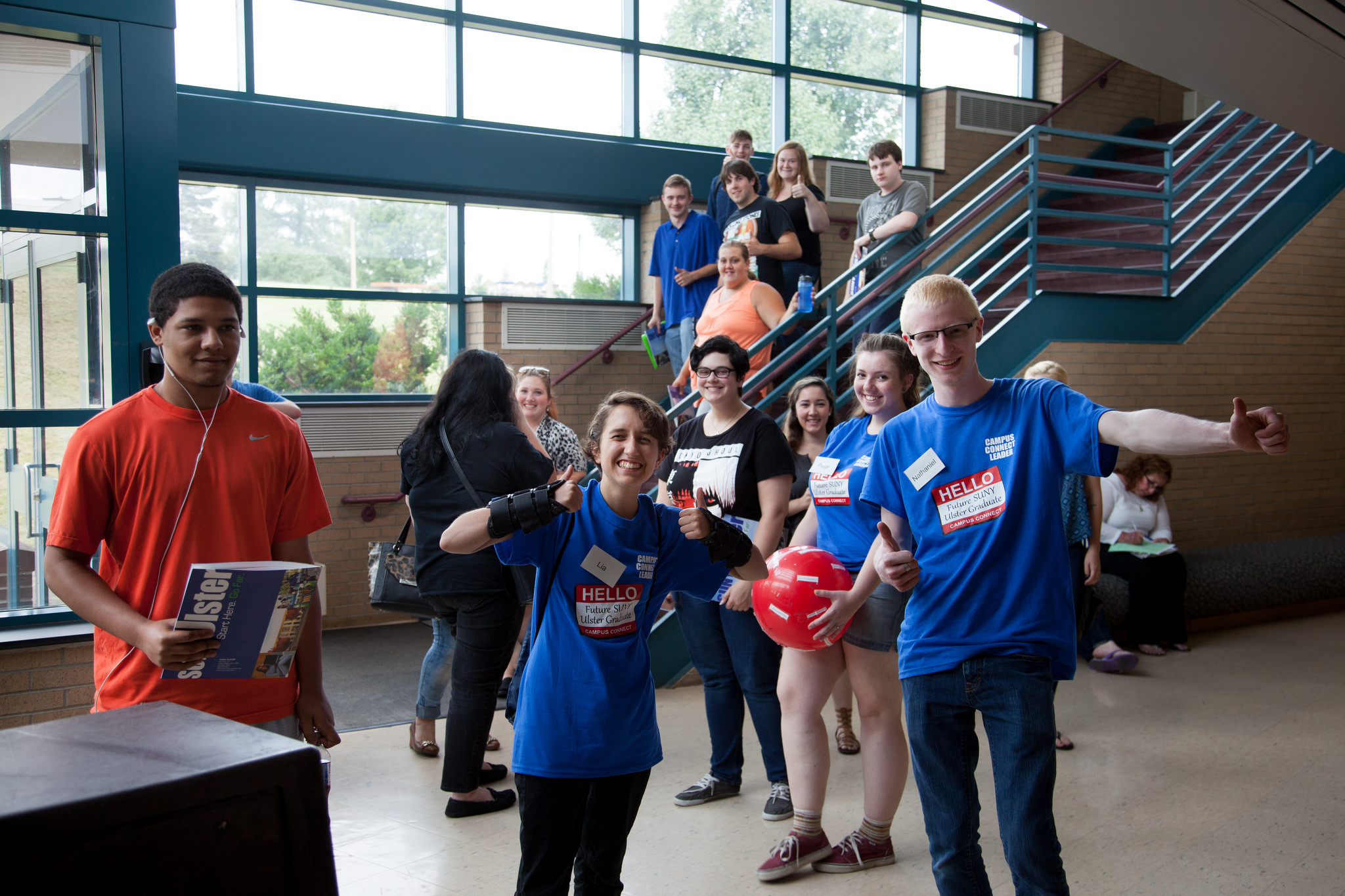
Campus Connect leaders giving a thumbs up with new students

Welcome, SUNY Ulster incoming freshmen! Many of you are probably both excited and nervous about your first semester at college. With a little effort, your first semester (and all of the following) can be successful. Here’s a few tips to help you on your way!

#1: Check Your SUNY Ulster Email

Once you’re enrolled, all important emails from Ulster will come to your @my.sunyulster.edu address. It’s how your professors get in touch with you, as well as one major way to get campus alerts and financial aid notifications. Other students and staff will often use it to contact you as well. Faculty are legally bound to contact you through Ulster email, so do your part and help them (and yourself, since nobody wants to show up for a cancelled class) by checking it at least once a day.

#2: Attend Campus Connect

This one is mandatory, actually, but there’s a reason it is! Campus Connect is the SUNY Ulster orientation, and it offers the opportunity you need to find out all about being an Ulster student, from where different offices are to what career and internship options are available. It’s also a great way to meet the SUNY Ulster community. When you attend, you should also plan to look around campus and find the rooms your classes will be in this semester.

#3: Understand Your Finances

Federal financial aid is a big part of everyone’s SUNY Ulster life, but what about all the other resources? Think about financing beyond just FAFSA, because there’s also local scholarships, the College Scholars Program, and, now, the Excelsior Scholarship. Don’t miss out on any opportunities! Plan ahead; even though federal aid may cover Ulster at the moment, if you transfer to another school, scholarships can be extremely helpful.

#4: Explore Ulster and Portal Resources

Make sure you know where everything is! Campus Connect is an excellent start, but take some time during your first few weeks of class to explore the campus and browse the portal. You can find a lot on the portal and Blackboard if you figure out how to navigate them and get a general idea of where everything is, which is especially important for taking online classes. Touring the campus is important for knowing where you can get food, hang out, use computers, and get information from different offices.

#5: Create A Schedule and Get Organized

If you have a schedule that includes both classes and work, make sure you budget your time! It’s recommended that you set aside 2-3 hours each week for every credit hour to give yourself time for assignments and studying. That’s 30-45 hours a week beyond classes, jobs, and family time if you take the average workload of 15 credits. For the first semester, it’s especially important to have this time available, since you’re still finding your own speed with college work. If you plan to set this much time aside and use it wisely, you should find yourself on track throughout the semester.

#6: Attend Class and Pay Attention

Establishing good habits when you begin college will benefit you for the remainder of your college life. Possibly the most important habit you can adopt is to attend class and pay attention. Students who drop out tend to not have attended their class, or, if they do attend, spend the entire class period using their phone. Remember that doing these things frequently not only gets you dropped from the class, but also means you’re missing important material that will be in essays and exams. Paying attention usually means better grades, and getting better grades means many more opportunities are available to you. Focus on your class for the hour that you’re in it.

#7: Get Involved

Make friends early on! There’s so much to be said for having a few people that you love to spend time with at Ulster. On a winter morning when it’s 5 degrees outside and the thought of your math class isn’t quite incentive enough to get out of bed, knowing you get to see your friends can be the push you need. Joining a SUNY Ulster club and participating in campus activities is a great way to meet new friends. You can also just start a conversation with someone in class or a group that looks interesting in the cafeteria. There’s plenty of options if you make an effort!

#8: Try to Plan for the Future

Obviously, your first order of business is to get acquainted with SUNY Ulster life, but it’s never to early to explore career and internship opportunities. At the very least, get to know your advisor, and be ready to plan next semester’s classes.

#9: Connect with Your Professors

Your professors aren’t just there to teach classes and go home. Most will have office hours you can go to when you need help for a class. If it’s a professor in your major, connecting is twice as important, since they can advise on job opportunities, colleges, and anything else related to your career. One or two will end up giving you your letter of recommendation if you transfer, so get to know them early on.

#10: Have Fun!

This goes without saying, but it’s important to enjoy your time at Ulster. College isn’t endless studying and suffering; you’ll meet interesting people and learn really cool things in classes and on campus. Relax once in a while and just enjoy being a student!

First Year Experience at Ulster

All About FYE 101 the new student's passport to ulster success

This fall, SUNY Ulster is offering its first round of First Year Experience (FYE 101) classes. The course is designed to give new students the tools and resources they need to help transition from high school or the workforce to college life. It also introduces students to a number of career-building and community opportunities Ulster offers. The course, which will be offered on campus and online by several different Ulster professors, will try to give new students a well-rounded understanding of college as they prepare to Go Far. Since everyone first entering Ulster with less than 30 credits will be taking this class, here’s some more information about what new students will be learning about.

Ulster Navigation

The first few months at a new campus can seem completely overwhelming, especially if you’re new to taking college classes. FYE will try to ease this problem for new students. Aspects of FYE will cover not only the support and informational services available on campus, but also how to use different items of Ulster tech that can be difficult to adjust to, such as Blackboard and the portal. Common college terms and requirements will be covered, such as the pros and cons of online, blended, and on campus classes, transfer and career planning options, and elective choices. The course also covers the social aspects of college, like clubs, activities, and other campus opportunities for work and play.

Communication Skills 

Clear communication is vital to college success, since it impacts every aspect of college (and graduate) life. From the emails students write to professors to word choice in an important essay, the way students communicate their thoughts becomes a deciding factor in the grades they receive, the financial awards they are offered, and their job prospects after college. FYE will help students consider factors that can improve their message content and delivery, as well as those that should be avoided.

Career and Finance Planning

Most first-time college students don’t know what they want to do career-wise, let alone know how to fund it. As a community college, Ulster is built around helping students discover what career paths might interest them. FYE will introduce not only the online and on campus resources for planning, but begins the process in class, by helping students identify career paths they might be interested in and the steps they would need to take to achieve them, including financial planning!

Study Strategies

From the Ulster placement tests to the last final exam before graduation, students find that tests are an all too frequent part of academic life. FYE will explain a number of options for study success, including methods for note-taking, studying, and test-taking, as well as how to select the method that best fits the individual student. Students will also learn how to manage the stress and anxiety that tends to come with these aspects of college life.


Fun Facts About Summer Sessions

Student drawing tree outside

Even though it’s still chilly outside, it’s already time to start thinking about the summer! That’s right, registration is now open for Summer Sessions here at SUNY Ulster, so here’s some interesting facts about these mini-semesters that can help you decide if they might be a good fit for you.

It’s Not Like Summer School in 10th Grade

Let’s dispel this common misconception right away, because you might be thinking, “Summer classes? But I passed all my courses!” The truth is, taking summer classes in college often has very little to do with how well you did in past semesters. Granted, it’s a great way to catch up if you didn’t do well in a past class and want to improve your grade, but most people taking summer courses do it for other reasons. In fact, many students (myself included) have had difficulties with scheduling at one point or another and will need a few extra credits to graduate on time. A summer class or two can make all the difference when it comes to your graduation date, whether that means graduating on time or a semester or two early, and thus affects getting into a 4-year school or joining the workforce. Of course, there are many other great reasons to take summer classes too, such as…

You Can Get a Head Start on College

If you’ve just finished high school and can’t wait to start your college career, summer sessions can be a fantastic way to begin. You have a variety of prerequisites to choose from, and you can try online or in class to see what styles work well for you. By starting early, you’ll have an advantage over all the other freshmen who show up that fall and have yet to adjust to new types of classes, the heavier workload, and meeting new friends and professors.

There’s Lots of Class Options

Not only do you have a number of core classes to choose from, there’s also prerequisites and major courses for many fields being offered. This summer, there’s over 80 different options for classes and times available, so there’s a decent chance you will find something you need at a time that works for you. Not only that, there’s an almost equal number of online and on-campus classes, one of the few times this happens. Take advantage of it!

Not An Ulster Student? No Problem!

Many colleges (particularly other SUNY schools) recommend taking summer classes at a community college to accumulate credits at a good price for when you return to your own school in the fall. So if you’re back in the area for summer, or even halfway across the country with access to the internet, you can take advantage of Ulster’s Summer Sessions. Just be in contact with your school to make sure all requirements will be fulfilled first!

Weather (Shouldn’t) Be An Issue

If you prefer in-class courses but often have travel difficulties, summer classes can be a relaxing change. Just like the rest of the year, there are classes in Stone Ridge and at the KCSU, but you really shouldn’t have to worry about driving in snowstorms or waiting for the bus in sub-zero weather to get to them. Additionally, many students say they enjoy the energy in summer classes, since the weather is brighter and classes tend to be smaller, and classmates and professors tend to spend more time together and get to know each other better.

It Keeps You in the Studying Mindset

Okay, this could be either good or bad, but if you’re like most people, that break from homework in the summer makes it all the harder to go back to school in the fall. Summer sessions minimize that and keep you in the class-attending, homework-accomplishing mood we all have to be in to finally graduate. Summer sessions can be difficult, due to the condensed time frame they often work in, as they typically run for 8 weeks instead of 15. This can be a benefit, however, since it keeps you in the mindset needed to get work done and can help you get through a dull course or prerequisite quickly, so that next fall you can start taking more fun classes!

Look at the full list of classes offered this summer, with their session dates and online/in-class options, here. If you find a good fit, register today!


Fun Electives Offered This Spring

People observing the night sky

Are you looking for an intriguing and fun elective to fill up your schedule or fulfill a requirement? Though it sometimes takes a bit of searching to find, Ulster offers a number of unique and innovative courses to bring some excitement into your semester. Here’s just a few you can sign up for this spring!

History of Rock Music – MUS 175

Personally, I’ve seen enough students with band-related apparel to safely say that many of you love rock music. Why not learn more about it in this informative class that covers every aspect of the genre? You get to learn about the history of rock music from its pre-50s roots to today, including its social causes and effects, style trends, and the backgrounds of many performers and songwriters who worked within it. Every other aspect of the business is covered too, as the course description says other topics are “language geared towards the non-musician musical features of rock: instrumentation, melodic/harmonic/rhythmic details, performance styles, lyrics, visual aspects (personal appearances, album covers, etc.), and production/recording techniques.” Of course, you get to listen to a great deal of music, both in and out of the classroom. What could beat receiving college credit for listening to music you already love? Professor Gregory Dinger, who teaches the class, says “The students are assigned a lot of listening outside of class, and we do some playful things in class like “create” appropriate song titles or group names.  Some of the written assignments include “Your Favorite and a Least Favorite Song,” reactions to a reading on the “Negative Reactions to early Rock & Roll,” and interviewing someone (of the right age) as to who they preferred in the 1960s:  The Beatles or The Rolling Stones.”

Feature Journalism – COM 201

If you like writing, this is the course for you. Although it’s a 200-level Communications course, this class can be taken by anyone who has taken ENG 102. Students get to learn about many aspects of the journalism industry, including the development and research, writing, and editing processes used to create feature stories for newspapers and magazines. Best of all, students in the class staff the campus newspaper and contribute articles for credit. Anyone interested in writing or journalism can benefit from this experience and exposure! Professor Robert Pucci, who teaches this class, offers, “The feature journalism class gives the student an opportunity to experience the working environment of a freelance article writer. Students research markets, target publications, write query letters and complete three magazine articles geared to their interests. In the past feature articles written for the class have appeared in local publications.”

Solar System Astronomy – AST 102

Who doesn’t love looking at the stars? The astronomy course here at Ulster offers not only the opportunity to attend a night sky observation (with a telescope and professional input!), but also the chance to learn more about the fascinating world outside our planet of moons, asteroids, meteors, and comets. Professor Steven Schimmrich, who teaches the class, says, “Students learn to use a freeware program called Stellarium which allows you to view the night sky from any location on Earth at any date or time which allows them to predict when and where to observe planets and other celestial objects. Students are introduced to the latest data being returned from NASA missions to various planets, moons, asteroids, and comets in our solar system.” The history of the solar system up through the current search for extraterrestrial life and new planets is also covered. This course is designed for all majors, and actually fulfills a Natural Science elective you might need for graduation.

Register Today!

If you can fit one in, it’s always good to have a class to take purely for the joy of learning! Read more about the courses and find out what requirements they fulfill by clicking on the names above. Be sure to register for these and your other classes before they fill up!