SUNY Ulster Offers Two Complimentary Learning Opportunities In Their Lunch & Learn Program

SUNY Ulster Offers Two Complimentary Learning Opportunities

February 6, 2020 – Kingston, NY – The SUNY Ulster SUNY Ulster Offers Two Complimentary Learning Opportunities In Their Lunch & Learn Program on Tuesday, February 18, 12:00 p.m. – 1:00 p.m. and Future Rich on Wednesday, April 8, 12:00 p.m. – 1:00 p.m. at the Kingston Center of SUNY Ulster, 94 Mary’s Avenue. A free lunch is included.

Digital Marketing Boot Camp Teaser

This is a small business startup blueprint class that covers the seven free things to solidify your online presence. It is also a snapshot of the classes Chris Short teaches at SUNY Ulster.

For over twenty years, Chris Short has worked with small business owners to large-scale industrial manufacturing teams educating others in the aspects of complex marketing and communications.

As Executive Director of the New Paltz Regional Chamber of Commerce, he advises and guides companies by using cutting edge marketing tactics focused around Content Creation, search engine optimization (SEO), and social media marketing (SMM).

Future Rich!

Barbara Ginty, owner of Independent Financial Services, will be giving instruction to the participants in the basics needed to set oneself up for success with their personal finances.

Barbara Ginty is a professional Certified Financial Planner and holds both security and insurance licenses including series 7, 63, 65, and health, life, and disability insurance. Her company, Independent Financial Services, is a family business that has been in operation for over twenty years, specializing in comprehensive financial planning.

For more Lunch & Learn topics and dates visit: www.sunyulster.edu/continuing_education/info_sessions or call Continuing and Professional Education at (845) 339-2025.

###

Over 50 Years of Nursing at SUNY Ulster

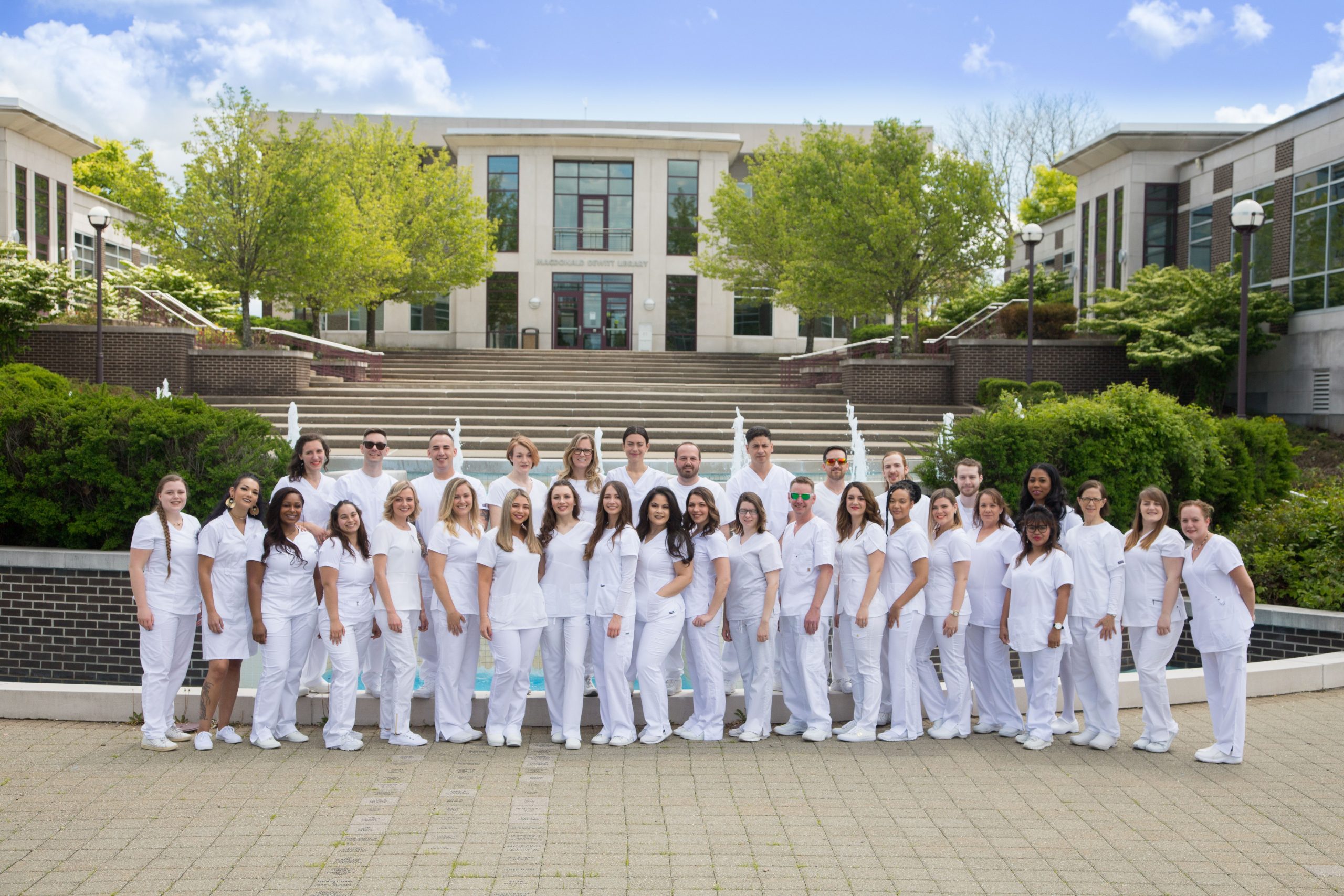
Group photo of nursing students on Campus

Nursing Awards Announcement:

In the Spring of 2018, the SUNY Ulster Nursing Department became the recipients of the PNA Honorary Recognition Award. This award recognizes an agency which has rendered distinguished services or valuable contributions to the nursing profession. This award came as the nursing program celebrated its 50th anniversary of service to the Ulster County community.

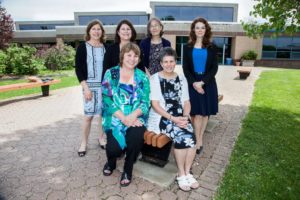
The Nursing Programs faculty and staff smiling outdoors on a spring day.

Celebrating 50 Years of Service:

Since its inception in 1968, the SUNY Ulster Nursing Program has proven itself time and time again as a leader in the healthcare industry of the Hudson Valley. The SUNY Ulster Nursing Program has had over 1,900 graduates- many of these graduates have gone on to win awards and be nationally recognized. Jess Robie Class of 2016 won the Future Nurse Leader Award 2017, Dana Wright class of 2015 represented the WMC/Health Alliance of the Hudson Valley on the Today Show in May 2018, and Donna Becker class of 2014 received the Registered Nurse of the Year Award at Golden Hill Nursing and Rehabilitation Center in May 2018.

Our History:

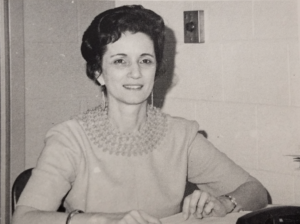
The prestigious 50 year history of the SUNY Ulster Nursing Program is one that is filled with the highest standards of academia, ethical standards, and professionalism. The commitment to student success in the Nursing Program began in 1968 under Head Professor Mrs. Florence Irwin (pictured below) and her original staff made up of Miss. Elizabeth Dunn and Miss Joan Cassavant.

An black and white portrait photo of the first nursing professor.

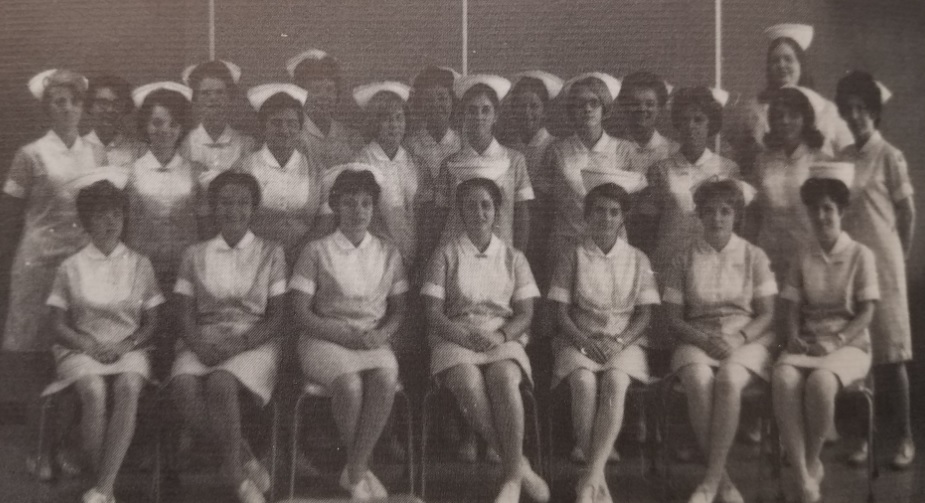
From the get-go, the Nursing Program has boasted itself as innovative and forward- thinking in its approaches to the healthcare field. In its earliest pubic recruitment efforts, the program made it known it was “-open to Men or Women, Married or Single, with High School or GED Degrees.” By the Fall of 1968, SUNY Ulster proudly announced in a newspaper headline that “50 Students Enrolled in the UCCC Nursing Program.” This first class was made up of 48  women and 2 men; 24 of those students were the first class to graduate from the program in 1971.

Class photo of the original 24 students to graduate the nursing program in 1971.

The photo below is of the 2019 graduating class, which was made up of 34 students and had a pass rate of 97.05% for the NCLEX (National Council Licensure Examination), which means 33 of the 34 students passed on their first try!

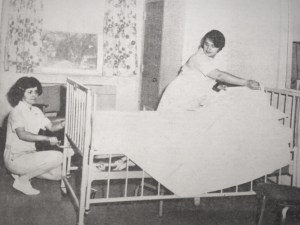
From the start, students in the SUNY Ulster Nursing Program have been exposed to and taught about all the different elements that go into making a healthcare facility reach its appropriate standards. Below is a photograph of students from the 1970’s practicing skills such as bed making and other “practical chores”.


Vintage photo of two nursing students making a hospital bed.

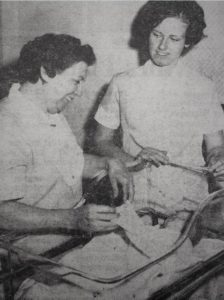
Students since 1968 have been gaining experience during clinical settings. Here, a nursing student is exposed to patients of all different ages: infants, children, adults, and the elderly.

Nursing student and Professor take cake of an infant.

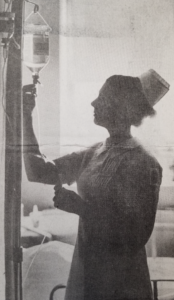
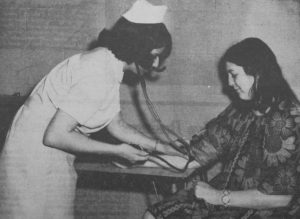
SUNY Ulster nurses have always been given the opportunity to practice the skills that make them exceptional: working hands-on with medical equipment, working one-on-one with patients, and working collaboratively at the nursing station.

Silhouette photo of nurse checking fluid bag in hospital setting.

Nursing student checking vitals of another student.

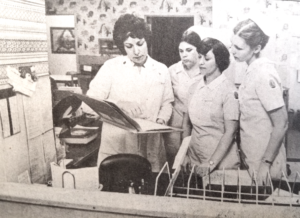
Nurses checking a chart at nursing station. The SUNY Ulster Nursing Program continues to prepare its students for the workplace, by instilling in them the skills needed to provide safe, compassionate, and evidence-based care to those in the Hudson Valley community.

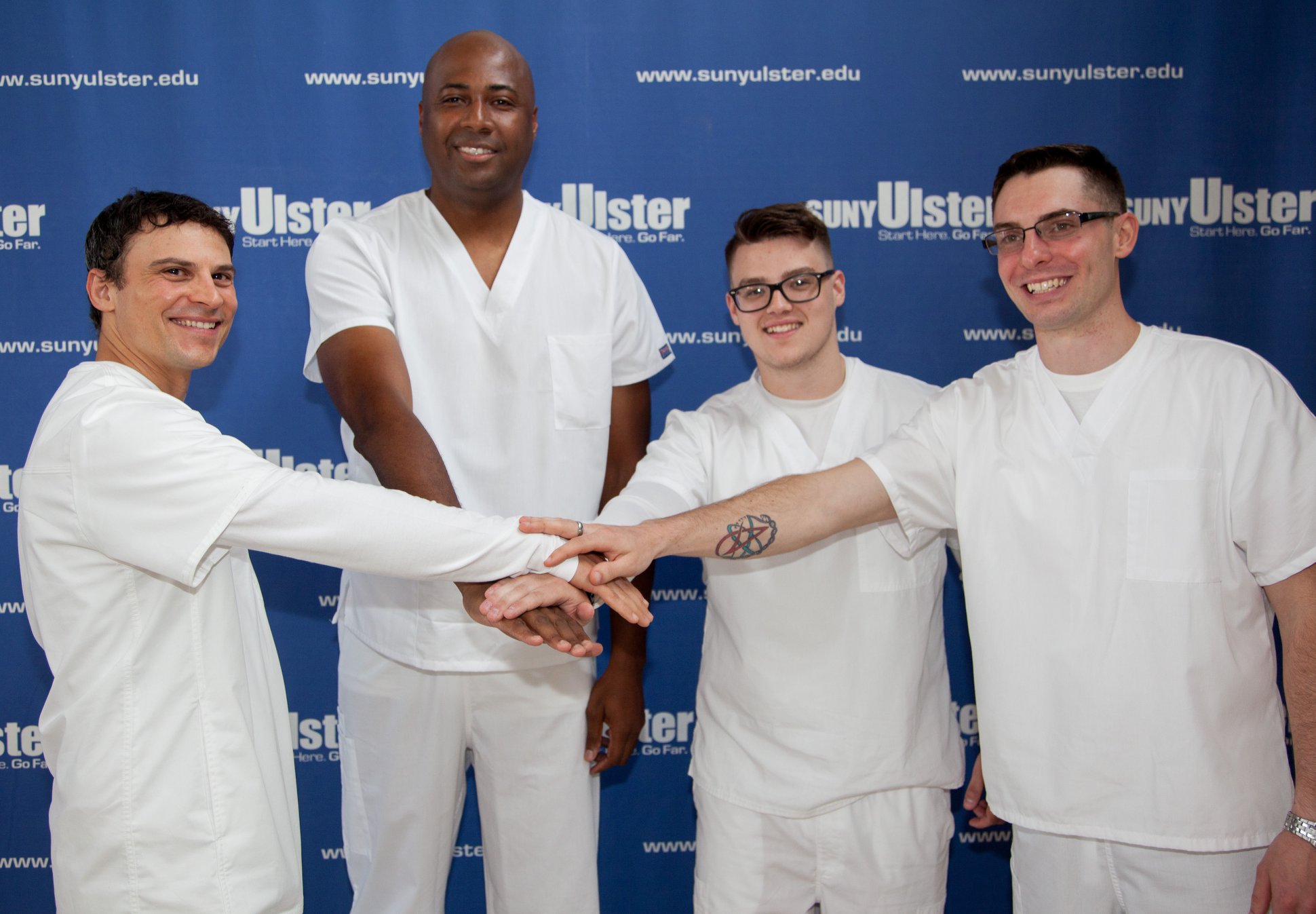
4 male nursing students posed together smiling.

The opportunities continue to grow for our nursing students!

During the 2019 Spring semester, there was a collaborative project with the Nursing program of Durban University of Technology of South Africa. It was an opportunity for our nursing students (present and alumni) to travel to South Africa to meet with their collaborating partners and observe their teammates in clinical settings. 

SUNY Ulsters graduates that decide to continue with their education can now look to our recently forged partnership with Empire State College. This partnership is making it easier for Registered Nurses (R.N.) to secure their Bachelor of Science (B.S.) in the Hudson Valley. It is designed to support students during their transition from an associate’s degree or diploma to a baccalaureate degree, in both an online and on-site format.

PRESIDENT’S AND DEAN’S LISTS FOR FALL 2019

SUNY Ulster Announces President’s and Dean’s Lists for Fall 2019  

January 31, 2020- Stone Ridge, NY- SUNY Ulster releases its Dean’s List and President’s List for the Fall 2019 semester.

Full-Time President’s List

A total of 101 students who attended classes on a full-time basis at SUNY Ulster have been named to the President’s List for the Fall 2019 semester, reported Dr. Alan P. Roberts, President, SUNY Ulster.

The list, compiled each semester, is comprised of students whose final average for the period of all courses taken is 3.75 and higher, plus other requirements.

The full-time Fall 2019 President’s List, by area, is as follows:

Accord:  Joseph Silva, Lauren Skeen, Mary Sommer.

Big Indian:  Florence Stout.

Bloomington:  Bradley Westervelt.

Boiceville:  Derek Boyle.

Callicoon:  Amelia Brooks.

Cornwall-on-Hudson:  Nicole Riccardi.

Cottekill:  Amanda Caseiras.

Eddyville:  David Mano.

Ellenville:  Grace Mannweiler, Riddhi Patel.

Esopus:  Laura Schappert.

Fishkill:  Alexa Ricotta.

Gardiner:  Lindsey Canavan.

Germantown:  Carrington Wood.

Halcott:  Shadow Williams.

High Falls:  Reginald Ade.

Highland: Eryl Bevan.

Holtsville:  John Sioutopoulos.

Hurley:  Matthew Pisano, Nicholas Stott.

Kerhonkson:  Jason Burnett, Andrea Mendoza, Victoria Somer.

Kingston:  Mallory Ameneiros, Lauren Anderson, Summer Brady, Donna Carmody, Scarlett D’Arcy, Haley DeCicco, Maria Elena Ferrer-Harrington, Jonathan Guerra-Ruiz, Camilla Ha, Sydney Haller, Whitney Heredia-Leon, Caelan Marsh, Mandy Seiler, Robert Stoutenburg, Sophie Temple , Alec Tervenski, Zachary Wesolowski.

Millport:  Ethan Smith.

New Paltz:  Jordan Carboy, Jacob Cohen, Noah Cotant, Anna Curreli, Lily Jones-Guida, Elizabeth Medrano,

Summer Mohrmann, Saara Pulkkinen, Kelly Sticca, Patrick Traver.

Newburgh:  Michael Carfora.

Olivebridge:  Amos Diaz.

Palenville:  David Wright.

Pine Bush:  Cassia Bodon, Jocelyn Siegel.

Pine Plains:  Holly Bay.

Port Ewen:  Dakota Terpening-Marino.

Poughkeepsie:  Kristin Brooks.

Queens Village:  Loncey Conyers.

Rhinebeck:  Austin Lunstedt, Abigail Raymond.

Rifton:  Louisa Goodwin, Brenda Robertshaw.

Rosendale:  Ruth Boumboume.

Saugerties:  Molly Dougherty, Constantine Fyffe, Emma Larson, Christopher McCutcheon, Jenifer Monroy,

Gavin Perri, Julia Voerg, Jacqueline Vought.

Shokan:  Spencer Estes.

Spring Glen:  Camryn Hoar.

Staatsburg:  Alyssa Cox, Jolene Region.

Stone Ridge:  Cara Countryman, Anne Palmer.

Tillson:  Emma Britten, Hannah Sheeley, Gabriella Walsh.

Tivoli:  Kathleen Anspach, Jonathan Rhea.

Ulster Park:  Erica Fautz, Devin Kren.

Walden:  Shayla Riggins.

Wallkill:  Matthew Antinucci, Moshe Canty, Tarik Harvey, Ricardo Joseph, Amelia Lukacik, Jermaine Page,

Willie Smith, Carl Taylor, Mason Tremper.

West Hurley:  Garrett Gramzow.

Woodstock:  Rachel Gorman, Maxwell Levin.

Part-Time President’s List

 A total of 33 students who attended classes on a part-time basis at SUNY Ulster have been named to the President’s List for the Fall 2019 semester, reported Dr. Alan P. Roberts, President, SUNY Ulster.

The list, compiled each semester, is comprised of students whose final average for the period of all courses taken is 3.75 or higher, plus other requirements.

The part-time Fall 2019 President’s List, by area, is as follows:

Beacon:  Emma Rudzinski.

Croton-on-Hudson:  Gretchen Grimm.

High Falls: Sloane Lapointe.

Hopewell Junction:  Ashley Hahn.

Hurley: Marleis Rosier.

Kerhonkson:  Karleen Dee, Genevieve Salerno.

Kingston:  Sydney Baisden, Patricia Bowers, Xuemei Dunda, Sarai Howard, Courtney Perry,

Jessica Reis, Tracy Sutton.

Lake Katrine:  Hope Carrubba, Sixto Taveras.

New Paltz:  Kristie Benel, Sharon Otis.

Port Ewen:  Dawn Marie Jankowski, Darrene Zanolini.

Poughkeepsie:  Heather Geib.

Saugerties:  Sabrina Fales.

Shokan:  Lily Savatgy.

Wallkill:  James Clairmont, David Diaz, Carlos Graves, Rashad Hudyih, Vernon Parker, Norman Risden.

Wappingers Falls:  Elyssa Nott.

West Hurley:  Kristen Cannon.

West Park:  Anastacia Cilione.

Willow:  Fenner Osmond-Friedman.

Full-Time Dean’s List

A total of 220 students who attended classes on a full-time basis at SUNY Ulster have been named to the Dean’s List for the Fall 2019 semester, reported Kevin R. Stoner, Vice-President for Academic Affairs, SUNY Ulster.

The list, compiled each semester, is comprised of students whose final average for the period of all courses taken is 3.30 or higher, plus other requirements.

The full-time Fall 2019 Dean’s List, by area, is as follows:

Accord:  Alice Gumpel, Jared Lyman, Emily Lyman, Sydnee Rider, Kevin Riopelle, Victoria Schaef.

Amenia:  Rebecca Venezia.

Bayside:  Brittney Cora.

Beacon:  Marissa Schiller.

Bearsville:  Samantha Goralczyk.

Bronx:  Angel Castillo, Brandon Gonzalez.

Brooklyn:  Hunter Paolucci.

Carmel:  Victoria Pourakis.

Clintondale:  Samantha Pisciotta.

Connelly:  Zachary Helzer, Nicholas Palmer.

Cornwall:  Samantha Lamitie.

Ellenville:  Crystal Conklin, Michael Fields, Guilia Ligotino.

Gardiner:  Jonathan Hansen, Jennifer Kozlowski, Yesenia Melendez, Megan Podeszedlik , Alan Strauss.

Glasco:  Brian Tulimero.

Grahamsville:  Monica Kennedy.

Greenville:  Colleen Bowden.

High Falls:  Erik Bogart, Jessica Meyer.

Highland:  Maiya Earley, Emily Giangaspro. Marylena Hono, Steven Long, John Miller, Megan Morgan,

Ashley Morrow.

Hurley:  Alexandra Bailey, Anthony Consiglio, Carly Harjes, Michael Hein, Hannah Mason , Daniel Norman

Lauren Schaffrick, Bixin Zhang.

Hyde Park:  Amandeep Kang, Carley Ronk.

Kerhonkson:  Frank Alicandri, Juliana Bonelli, Amari Brodhead, Madeleine Callan , Courtney Krom,

Daniel Mendoza, Aidan O’Connell, Zachary Smith, Joseph Taylor, Aaliah Williams.

Kingston:  Jacquelinne Barrientos, James Blatz, Brian Bovee, Morgan Camara, Ashley Campbell,

Mehdi Chamas, Jeremiah Childs, Steven Cina, Rachel Collins, Fatima Contreras-Pacheco, Christian Dovel,

Maya Fornari, Katie Hernandez Chavez, Isaias Herrera, Anders Iaconelli, Riley Jacobsen, Sohraab Khan,

Kacie Kiersted, Elizabeth Lemus , Narritah Lomax, Aaron Martino, Ryan McDowell, Heather Metzger-Brodhead,

Sydney Miller, Adam Modeen, Saul Ortiz, Dhyey Patel, Afeefah Peters, Alana Potter, Juliette Rhodes,

Arlene Rider, Charles Rigney, Sandra Sanchez, Carolyn Scopino, Nolan Secreto, Danielle Soldezzo,

Natalie Terbush-Colon, Haley Toman, Steven Valles, Bailey Vines, Alexandria Wilcheck, Shaye Witkus,

Donald Yonta, Cathleen Zeno.

Lake Hill:  Matthew Brady.

Lake Katrine:  Heidian Bartley, Frances Detweiler, Caesar Martinez, Daniel Shambo, Jonathan Traver.

Lindenhurst:  Justin Ventura.

Loudonville:  Mary Rankin.

Marlboro:  Cassie Coutant, Dakota Wolff.

Middletown:  Angel Martinez, Anthony Sacchi, Hannah Van Sickle.

Monroe:  Matthew Yurman.

Montgomery:  Jenna Malloy-Pomales, Lilei Mason, Holly Walters.

Mount Marion:  Jenna Coppey.

Napanoch:  Rylie Lake.

New Paltz:  Nathaniel Bath, Maya Becker, Samuel Berman, Lauren Buther-Jones , Cody Heller, Gregory Hull,

Olivia Johnson, Jacob Jurain, Skyler Lawrence, Marquis Loveless, Sebastian Mazo, Hunter Murawa,

Jennifer Navarro, Brent Stewart, Shan Vitarius.

New Windsor:  James Secreto.

New York:  Henry Pena Mercededes.

Newburgh:  Andrea Freyer.

Olivebridge:  Kayla Sharp, Amanda Summers.

Pawling:  Gabriella Delaski.

Phoenicia:  Gabriel Solis.

Pine Bush:  Brendan Conklin, Brianna Eagan, Michael Finch, Michael Gardner.

Pine Hill:  David Lydick.

Pine Plains:  Lena Kilpatrick.

Port Ewen:  Natalie Robinson, Madison Wenzel.

Poughkeepsie:  Hailey See.

Prattsville:  Alaina Yarger.

Red Hook:  Malia DiGugno.

Rifton:  Nicholas Gerard, Evelyn Myers-McCarthy.

Rock Tavern:  Erin Martin.

Saugerties:  Jackson Baker, Crystal Barlow, Meredith Becnel, Taylor Brooks, Hannakay Burton, Ryan Chrystie,

Jaclyn Davren, Kieran Defino, Skylar France, Aris Henderson, John Hutter, Charles Johnson, Anna Larson,

Tami Mallett-Edwards, Isabel Martinez, Josue Martinez Hernandez, Matthew Monaco, Elizabeth Scott,

Alyssa Wagor, Ernest Williams.

Shokan:  Adam Carroll, Lily Comerford, Mary Dornan, Alyssa Wiswall.

Stone Ridge:  Matthew Foertsch, Andrew Jarvis, Samantha Radliff.

Tillson:  Katelin Gromoll , Alexander Herrling, James Newman.

Tivoli:  Sage Engasser.

Ulster Park:  Christina Johnson, Julia Simonini, Haley Whalen.

Walden:  Kyle Weiskittel .

Wallkill:  Kareena Clark, Jarvis Cromwell , Moses Ervine, Curtis Farrow, Julia Graziano, Sean Gustafson, Savannah Keesler, William Kenney, Alexis Klinger, Faith Martin, Antonio Morales , Veronica Padilla, Daniel Patrikeyev, Earl Payne, Roland Roberts, Genesis Romero , Jake Sweed, Darr Williams,

Kenneth Williams, Rahman Wilson.

Wanaque:  Tyler Guadagno.

Wappingers Falls:  Blake Butler, Erica Grater.

West Hurley:  Kimberly Kearney.

Woodstock:  Jeannie Borschel, Ashley Grandy, Whitney Harris.

Wurtsboro:  Rachel Whitbeck.

Part-Time Dean’s List

A total of 66 students who attended classes on a part-time basis at SUNY Ulster have been named to the Dean’s List for the Fall 2019 semester, reported Kevin R. Stoner, Vice-President for Academic Affairs, SUNY Ulster.

The list, compiled each semester, is comprised of students whose final average for the period of all courses taken is at least 3.30 or higher, plus other requirements.

The part-time Fall 2019 Dean’s List, by area, is as follows:

Accord:  Emilie Bunch.

Catskill:  Bridgitte Clarke.

Cornwall:  Logan Colandrea.

Ellenville:  Jeffrey Grey.

Gardiner:  Allison Carlstrom, Michael Makely.

Highland:  Emily Losonczy, Royteisha Wright.

Hopewell Junction:  Jennifer Elie.

Hurley:  Jeffrey Knapp, Morgan Quinn.

Kingston:  Mary Brennan, Danielle Cangelosi, Christopher Coddington, Marina DiBella, Steven Dovel,

Sadie Gordon, Natoya Henderson, Ariana Krom, Cameron Letus, Katlyn McManamon,

KellyAnn Palazzolo, Allison Riche, Jacqueline Soechting.

Lake Katrine:  Moheni Creavalle, Erin Marinho, Ebony Pemberton.

Marlboro:  Jenna Tompkins.

Modena:  Elisa Vasile.

New Hampton:  Katharine Matthews.

New Paltz:  Benjamin Ambrosini, Gabriella Connolly, Shanti Esdelle, Zoe Lewis, Cathleen Senior.

Pine Bush:  Melissa Larson.

Port Ewen:  Tanya Hoefer.

Poughkeepsie:  Monty Robinson .

Ruby:  Francisco Santos.

Saugerties:  Christopher Connolly, Marilyn Cox, Leeta Damon, Brandon Drescher, Gina Ferraro, Christen Padilla,

Nina Palumbo-Torres, Jaime Proper, Michael Quinn, Gregory Sillins.

Sherburne:  Mark Louprette, Jr.

Shokan:  Lauren Lomoe-Thompson.

South Cairo:  Elizabeth Bailey.

Wallkill:  William Brewster, Ray Ray Conner, Mark Crowder, Tramel Cuencas, Joel Guzman, Scott Hall,

Andrew Jones, Raymond Merchant, Joseph Patterson, Andrew Smart, Anatoliy Utenyshev, Emil Vazquez.

Wappingers Falls:  Yanire Mozzone-Wickers.

Woodstock:  Cayenne Fusco.

###

Cultural Frequency: What It Means & What It Could be Good For

Cultural Frequency: What It Means & What It Could be Good For
on Display at SUNY Ulster February 7 – March 20, 2020

Participatory Live Performance on Wednesday, March 4 from 1-2 p.m. & 6-7 p.m.

January 27, 2020 – Stone Ridge, NY  SUNY Ulster’s Muroff Kotler Visual Arts Gallery will exhibit “Cultural Frequency: What It Means & What It Could Be Good For” from February 7 – March 20, 2020. The opening reception will be held on Friday, February 7, from 5:00 p.m. – 7:00 p.m. and a live performance will take place on Wednesday, March 4, from 1:00 p.m. – 2:00  p.m. and again from 6:00 p.m. – 7:00 p.m.

Does Industry tell us what we need to use technology for or do artists tell us what it could be good for?

Using electronic signal, performance, video, virtual reality, and print, experimental media artists Jason and Debora Bernagozzi, Eric Souther, and Alan Powell answer that question by immersing the audience in an altered reality. Participating artist Alan Powell explains, “We live in an electronically simulated reality. We spend as much time in electronic space as we do in physical reality.”

In the piece entitled, ‘Glitch 2018’ throw away video is layered like abstract expressionism until it becomes its own surface and cultural reflection.

The live event is an audience-inclusive performance in conjunction with the work on display in the gallery that will include sound, video, and virtual reality to envelop the viewers in a freeform improvisational experience referencing culture, nature, biology, and politics.

The Muroff Kotler Visual Arts Gallery is located in Vanderlyn Hall 265 on SUNY Ulster’s Stone Ridge Campus. Its hours of operation are Monday through Friday, 11:00 a.m. to 3:00 p.m., and closed on college holidays. Contact Gallery Coordinator Suzy Jeffers by phone at 845-687-5113 or email her at jefferss@sunyulster.edu for more information.

###

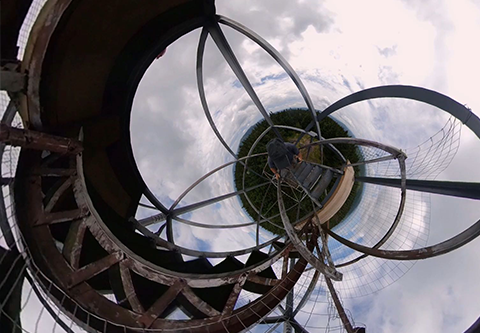
photograph of distorted image with sky and metal

FINAL REGISTRATION FOR SPRING 2020 AT SUNY ULSTER: JANUARY 13

Final Registration for Spring 2020 at SUNY Ulster: January 13

January 2, 2020 – Stone Ridge, NY- Final registration for the spring 2020 semester at SUNY Ulster will take place on Monday, January 13 from 1:00 p.m. – 6:00 p.m. in Hasbrouck Hall, Room 220, on the Stone Ridge Campus. Representatives from multiple academic departments, Admissions, Financial Aid, Registrar, and Student Accounts will be available for advising and information during these hours. Spring 2020 classes begin January 21.

Many Ulster County residents begin their college experience at SUNY Ulster, going on to transfer to four-year colleges and universities or entering the workforce upon graduation. It’s a smart strategy that allows students to gain an excellent education without incurring extraordinary debt. For those transferring, the money saved in the first two years helps finance the last two.

Students just starting the financial aid process may put down a $50 deposit to hold their registration. All other students should sign up for our payment plan or remit payment in full.

For more information on applying or registering, call (845) 687-5022 or visit https://www.sunyulster.edu/admissions.

SUNY Ulster Hosts Continuing Education Open House with Ulster BOCES on January 15

SUNY Ulster Hosts Continuing Education Open House with Ulster BOCES on January 15


January 6, 2020 – Kingston, NY – The SUNY Ulster Office of Continuing and Professional Education will host an open house with information sessions on Wednesday, January 15, from 4:30 p.m. – 7:30 p.m. at the Kingston Center of SUNY Ulster, 94 Mary’s Avenue in Kingston. Representatives will be available to provide information on Continuing Education programs, which provide participants with customized career training and special interest classes. During the open house, prospective students have the opportunity to meet with career counselors and course instructors, register for classes, learn about financial assistance, and more. This event is free and open to the public.

Advanced Manufacturing

Local manufacturers are looking for skilled workers. Learn how you can gain skills to increase your employability, and ask about the pre-apprentice program. This information session will be held at 6:00 p.m.

Animal Care
Talk with animal professionals to learn about a variety of animal related fields and careers, available internships, mentoring, volunteering, and potential entry-level employment opportunities. This information session is scheduled for 3:30 p.m. – 7:00 p.m.

CASAC
For those interested in becoming an addictions counselor or for professionals who wish to re-specialize in addiction counseling, this session will address the training, education, and competencies needed. This information session will be held from 5:30 p.m. – 6:30 p.m.

Green Careers Academy
Learn about green technology training programs that can provide students with a rewarding career with local companies. This information session will be held from 7:00 p.m. – 7:30 p.m.

High School Equivalency Diploma (TASC)
Meet the instructors and learn about review classes to help students earn their High School Equivalency Diploma. This information session will be held from 5:30 p.m. – 6:30 p.m.

Paint & Sip
Enjoy painting a simple winter scene of cardinals in a fir tree while sipping delicious nonalcoholic beverages. Under the direction of artist and teacher Leslie Bender, you will learn to draw the scene onto canvas, mix colors and paint. All materials will be supplied. $40 5:00 p.m. – 7:00 p.m.

Web Development

Learn about the options for web development training. This information session will be held from 6:30 p.m. – 7:30 p.m.

Webinar: Career Step Healthcare

CareerStep is an online school partnering with SUNY Ulster to offer a career-focused education designed to help students quickly enter the workforce. Learn about the following careers: Medical Administrative Assistant, Medical Coding and Billing, Medical Office Manager, and Medical Transcription. This information session is scheduled from 5:30 p.m. – 6:00 p.m. and a link for the webinar will be emailed to registrants.

For more information or to register, contact SUNY Ulster Continuing and Professional Education by phone at (845) 339-2025 or online at www.sunyulster.edu/continuing_education/info_sessions.


                                                                        ###

CAMP ULSTER HOSTS MLK BASKETBALL CAMP ON JANUARY 20, 2020

Camp Ulster Hosts MLK Basketball Camp on January 20, 2020

January 3, 2020 – Stone Ridge, NY – SUNY Ulster’s Camp Ulster will host a full day basketball camp for ages six through thirteen on January 20, 2020 in the Senate Gymnasium on the College’s Stone Ridge campus from 9:00 a.m. to 4:00 p.m.

Activities for the day include stations and drills in the morning, with competitions and games in the afternoon. Campers will get to learn from college players and watch a basketball orientation movie during lunch. Campers should bring a lunch that requires no refrigeration and a reusable/refillable water bottle.

Justin Maxwell, Head Coach of the SUNY Ulster Men’s Basketball program will lead this camp. Coach Maxwell has led the Men’s Basketball team to one National Championship, one Conference Championship, and three playoff appearances in his four seasons as Head Coach. He has also earned two Coach of the Year awards.

Space is limited and registration can be completed online at www.sunyulster.edu/campulster or by calling (845) 339-2025. The cost is $50.

 ###

Why Taking Hand-Written Notes Makes You a Better Student

A bouquet of flowers sits in the corner of the image of a table top from an aerial view. Also on the table is two notebooks, one of which says, "make it happen".

When you take good notes in class, you have a study tool that’s sure to help you get better grades. The way you take those notes can also determine your likelihood to sink or swim in a class. As it turns out, the old-fashioned method, using a pen and pad, is superior in terms of the learner retaining more information. So to shorten that up: paper notes are good and laptop or phone notes are not so good, and I’ll tell you why.

Benefits of Good Paper Notes

It seems a little obsolete to bring a notebook to class in this world of readily available technology that we live in. When we’re talking about being a successful student, however, paper the best resource available! One of the reasons for that is that laptops and phones tend to be too distracting. A student is far too tempted to play a game or take a gander at social media from any computer device; whereas with paper, you’re forced to stay on track.

five notebooks rest on a table with a string of lights and a small bottle of what looks to be perfume or make-up
Photo by Brittany Neale on Unsplash

On top of that, more mental processing takes place with the information when you’re taking hand-written notes. That’s one great reason to put your laptops away, but let’s break that down a bit.

When students take notes on devices such as laptops, they try to take down every word and detail, verbatim. When students hand-write their notes as opposed to typing them, they’re forced to find keywords and summarize the lecture. This means that they had to think about what was said, process it and write it down in a way that they understand. Doing that leads to the subject being better remembered by the writer. We write a lot slower than we can type, so we end up taking fewer notes but they’re more effectively learned.

Mental processing power booster aside, benefits of of hand-written notes go even further in helping you as a student. Pen and paper notes can keep you more alert and engaged during class. It helps to emphasize and organize specific information, and of course creates a more condensed version of the lecture to study.

Successful Note Taking Methods

A woman sits in grass with only her knees and hands visible, she is holding a slim pen to a notebook resting against her knees.
Image by StockSnap from Pixabay

There are different methods of taking notes for everyone. You might already have a way that works for you and that’s great. If you need some ideas on how to better your note taking, I’ve got some suggestions.

First of all, most instructors have no problem with you recording the audio of their lecture. This IS NOT me advising you to substitute this for taking notes, but merely a suggestion of a supplement to your notes that might come in handy later. Just ask your teacher or professor, they might be surprised by your initiative (bonus!).

A Few Methods to Try

The three major note taking methods are widely used and taught among college students. The first is a system of outlining all the material by identifying the main topic. Then make a list of details about it under the topic. This can be good if the lecture is staying with one topic and not jumping around a lot. If you are working on retaining a lot of information, you may want to try another method.

A light bulb is surrounded by bubbles
Image by Gerd Altmann from Pixabay

A different method to try is called mind-mapping, this is something you’ve probably seen before as it’s pretty common in high schools. The idea is to write the overall main topic in the middle of a page in a circle and branch ideas off of the middle circle. For example you might write “water cycle” in the middle and branch off of it with subtopics like “condensation”, “evaporation”, or “water tables”. This can be good for keeping up with a fast lecture but lots of details can fall through the cracks.

Finally, the last well-known method of note taking I have for you is called the Cornell system. This is where you start of the lecture by dividing your page into three sections with lines. Make it so there are extra small spaces on the sides or top and bottom. You take notes as you normally would in the middle, but the extra sections are there to get you a little more involved. After the lecture you are supposed to write keywords or questions in one of the smaller sections. In the other small section, you should write a summary of the whole lecture while it’s still fresh in your mind.

How Do You Know If You’re Doing It Right?

Two hands reach out onto a notebook, holding a pen and marking the paper. On the table next to the notebook is a croissant and a cup of black coffee.
Photo by Cathryn Lavery on Unsplash

Good grades and teacher satisfaction is always a good method of measuring your success in a class. However, knowing if you’ve taken good notes or not can be difficult until the test comes. If you think you got all the important stuff written down then you’re finished, right? Wrong, you need those notes for the purpose of studying and ultimately passing the class with good grades. If your notes can’t help you with that, you might need to consider the five tips below from Dartmouth college’s website.

5 Essential Steps for Mastering Your Notes:

  1. Record the information
  2. Reduce the ideas to a key word or phrase in the left-hand margin
  3. Recite it without looking at it, and if you can’t, you don’t know it
  4. Review to get a complete picture of the ideas that were recited
  5. Reflect by speculating on the implications of the facts and concepts

P.S.

How you fuel your body also plays a huge part in how successful you and your brain are academically. Take a glace at our other articles about drinking enough water and the best brain food for college students.

Water: the Most Important Liquid in Your Life.

Three glasses of water sit on a table with fruit sitting in them, the closest glass has a raspberry splashing into the water in the glass.
A single droplet bounces off the surface of a container of water.
Image by rony michaud from Pixabay

Water makes up most of our bodies so, needless to say, it’s pretty important. While it may be something you shrug off when you’re told that you need more of, read on for some surprising reasons why drinking more water can improve your life fast and easily.

Brain Function Booster = Water

Photo by Daria Shevtsova from Pexels

There is one word to describe the relationship between your brain and water: essential. Your brain is made of more water than the rest of your body is. Your total percentage of H20 in your body is 60%. While just your brain is made of about 75% water. It helps to keep the mind sharp while also helping the brain itself stay healthy and strong. The reason being that when your brain is hydrated and healthy, water plays an essential role to carry nutrients in and carry toxins out.

What about the flip-side?

A black silhouetted head with colorful cogs inside it in the shape of a brain.
Image by Gerd Altmann from Pixabay

Dehydration can lead to terrible brain-related side effects and can affect how you think and physically function. There’s a long list of the mental symptoms caused by not having enough water in your system. They include brain fog, afternoon fatigue, focus issues, depression, anger, exhaustion, headaches, sleep issues, stress, and a lack of mental clarity and acuity. Source: Your Brain on H20.

These are things we all experience from time to time, and frankly, could do without. What’s a super simple solution that’s backed by science, you ask? Drink water until you see signs that you’re drinking enough! I’ll tell you more on how to tell if you’re well hydrated later.

Energy & Mood Improvements, Brought to You by Water

Scientific studies have been conducted to reveal that increased water consumption resulted in a significant decrease in fatigue, confusion and thirstiness, plus a trend of subjects feeling less sleepy. Next time you get that “2:30 feeling” at work, maybe the results of grabbing a glass of H20 will beat out your afternoon coffee.

Image by engin akyurt from Pixabay

A study isn’t needed to figure out that when people are lacking food or water, they can get pretty cranky. So naturally, drinking water can improve your mood as it hydrates you and can help you feel more full when it’s consumed before eating a meal. When you’re fully hydrated, the chances of your mood swinging for the worse are diminished by far.

Help With a Heart as Strong as a Lion

Your heart is an incredible organ that is always working, pumping around 2,000 gallons of blood a day. This superstar body part is more easily able to do it’s thing when you’re well hydrated. Meaning it can pump blood to your muscles and all over your body more efficiently. This is critical to your overall health as the muscles and organ systems that are receiving more blood are more effective when you need to use them.

An outline of a heart is filled with the silhouettes of a family, a man, a woman, and a small child.
Image by Gerd Altmann from Pixabay

Can Drinking Water Result in Disease Prevention?

Well, yeah it can actually. Did you know that drinking water at certain times in the day, such as right before bed, can help to prevent a heart attack? An American Journal of Medical Epidemiology study found that subjects “who drink five or more glasses of plain water per day have a much lower risk of fatal coronary heart disease, compared to those who drink less than two glasses per day.”

The importance of water in our lives goes far beyond staying hydrated, it can help to prevent a list of sicknesses and diseases. This magical liquid is the basis for all toxin release in your body, the more water you drink, the more bad stuff comes out. Drinking water regularly can help prevent and lower the risk of colon and bladder cancers. You can also lower your risk for hypertension, or high blood pressure, with enough water. When you drink water it thins your blood making it easier for your body to keep it regulated in terms of pressure.

You can prevent kidney, bladder and gallbladder by keeping the water flowing. Methods of removing these stones can involve pain, medicine and sometimes even surgery. Prevent them from being a problem in the first place by drinking up. Consuming more water and eating more moisture rich foods can also help promote the healthy growth, survival, and reproduction of your body’s cells.

So, How Much is Enough?

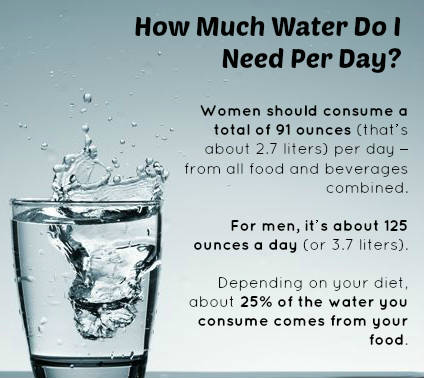
The National Academies of Sciences, Engineering, and Medicine has determined what the adequate daily fluid intake for the average, healthy adult living in a temperate climate is. For women it’s about 11 cups (~2.7 liters), and for men the daily total is about 15.5 cups (~3.7 liters). Before you run to the water cooler, know that about a quarter of that comes from the food and beverages you already consume.

Drinking water is especially important to athletes, people who consume a lot of sugar and/or caffeine, and those who are sick. Since they are at the most risk of water loss.

If plain drinks are something that makes you frown, never fear! There are lots of alternative methods to staying just as hydrated as the next guy. You can try adding fruit to your water via an infuser bottle or a pitcher in your fridge. Some popular mix-ins are lemons, limes, raspberries, strawberries, and cucumbers.

Photo by Caju Gomes on Unsplash

There is also the option of adding more hydrating foods to your diet such as fruits and veggies. Watermelon is an excellent example, consisting of about 92% water.

Whatever your way of drinking more H20 is, more power to you! It’s the liquid that makes the world go ’round, more than just figuratively. Try drinking a few more glasses of this good stuff each day and see how your life and health improve.

Help Protect Our Planet with an Environmental Studies Degree

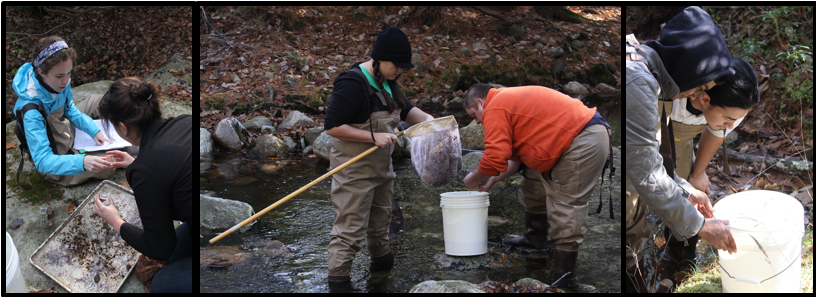
Environmental Studies students working in a stream with nets and buckets

Do you love the outdoors? Are you passionate about nature and wildlife? Would you like to make a difference for the ecosystems that make up our world? If so, an Environmental Studies A.S. degree might be for you!

With environmental issues continuing to grow in severity and importance, Environmental Studies graduates leave Ulster prepared for a field with a steadily expanding job market. Graduates can use their knowledge to help with any issue they’re passionate about, whether that’s food insecurity, climate change, pollution, wildlife endangerment and extinction, resource depletion, or anything else.

Reservoir surrounded by forest at sunset

Graduates have found jobs at the NYC Department of Environmental Protection, the NYS Department of Environmental Conservation, the Ulster County Department of Health, as well as at private companies and local municipalities. The demand for environmental expertise is very high in the Hudson River Valley and Catskills Watershed region, so this career path can be great for students who want to stay local.

In the program, students gain skills in and out of the classroom. Students have the opportunity to explore nature and get hands-on experience as part of their classes. The program includes comprehensive courses in biology, environmental science, mathematics, and chemistry, so students are prepared for a variety of careers in environmental and scientific fields. In addition to the program itself, students can join the SUNY Ulster Environmental Club, which has taken part in several exciting sustainability and restoration activities in the last few years.

Monarch butterfly pollinates a flower

Students can take part in studies relating to stream management, wetlands, forestry, invasive species, pollinators, and fisheries through a variety of field‐based internships. Environmental Studies students also have exclusive access to paid internships with the NYC DEP.

Program graduates who decide to begin working immediately after graduation are qualified for jobs as environmental technicians, laboratory technicians, wetland field technicians, and environmental trainees. For those who want to continue their education, the program prepares students for fields like environmental law and environmental engineering. The program is also a terrific foundation for students who choose to pursue careers in other science fields, such as biology. The program affords easy transfer to schools such as SUNY ESF, SUNY Plattsburgh, and SUNY New Paltz, as well as many private colleges.

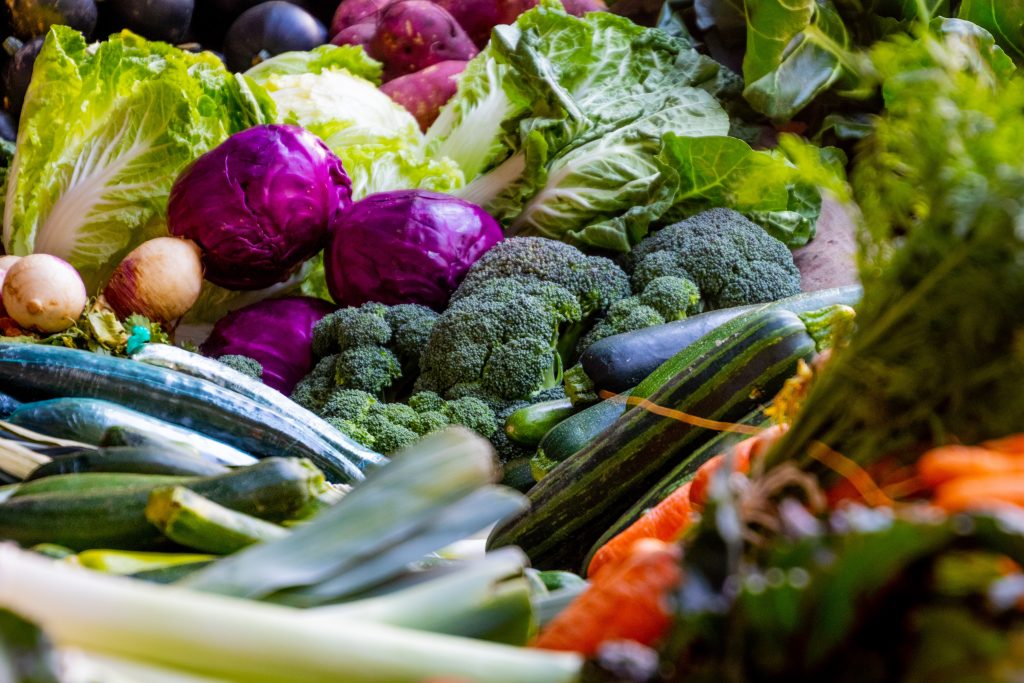
Assorted vegetables in a pile

One recent graduate began a very meaningful project for the local community! Michael Burke, a 2018 program graduate, was awarded a 2017 Barnabas McHenry Hudson Valley Award from the Open Space Institute to work with the Rondout Valley Growers Association to address food insecurity in Ulster County. The culmination of his work was a forum on campus in which local organizations and the community were invited to discuss the issue of food insecurity and potential solutions.

Another alum, 2016 program graduate Alex Lemus, transferred to SUNY Albany to study biochemistry and molecular biology. He is now a graduate research assistant at SUNY Albany and is pursuing a doctorate. He has already published his first research article!

Whether your goal is to improve pollution policies, study renewable energy resources, or help wildlife in their natural habitats, an Environmental Studies degree can be the perfect place to start! Learn more about the program by contacting admissions@sunyulster.edu.