
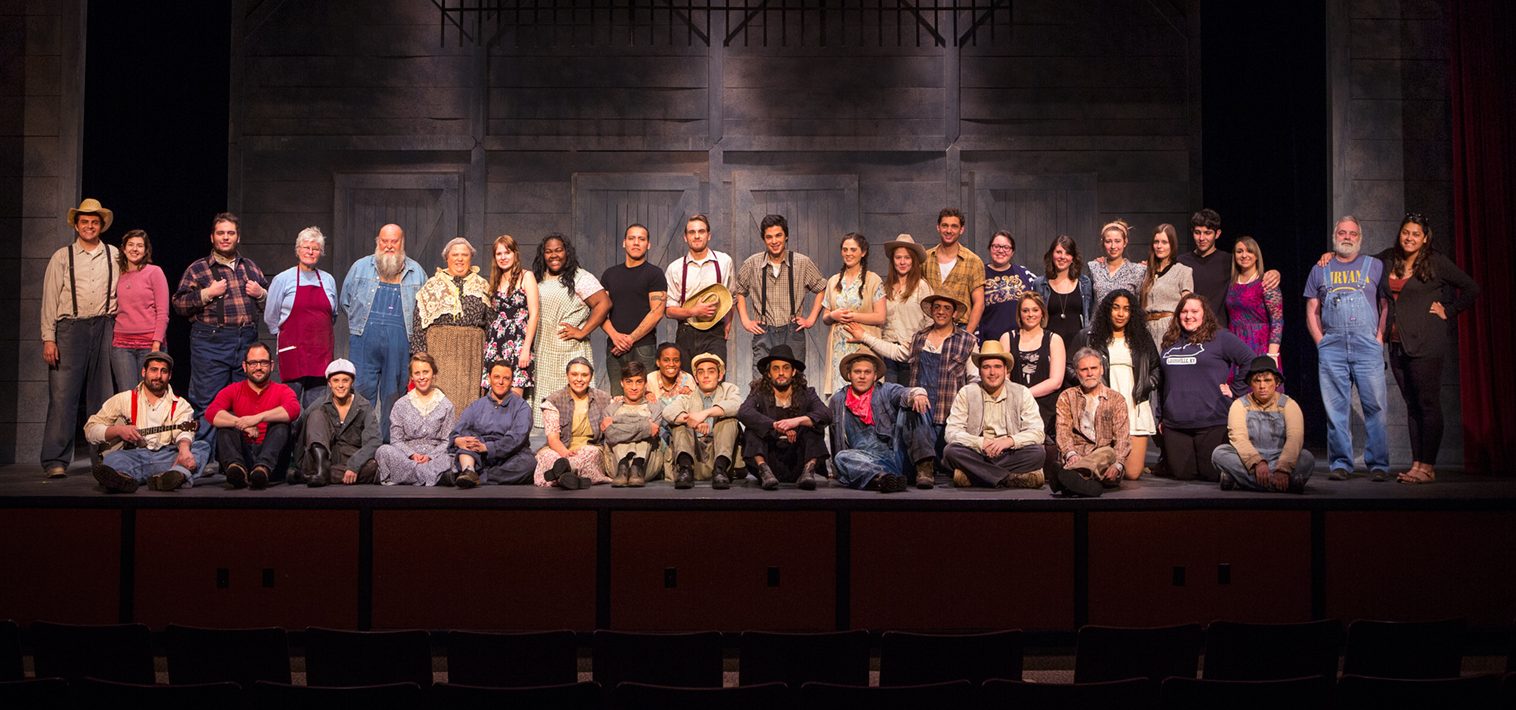
If you dream of performing for the stage or screen, then obviously a Theatre degree is for you. But if your passion lies in writing, woodcraft, art, makeup, or anything else creative, really, then Theatre could be for you too!
Students who receive a theatre degree are well equipped for a variety of jobs in performing arts and beyond. Students immerse themselves in diverse classes, including performance, playwriting, directing, and technical theatre. When they graduate, most students transfer to obtain a Bachelor’s degree, sometimes even going on to get a Master’s. SUNY Ulster students are prepared for further education by building the necessary skills a theatre student needs, including communication, organization, public speaking, community building, self-discipline, and motivation.
Students leave SUNY Ulster knowing how to work power tools, read effectively, paint and build structures, and create their own work on and off stage. They learn the importance of a play and how to interpret text as actors, designers, writers, and directors.
Many students who are undecided (regardless of age or self-described level of “talent”) find their place in the Theatre program, since there’s something for any creative person. The program is excellent for those who like to work with their hands and think critically. Theatre Program Coordinator Stephen Balantzian says, “Our goal is to teach students respect and understanding of all the roles in theatre. It is a community of wonderfully creative people whose jobs ultimately depend on each other. It’s exciting, challenging, and worth the ride.”
Alumni from the Theatre Arts program are now running their own theatre companies, freelance playwriting, creating their own businesses, and working as drama therapists and educators. Kaitlynn Bridget graduated with an AA in Theatre Arts in 2011. She went on to earn a BA from Brooklyn College in Theatre Arts, then received a Master’s from NYU in Drama Therapy. She currently works as a Drama Therapist in New York City, working with children and adolescents with complex trauma histories and conducting a research project with veterans using therapeutic theatre. She says, “Within the coursework and performances I participated in, I discovered the therapeutic nature in theatre. It’s at Ulster where I developed the foundation for the Drama Therapist I am today, and I could not be more grateful for the amazing professors and colleagues I studied with.”
Rita Ritolo-Miranda graduated from the Theatre Program in 2012. After graduating, she received a professional makeup certificate from Make Up For Ever Academy in New York City. She now works as a freelancing makeup artist for weddings and theatre performances. She says, “I’m doing makeup and wardrobe for incredibly talented, experienced actors. The last show I worked on was with the legendary Sean Astin, with a surprise audience member appearance from Stephen Colbert!”
Whether your goal is to perform in the spotlight, create a production behind the scenes, or even help others find themselves on stage, the SUNY Ulster Theatre Arts program can be a rewarding and formative experience.