Utilizing The SUNY Ulster Macdonald Dewitt Library.

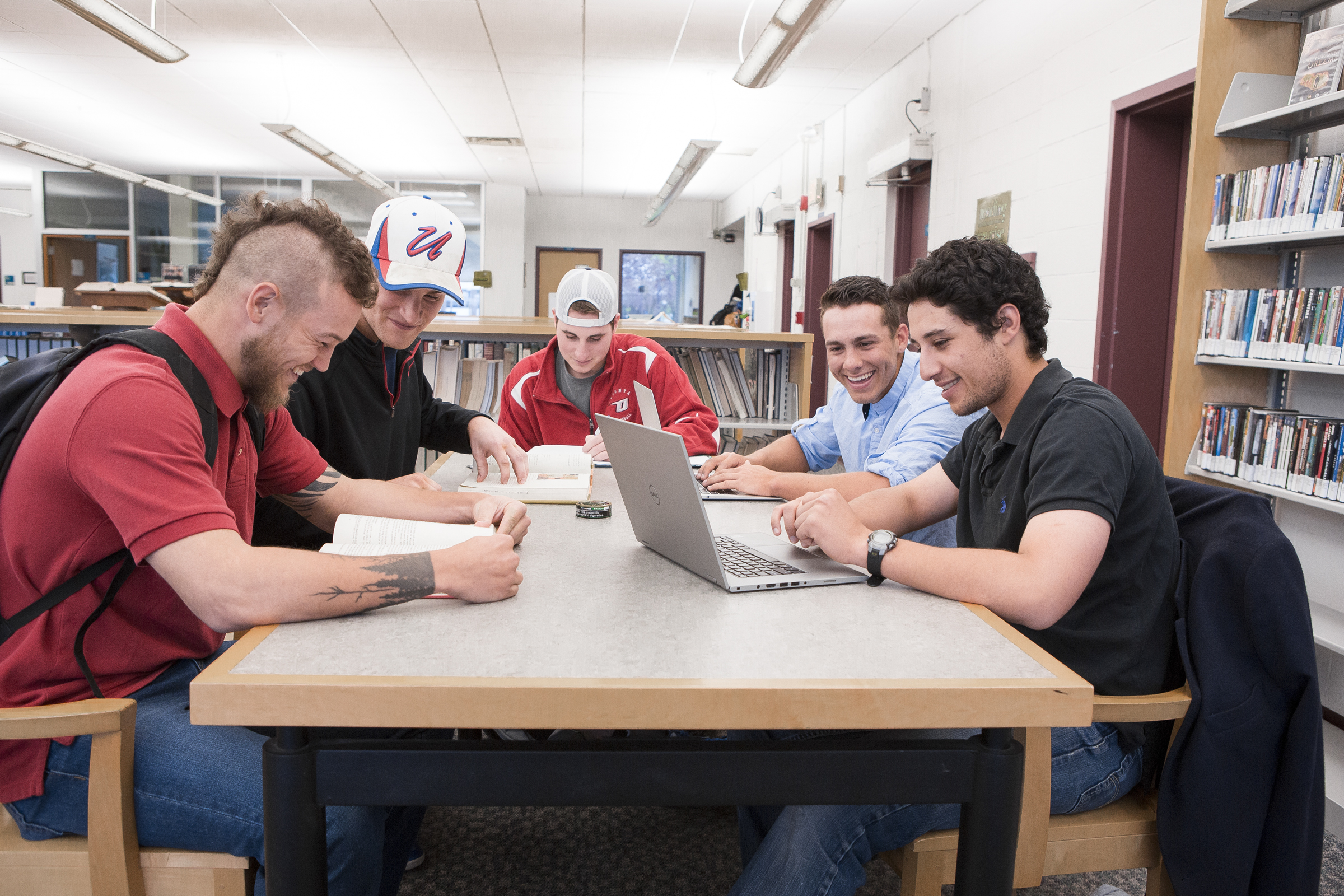
Group of students doing homework together in the library

As final exam pressure begin to mount you may find yourself looking for a place to host a group study group, or rehearse a group presentation without disturbing your peers that may be seeking quiet. Did you know that right here on our SUNY Ulster campus there are rooms you can reserve as a student?

The Macdonald Dewitt LibraryMedia Room (DEW 017) has approximately 24 chairs, a computer, LCD projector, DVD, and VCR player. The projector image is large scale predicted to be “-around 8ft by 10 ft.” by Kari Mack the Director of Library Service. This room is the perfect place to practice any presentations, or group presentations that you and your peers may have.  

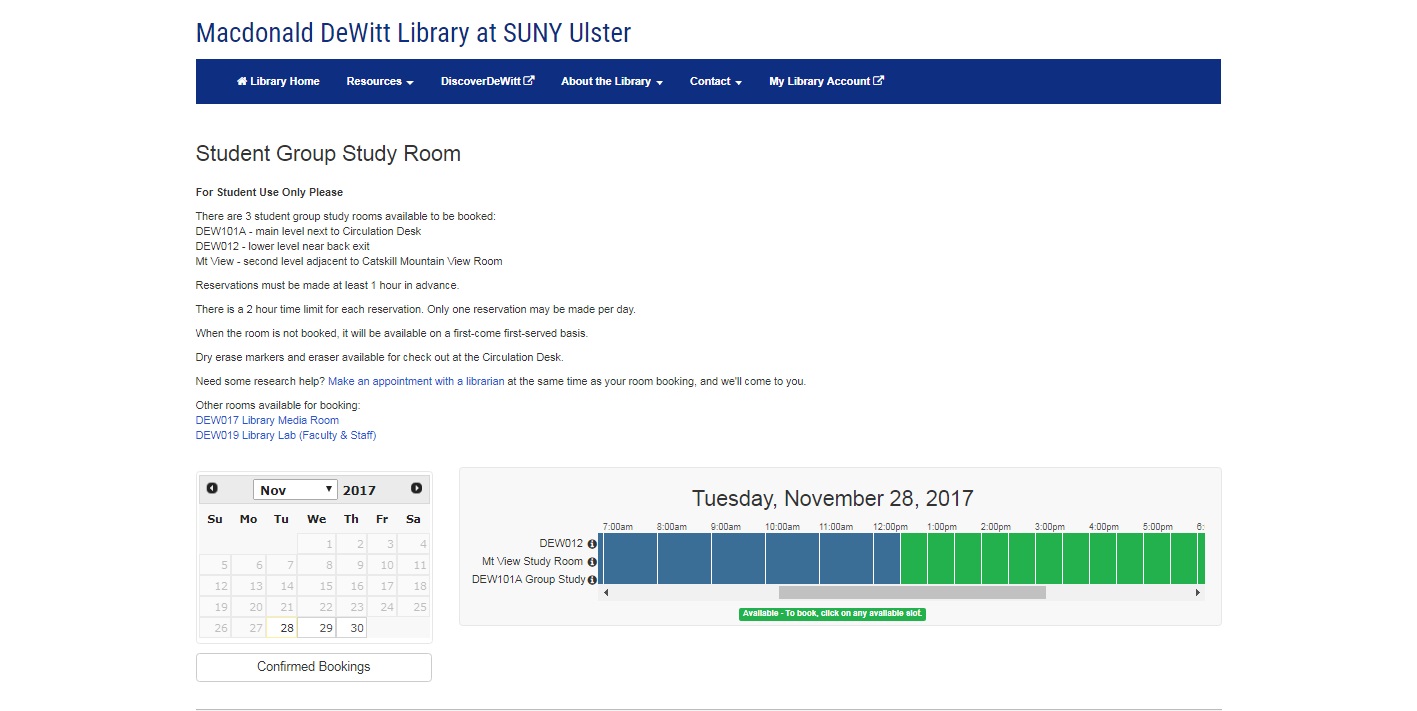
At The Macdonald Dewitt Library There are 3 student group study rooms available to be booked: DEW101A – main level next to Circulation Desk, DEW012 – lower level near back exit, Mt View Room – second level adjacent to Catskill Mountain View Room. The Student Group Study Rooms have tables that comfortably seats about 6 people. 

Reservations must be made at least 1 hour in advance. There is a 2 hour time limit for each reservation. Only one reservation may be made per day. When the room is not booked, it will be available on a first-come first-served basis. Dry erase markers and eraser available for checkout at the Circulation Desk.

Step-By-Step-Guide on How to Book a Library Room.

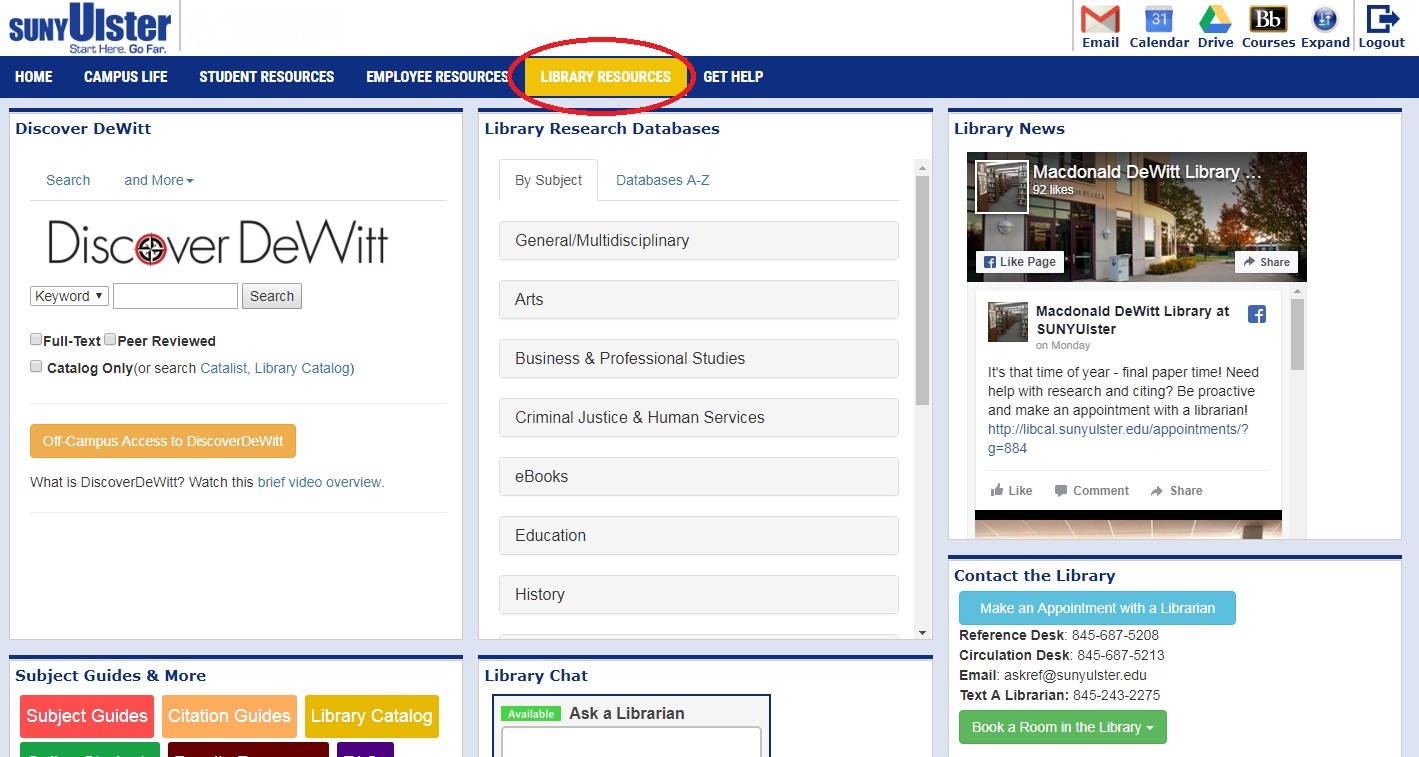
One you have logged on to your SUNY Ulster Portal you will first CLICK Library Resources.

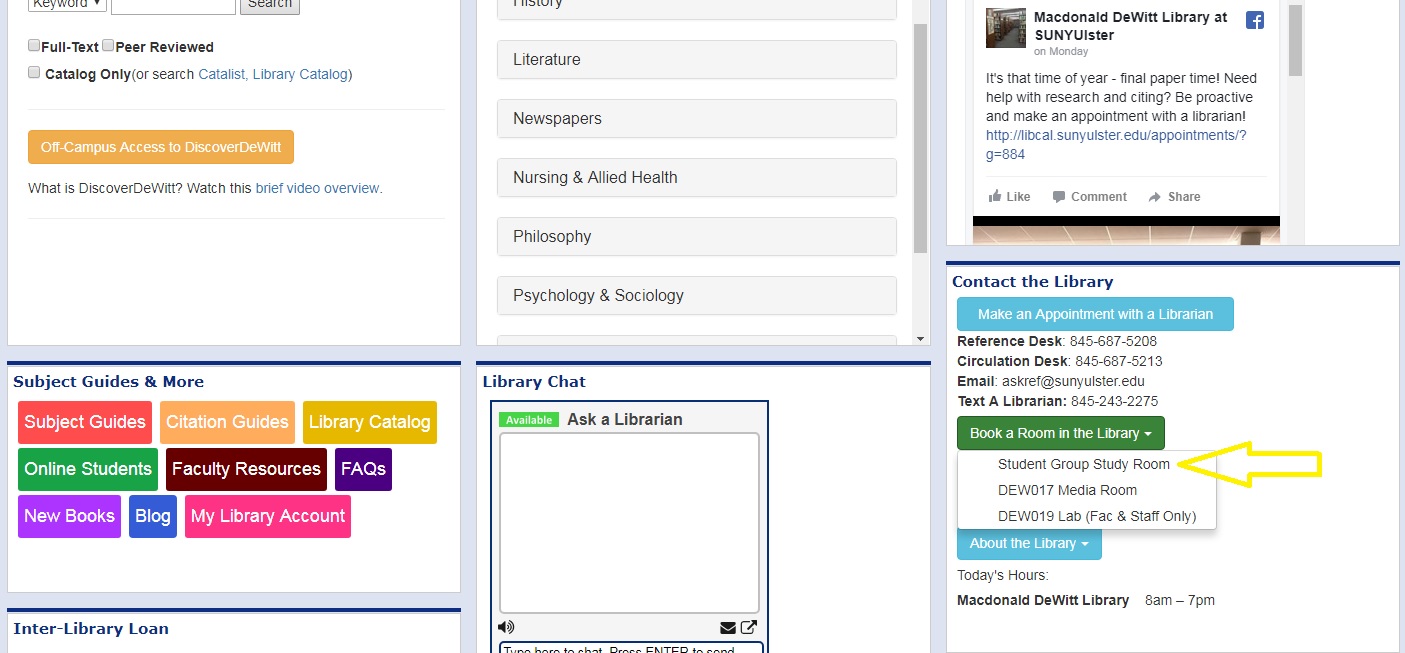
Scroll Down to the sectioned titled Contact the Library and CLICK Book a Room in The Library. From here you can select either the Media Room or Student Study Group Room and CLICK your option.

From here you will be presented with a page that enables you to select the desired date on the calendar. Separate days require separate bookings. 3. Click ‘Continue’ and fill in the required fields. Select ‘Submit My Booking’. To cancel a reservation, use the link provided in your confirmation email.

For more information you can contact the Macdonald DeWitt Library.
Reference Desk: 845-687-5208
Circulation Desk: 845-687-5213
Fax: 845-687-5220
askref@sunyulster.edu
http://www.sunyulster.edu/library/contact.php

The 5th Anniversary of the Start Here, Go Far Boutique

Professional women's business attire at the Start Here, Go Far Boutique
For the last 5 years, students have had the opportunity to receive clothing for free through the generous donations of others in the community at the Start Here, Go Far Boutique. The model is simple: community members and students who have clothing and accessories such as belts, ties, scarves, jewelry, and handbags that they don’t need or use can donate to the Boutique, and students in need of that attire for interviews, jobs, or just everyday life can get what they need for free from the Boutique. The Boutique is a resource available to all students, no questions asked.

History

The idea for the Start Here, Go Far Boutique began when several students expressed concern because they didn’t feel well dressed when attending the Ulster Community College Foundation’s Scholarship Luncheon. With financial support from Darlene Pfeiffer, a Foundation board member and scholarship benefactor, the Boutique was established through Ulster’s Reaching Independence though Supportive Education (RISE) program.

In the beginning, the Boutique was supposed to assist graduates who needed business attire for job interviews, but after Hurricane Irene, the focus expanded to include basic clothing items as well when many students lost their possessions. The boutique is currently being managed by student aides and Meg Sheeley, the Interim Coordinator of Campus Life.

Where Can I Find It?

 The Start Here, Go Far Boutique is located in VAN 154 across the hall from the Food Pantry.
 
FALL 2017 Hours:
Tuesdays 11:00 a.m.- 1:00 p.m.
Wednesdays 10:00 a.m. – 12:00 p.m.


Hours will be updated and advertised for the Spring Semester. To make a donation, contact Meg Sheeley at sheeleym@sunyulster.edu.

Several rolled up, professional ties for men at the Start Here, Go Far Boutique.

4 Ways to Find An Internship.

Woman writing in notebook and looking at laptop

As the winter recess approaches you may find yourself thinking that this is the perfect time to consider getting involved with an internship. Here at SUNY Ulster you can earn college credit while participating in the Student Internship Program. To get involved in the Student Internship Program you must have at least a 2.0 GPA and 30 college credits completed, or by permission of the fieldwork coordinator. For further information, contact Linda Farina, Office of Fieldwork and Internships, farinal@sunyulster.edu

You can also check out our Internships page Here:  http://www.sunyulster.edu/student_handbook/internships.php

An internship is not only a beneficial addition to your resume but can also be a fulfilling personal experience as well. Gaining knowledge, building your skills profile, and expanding your network field are all crucial elements in creating the best opportunities for yourself as you continue your success after SUNY Ulster.  

*Important Tip* When reaching out to potential internships put together a resume and a short pitch/ cover letter can help you to appear direct, and respond to your potential internship. Be prepared to have to communicate with people as to why you are deserving of this opportunity.

3 Additional Ways to Find An Internship.

Talk to People You Know.

When it comes to looking for an internship you may find yourself thinking “Where do I even start?”  The answer may be right in front of you in your sphere of influence. Start by asking your professors if they are aware of any opportunities that are available.

Another way to reach out to people you already know is sharing with your friends on social media (Like Facebook, Instagram, Linkedin) that you are looking for this new venture. You may be surprised by what leads and resources your friends and family have to offer.

Online Websites.

Online job sites like Indeed.com, Monster.com, https://regionalhelpwanted.com are not only for looking jobs! With the websites listed above, you can either use the “Internship” tag or search “Internships” in the website’s search engine. Here all active opportunities are filtered and listed as specific, or unspecific as you would like!

Create Opportunities For Yourself.

Make a list of 5 to 15+ potential places that you can see yourself working in your local area. Research the best contact information for all of these places- and do what is known as a “Cold Contact”. Be professional and friendly while letting them your objective, when you can start, and all the important information they need to know when considering you as a potential intern.

You are capable of manifesting your own opportunities that could in turn into an employment position for you.

12 Tips for Organizing Your College Life

Focused woman doing homework in the library

With finals approaching, there’s no better time than the present to get organized. Whether you’re new to college or a returning student, here are some great tips to help you succeed. Try them and find what works best for you!

  1. Be motivated. When the going gets tough, it’s easy to lose track of why you’re putting so much time and effort into college. Keep a list of long-term goals to help you stay focused on what’s important. Tack it up somewhere where you will see it every day.To do list written on paper with blue pen
  2. Keep a planner and/or a planner app. During the school year, using a planner to track classes, assignments, work, and social plans is extremely important. Planners are cheap and are available almost everywhere you can find calendars. If you’re more digitally inclined, there are many free apps and websites you can use that are a Google search away. 
  3. Save all your syllabi and keep them available. If your professor gives you a guide to what your entire semester is going to look like, don’t lose it. You can mark your syllabus with everything you need to remember. Gather all your syllabi together and enter important dates into your planner or calendar app.
  4. Set a schedule and stick to it. Keep to-do lists updated every day. Try to keep the same wake-up and bedtimes every day of the week, even on the weekends and holidays, when there are no classes. This will help you stay on schedule consistently. Also, try to figure out what time of the day you are most productive, and optimize that time for productivity.
  5. Be prepared for the day, before the day happens. When you’re ready for the day even before you wake up, the day tends to run much smoother. You’re less likely to forget important items you need for the day. Having your backpack stocked ahead of time with everything you need is a big time saver. stuffed-pack
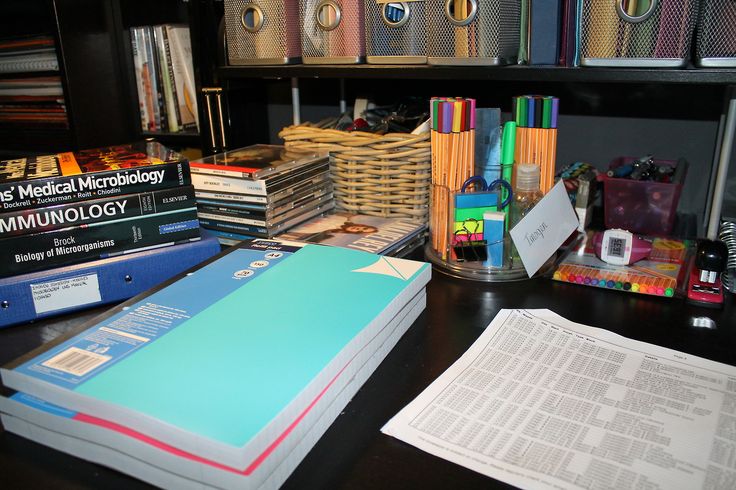
  6. Tidy your living and work spaces. Think of the time you spend looking for something in the morning while getting ready to leave the house for the day. Having a clean desk is an excellent start. At the end of each day, get rid of clutter and put things where they belong. This simple nightly routine makes getting ready in the morning much less stressful.
  7. Develop good note organization habits.  Use a color code system, and give each class a color. Match all your binders and notebooks for that class to their color, so that they are easier to find and grab when you are on the go.  Keep separate binders, folders, and/or notebooks for each of your classes. apps-for-keeping-organized-in-college
  8. Set work sessions and use a timer. This step will keep you from wandering into other tasks not coursework related.
  9. Study and hang out in different areas. Work at a desk or in a library, and reserve your room or bed for hanging out and sleeping. Try not to study on the couch in front of the TV, as it’s easy to get distracted by your newest favorite Netflix show.College Study Area SUNY Ulster
  10. Spend time away from the screens in your life. Disconnect from the internet for a few hours a day. Unplugging is a healthy way to curb stress and keep yourself from wasting time. Consider limiting your social media use or cut the habit out altogether, as a quick scroll through your Instagram feed can quickly turn into a hour-long browse.
  11. Remember college is only one piece of your life. If possible, try the 8/8/8 method for balancing your life. It’s a way to divide your time to be responsible and still relax. Try to sleep for eight hours a day, spend eight working, and eight hours for the rest of your life – time with friends, eating, etc.
  12. Go easy on yourself. No one is perfect, and it can be incredibly difficult to stay on top of all your responsibilities. Do your best, but remember, everyone make mistakes. SUNY Ulster has lots of support services to help. And always remember the goal – graduation!


How to Master the Class Registration Process

Register Now - Ask your Advisor About Online Registration

Every spring and fall, current returning students must register for the next semester’s classes here at SUNY Ulster. It’s not hard to do once you’ve got the hang of it! Here are some key tips to keep in mind as you prepare to register, and how to prepare for the upcoming semesters class load.

 First Things First: Make an Appointment with Your Advisor.

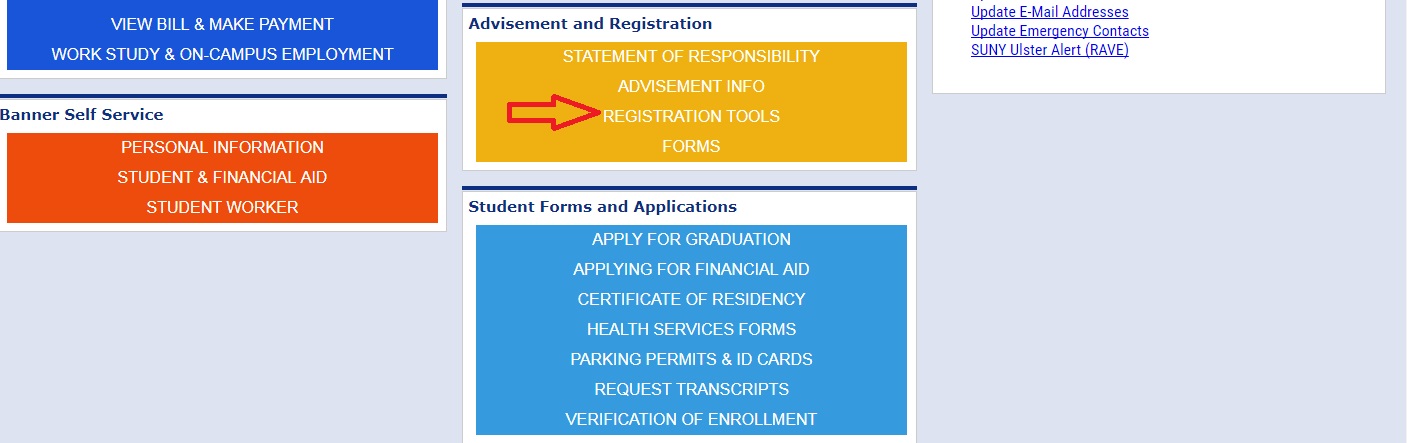
  • You can find your Advisor by visiting My.SunyUlster.edu
  • Next click Student Resource Tab.  

  • Scroll down the page until you get to Registration Tools and CLICK

Still Need Help?

Get registration assistance by phone at 845-687-5075.

Email: reginfo@sunyulster.edu

Your academic Advisor may let you know where or how they prefer for you to sign up for your registration appointment. For example some Advisors will provide an appointment signup sheet with their various available time slots, others will have you sign up via an online appointment calendar.

Before Your Appointment: Make a Plan!

There are a few things that you can do in preparation for your upcoming meeting to make sure it goes as smoothly as possible, and has limited confusion.

  • Check to see what is required for the upcoming semester and compare this what classes you still  need against the upcoming academic class schedule! http://apps.sunyulster.edu/courses/ 
  • It is also helpful to make a mock schedule (or even 2) to bring to your upcoming appointment!

After Your Appointment: Set reminders for yourself!

  • In your planner, or calendar in your phone mark the start date reminder of any online courses or accelerated courses you may be taking. (It can be easy to forget when you aren’t physically attending class about particular dates.)
  • Also set a reminder at a closer date for you to closely see what books are required for your upcoming classes!

Kevin Stoner: Dean of Academic Affairs, Master of the Mind, Whitesnake Fan

Vice-President and Dean of Academic Affairs Kevin Stoner clapping at graduation ceremony

EXCLUSIVE: Stories recently got to have a chat with Ulster’s very own Dean, VP, and educator — the sterling Kevin Stoner. A man who moves in silence and thinks in volumes, a powerfully inquisitive mind, a monolith of philosophy; the Dean’s academic acumen is beyond measure. Sitting at his desk with his hands forming a triangle, peering above his glasses in signature style, Kevin Stoner tells us what it means — to be the Dean.

“Deans are a very different sort of creature that exist only in the academic realm, in that we are first among equals, in other words, we are all peers and colleagues in academe, and it’s my privilege to lead, through consensus, the group of my peers…It’s challenging, but the best part of the job is that no 2 days are really alike. I never intended to be a Dean, I was at a training at Harvard some years ago, and they dubbed everyone in the team, everyone got a nickname. Mine was the ‘accidental administrator’ — they did that because I never had that as a career goal, never saw myself doing that, never aspired to that. I moved into administration from a full time faculty position, reluctantly, and I did so because I’d been involved with Middle States accreditation, and so I knew the backside of academe. It’s very much like understanding how the kitchen works, once you understand how it does, it becomes very difficult to go back outside again. I realized that if I wanted to affect change, the best way to do it was through administration…The things I often say to first year students are that your first semester GPA is absolutely critical, it becomes very difficult to ever recover from a bad first semester. To the extent that one can, they should think of college as a job, it’s an obligation; not something that comes tenth or eleventh in life. I also realize that for some students, there are other things that must come first, and so my advice is to always nudge it as close to the top as you can…And also, take every single shred of experience that you can from college: pick your teacher’s brains, pick your peer’s brains, get involved, think — live this college life. My own mother told me when I was a child that I would look back on these college years and think it was the happiest and best time of my life. At the time, I was like ‘yeah-yeah-sure’, but, she was right. Enjoy this time, as it may be the last time, for many people, to pursue pure knowledge.”


FUN FACTS: As for the Dean’s musical tastes, he likes Gretchen Wilson, and expressed a particular affection for ‘80’s hair-metal group; Whitesnake.


An Interview with Chief Diversity Officer Lorraine Lopez-Janove

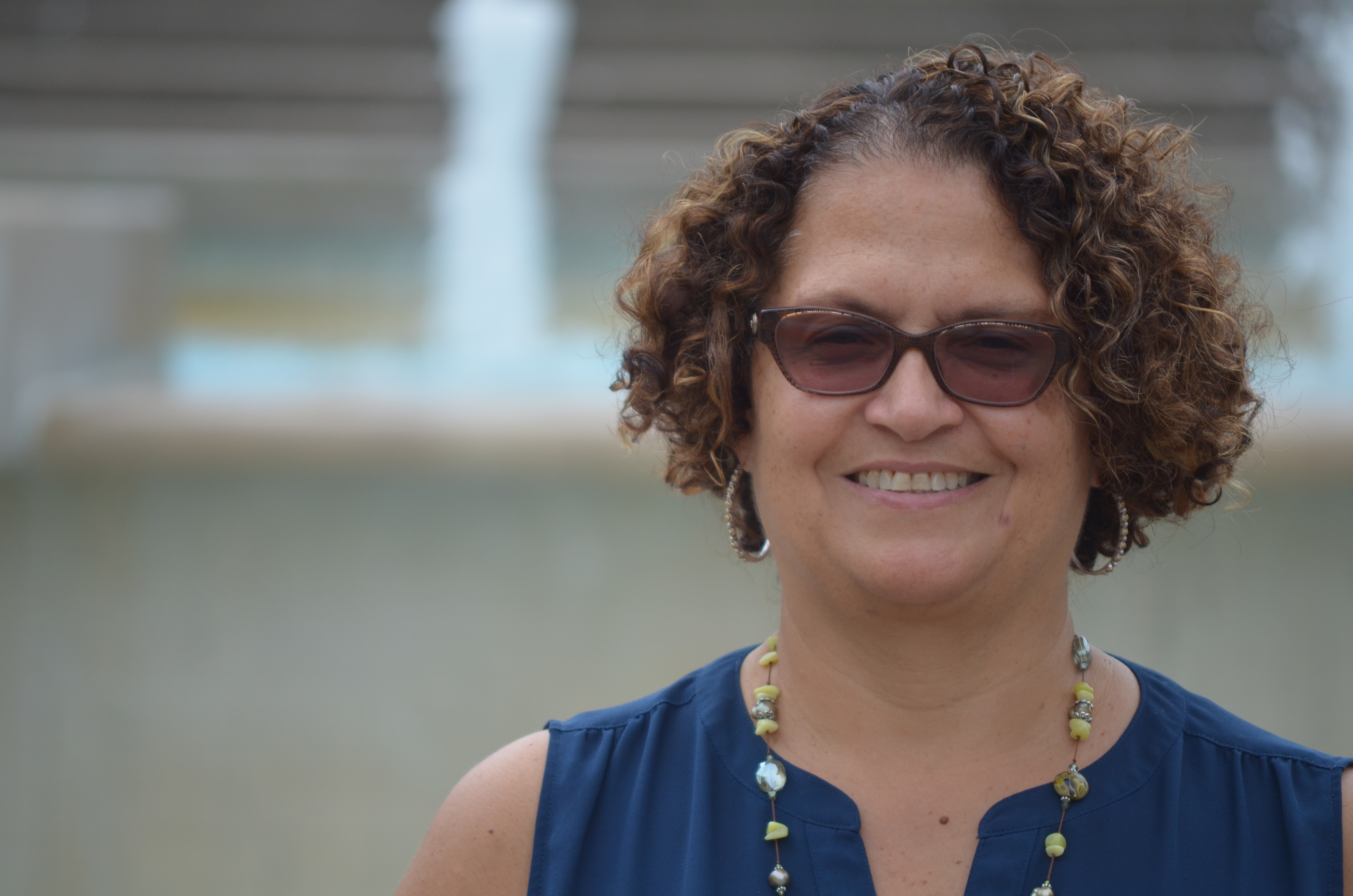
Lorraine Lopez-Janove

SUNY Ulster now has its first Chief Diversity Officer! Learn more about her and what she does for the SUNY Ulster community:

How would you describe your position to someone unfamiliar with it?
The Chief Diversity Officer is a person who focuses on opportunities to expand diversity and inclusion of all students, faculty, and staff. A CDO explores ways to improve organizational culture for all faculty, staff, and students by working collaboratively with campus leaders to solicit input, implement, and maintain the institution’s diversity and inclusion plan (DI Plan).
What sort of work does your position involve?
My position, specifically, is one that is shared among 3 colleges – SUNY Orange, SUNY Sullivan, and SUNY Ulster. I report directly to the President and am responsible for the implementation and maintenance of a strategic DI Plan. Some of my responsibilities include advising and conferring with the President on issues involving the programs and services of the College, including policies, procedures, and strategic planning as it pertains to diversity and inclusion; serving as the primary spokesperson in communicating the importance of equity, inclusion, and diversity as well as sharing the DI Plan to stakeholders; providing expertise and collaboration with the Office of Human Resources to develop, implement, and monitor policies, procedures, and activities which impact campus culture on diversity, such as hiring procedures, promotion and retention of current staff; and providing expertise on campus publications, media and public relations (such as website, social media, advertising, mass emails, etc.) to ensure that communications are free of bias and reinforce the commitment to an inclusive campus through word and imagery.
Will you be working with students directly?
I’m going to begin working directly with students by holding forums to hear their thoughts on diversity and inclusion on campus. Based on student responses, I can provide recommendations to improve the DI Plan and SUNY Ulster’s efforts in inclusion. I plan to support the work of the director of student life as it pertains to activities that promote
diversity and inclusion on campus.
What do you hope to accomplish for SUNY Ulster in this position?
My goal is to carry out SUNY Ulster’s vision to empower students, faculty, and staff to build a diverse, welcoming, and inclusive campus for all faculty, staff, and students, where all are respected and appreciated for who they are as an individual. To develop and implement programs, trainings, seminars, lectures, events, discussions, and other group opportunities to promote culturally sensitive leadership and interpersonal skills for all members of the campus community; promote an environment which encourages respectful discussion to improve cultural proficiency; and provide expertise to appropriate campus leaders to develop a student recruitment and retention strategy that encompasses programs and activities to actively encourage the enrollment of diverse students and enhance the learning experience of all students.
What first interested you about this line of work?
As an educator, I have always focused on how best to create an environment where ALL students can learn regardless of race, ethnicity, social economic status, gender, gender expression, sexual orientation, religion, nationality, language, etc. I began my work as a teacher within the prison system where I often heard from my students that they dropped out of school because they didn’t ‘fit in.’ As I continued my work within PreK-12 school environments, I supported school districts that were cited for disproportionality of Black and Latino students either in special education or suspension address and revise their policies and procedures to become more inclusive. After reviewing the district quantitative and qualitative data, the main reason for the disparities always led to the districts’ inability to deal with differences of certain student groups. As CDO, I promote diversity, but of equal importance, inclusion. I can provide my expertise to campuses to create or strengthen inclusive environments to advance equal educational opportunity for all. Diversity and inclusion have always been very important to me.
What would you say are the biggest diversity-based issues facing colleges today?
I believe one of the biggest diversity-based challenges colleges face deals with inclusion – that feeling of belonging on campus regardless of identity. Every faculty member, staff, and student should feel they work or study in an institution that values their identities and beliefs; an institution that encourages them to be their true selves without worries of humiliation or retribution. As diversity increases, the need to be mindful and intentional in our approach to promote diversity and inclusion on campus needs to be at the forefront.

Guide to Surviving Midterm Week.

Man working at homework on desk

It may seem hard to believe, but Midterm Week here on campus is quickly approaching!

Over the next few days, you may find yourself wondering how you may ever survive all the projects, and studying that needs to be completed within such a specific span of time!

To survive what may seem like “Midterm Madness” we have put together some of our top tips that can help you get ahead of the game and dominate anything that comes your way!  

Attend Study Sessions.

Attending study sessions is a great way to get a professional and in-depth look at what the upcoming midterm topics. Professors are likely to let similar questions to those on your exams slip during these sessions, and that is an excellent opportunity for you to get a full study experience!

Meet With Your Professors.

Taking advantage of your professors’ office hours as the mid-term looms closer may allow for you get a full analysis on what areas you need to work on, and you may also be able to gauge what topics will be focused on by listening closely to what topics your professor focuses on during your meeting. You can find your professors schedules on their syllabuses, or posted on their office doors.

Stay Healthy.

You may be tempted to pull an all-nighter and spend little to no time preparing healthy food options for yourself. As you increase your brain activity even further this time more than ever your body requires sleep, and nutritious food to keep a clear mind!

Manage Your Time.

As previously stated in our blog post “How to Fight Procrastination this Semester” creating a customized study plan may be an essential part of your success during midterm week. A HUGE part of this is time management- the recommended study session from University of Guelph Learning Commons is studying for 1 hours with a 5-10 break in between.

SUNY Ulster’s Campus Clubs

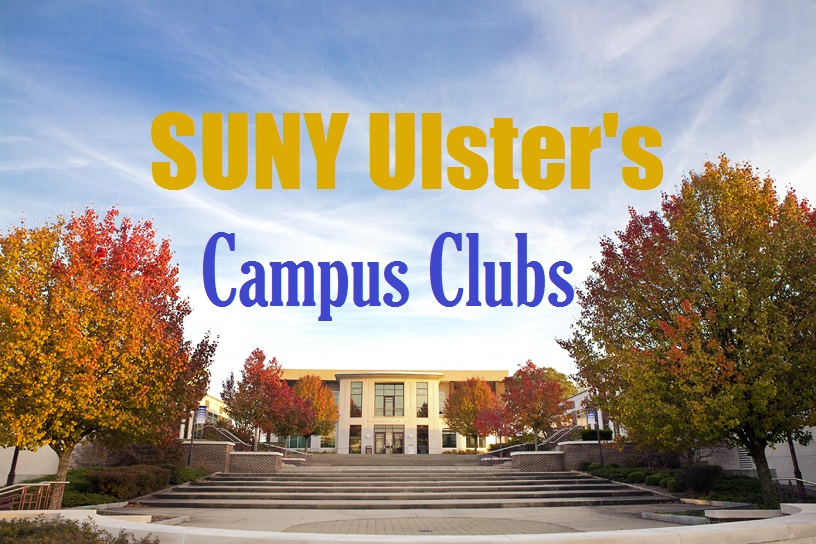
Front of library in fall with SUNY Ulster's campus clubs written in sky

You’ve been here a while now, and you’ve probably adjusted to classes and college life, but you may not feel really connected to Ulster yet. You may also be struggling to meet new people outside of class. How do you fix this? Well, one easy way is to try one of our many active clubs here on campus! Clubs are organized and run by your fellow students, with help from a faculty advisor. Here is a preview of some of the many interesting clubs on campus:

BIOLOGY CLUB

The Biology Club often works with the Environmental Club to plan and take part in events. The clubs have held panels and events on topics such as the effects of chemical spraying on farms, on the environment, and on consumers. This semester, the club hopes to take part in community volunteering, volunteering on local farms, hosting a blood drive, and possibly holding a bake sale as a fundraiser for those affected by the hurricanes. They are also trying to find a museum or event  to attend. Due to many overlapping interests, the environmental and biology club meet together in HAR 211 on Wednesdays at 1 p.m. Contact Nancy Decker at deckern@sunyulster.edu for more information.

BUSINESS CLUB

The SUNY Ulster Business Club presents an opportunity for students to experience and learn from various business-related activities. With speakers, club trips, and many club events, the Business Club can be a fun club for students pursuing a career in any field. Some of their past trips include a tour of YouTube studios and a tour of Wall Street. The meetings are held every Wednesday from 1 p.m.-2 p.m. in HAS 208. For more information, contact Mindy Kole at kolem@sunyulster.edu.


CRIMINAL JUSTICE CLUB

In the past, the Criminal Justice Club has gone to NYC to the “Bodies” exhibit and to the NYPD museum.  They have also had K9 officers and their partners come to school for a demonstrations. The Criminal Justice Club starts a charitable drive to help the less fortunate. They normally meet on the third Wednesday of the month at 1 p.m. in HAR 118. For more information, contact Thomas D’Amicantonio at damicant@sunyulster.edu.


DRAMA CLUB

Members of the Drama Club use their meetings to produce student written work, work on improvisation, and play theatre games. Their writing and acting has been on display at a number of improv shows and student productions put on for the campus community. They meet on Tuesdays at 2:30 p.m. in the Vanderlyn Rehearsal Room. For more information, contact Stephen Balantzian at balantzs@sunyulster.edu.

ENVIRONMENTAL CLUB

The Environmental Club focuses on educating the campus and surrounding community on environmental issues. They participate in community volunteer cleanup opportunities when possible, such as trail maintenance on I Love My Park Day, preparing the community garden with the Kingston YMCA Farm Project, and cleaning and restoring Kingston Point Beach. This work was recognized by SUNY’s 30 Days of Giving. They also raise money to donate to environmental groups and to preserve rain and cloud forests in areas considered to be most at risk of development. On campus, they have hosted events such as the film showing of “Open Sesame: The Story of Seeds” followed by a discussion panel, a talk by Larissa Walker on the importance of pollinators, and an Earth Day event in which they invited guest speakers and environmental groups. This semester, they will be hosting a forum on food security and the importance on getting food from our farms to the food pantries that need it. They meet at 1 p.m. on Wednesdays in HAR 211. Contact Jennifer Costello at costellj@sunyulster.edu for more information.


FASHION CLUB 

The Fashion Club promotes fashion awareness on campus and does fundraising events for field trips. In the past, they have made club t-shirts and planned fundraisers. They meet in the HAS 202 Sewing Room at 4:30 one Wednesday a month. Contact Kristin Flynn at flynnk@sunyulster.edu for more information.

FOCUS

FOCUS (Fellowship Of Christian University Students) aims to encourage spiritual growth among the college community, create an atmosphere of studying the Scriptures, establish opportunities for community service both on and off campus, and equip students with skills and experiences that will further develop leadership skills. In the past, club members have sponsored a coffee house and passed out Final Exam Survival Pack goodie bags to the campus community. The club meets on Wednesday afternoons from 1-2 p.m. in the Dining Hall, where they pray together and do a Bible study. Contact Dr. Hans Vought at voughth@sunyulster.edu for more information.


HUMAN SERVICES CLUB

The Human Services club puts their classwork into practice by helping those in need throughout the year. This year, they will be working in collaboration with the Nursing Club to do activities with older adults in a local nursing home. They also plan to help a soup kitchen prepare and serve meals on Thanksgiving Day and host a talent show in the spring. In the past, they have worked together to buy gifts for children who otherwise wouldn’t receive gifts on Christmas. The Human Services Club meets every Wednesday at 2 p.m. in Hardenbergh 117a. Interested students can contact Vicky Burgh-Harris at burghhav@sunyulster.edu.


NURSING CLUB

The nursing club is very active on campus and the local community. Members have held health fairs, blood drives, holiday card signing, health walks, and collected and distributed food for the food pantry. They also run the Salvation Army holiday angel tree that pops up in Hardenbergh every Christmas. This year, they will be running a session of holiday arts and crafts at a local nursing home around Thanksgiving. They meet at 1 p.m. the first Monday of every month in the nursing lab. Nursing students interested in participating can contact Ellen Tangney at tangneye@sunyulster.edu.

SUAA

SUAA (SUNY Ulster Art Association) gives students the opportunity to develop personal work for their portfolios.  Last year SUAA painted the mural in Vanderlyn outside of the Vice-President’s office. In the past, they have gone on a museum visit to Boston, made cards at the Woodstock School of Art, and visited the Storm King Art Center. They meet in VAN 261 at 1 p.m., typically on the second and fourth Wednesdays of every month. For more information, contact Chris Seubert at seubertc@sunyulster.edu.


VET TECH CLUB

The Veterinary Technology Club’s primary goal is to help animals in the community. They have hosted pet owner education at SUNY Ulster, raised money for Kevlar vests for Kingston’s Police K-9 unit, donated new instruments to the UCSPCA, paid for students to attend continuing ed seminars by the NYS Association of Veterinary Technicians, and hosted internationally known speaker Temple Grandin in 2012. Students have also volunteered in a TNR program for feral cats with the UCSPCA and arranged rabies and microchip clinics held at SUNY Ulster. They won an award for Collegiate Philanthropy from the Mid-Hudson Fund Raising Professionals Chapter in 2011.  The club meets every other Wednesday (when SGO doesn’t meet) in HAR 207 at 1:15 p.m. Interested students can contact Beth Alden at aldenb@sunyulster.edu or Sandy Wiltshire at wiltshis@sunyulster.edu.


WRITING CLUB

The Writing Club meets every week to share the creative writing of its members. They respond to prompts and bring in their own work for discussion and critique. Some members have published work workshopped at meetings. The club meets in DEW 104 on Wednesdays at 1 p.m. Interested students can contact Nicholas Haines at hainesn@sunyulster.edu.

Stories of SUNY Ulster — Marla Gruner: Family Woman, Educator, Library Scientist

The Stories team recently got an opportunity to conduct an interview with SUNY Ulster’s own charismatic librarian: Marla Gruner. Invariably seated at the help desk, Marla is known for her pleasant helpfulness and the sagacity of her assistance. Entering her office, we are delighted to the smell of fresh coffee, photographs of her two adorable children, and a glowing presence ready to talk.

“I was an English major in college, and I realized there wasn’t a whole lot I could do with an English degree *Laughs*. So I thought, what are my options? I talked to my advisors and they were iffy about it, and I think I took a career quiz and found out that I could go on and get my masters in library science very easily, and I had also worked in a public library when I was in high school and I liked it! It’s not a thrilling story or anything, I was just fortunate enough to have a direct line to working in this field, sort of a straight path…Mostly it’s the people here that I like working with, there are a lot of energetic, fun people to work with. It’s a small community, and unfortunately a lot of people come here from disadvantaged circumstances, so I really enjoy being able to help them in any way; be it finding a book or navigating the site…I’m teaching at F.Y.E. this semester, so I feel like I’m really able to branch out, talk to people and meet more students — that’s one thing about the library is you don’t always necessarily get to know the students very well, you don’t see them as much as their professors might per se. I feel like this is a great opportunity to know more students better…So, yeah, I just really like the community college environment and feel, and with my job specifically, I’m able to do a lot of things in the library, whereas at a larger institution, there might be like ten librarians. So I get to do the job of ten *Smiles*, but in all seriousness it is wonderful and I enjoy it.”

Interesting Tidbit: When asked about the slow decline of the print book and nationally declining book circulation rates, Marla says she is not concerned. She envisions the library of the future as more of a meeting place and help center, as well as a massive digital database. Forever the optimist, Marla is as much a librarian as she is a friend to the campus at large. The next time you find yourself in the library, keep an eye out for Marla and her infectious smile!