
Getting through Finals -10 Tips for Success

Woman working at finals

Yes, it’s about that time, finals! As a college student, finals are stressful and important. We’re hoping though, these ten tips below, help you be more prepared and less stressed during finals time.

1. Lower your commitments. Don’t take on any extra commitments and even put off any unnecessary social obligations or family commitments. Let your schedule have as much free time as possible within the two weeks leading up to finals. You’ll find you have a lot easier time studying if you make extra time for it. If you’re working, try if at all possible to take 10 days off for final exam period (or at least trim your work schedule). Even a few strategically placed extra hours can make the difference between doing just OK on finals and doing a really great job.

2. Understand your study needs. Some students think they should spend equal amounts of time preparing for each of their finals. Instead, distribute your study time to how hard the final is likely to be and how well you already know the material.

Insider tip: When figuring out when to start studying, count up from the day the study questions are handed out (or if your prof doesn’t do this, a week before the exam) to the day the exam will take place. “Seven days? Then divide the course into sevenths and study two weeks’ worth of lectures each day.”

3. Figure out what’s covered. One of the most important things you need to be clear about is what materials are going to be tested on the final. Are readings and discussion sections included, or is the final going to focus almost exclusively on material from the lectures? Is the final going to concentrate on materials since the midterm or is it going to be a comprehensive or cumulative final? Knowing the extent and the limits of the exam will make it much easier to organize and structure your studying.

4. Find out if you’re answering the big question or a series of smaller questions. Professors have two strategies when making up finals. Some design a single, big question or two; others give a series of more focused questions, each covering some single issue in the course. Before you start studying, make sure you’ve figured out your professor’s test-construction strategy.

5. Understand when to do group study. Many students believe (mistakenly) that a study group always is the best advantage: more brain power plus peer pressure to crack the books. This works well when your study partners are at least as smart as you. Exam time isn’t charity time.

6. Read the instructions—and make a plan. When you get to the exam and get your test sheet, take the time to carefully survey the format of the test. How many questions are you being asked to answer? Is there a choice? How much does each part count? Then make a (tentative) plan—right up front, before you start working—of how much time you’re going to devote to each question.

Insider tip: Don’t waste too much time outlining your answers, writing down formulas you’ve memorized, or (when given a choice) starting a question and then stopping and starting another question. You’re being graded on the quality of your answer, not on notes to yourself or false starts.

7. Be sure to expand your answers fully. Many students don’t realize that, on essay exams, part of what’s being graded is how well you develop and explain your answer, not just how correct it is. Consider explaining your points in more detail so that someone unfamiliar with the answer would know, just from what you say, what the answer is.

8. Don’t panic too soon. In three hours, you’ll probably be confronted with a number of questions of varying degrees of difficulty. There are bound to be ups and downs—times you’re feeling better, and worse, about how the test is going. Ignore such instantaneous feedback. Most tests are designed to have some harder questions, and in any case, such self-evaluation is often wrong.

9. Pace yourself. Two or three hours is a long time. Think of the final exam as a work session, divided into a number of sub-sessions. Take a few minute break between each question or part. Approach each question separately from the rest.

10. Stay until the end. It’s amazing to see, but many students leave before the exam is over. That’s never a good thing to do, since there are always problems to be checked over or essays to be added to or proofread. Even making a single correction to a problem, or adding a single point to an essay (don’t be afraid to pencil a paragraph into the margin or on top of the page), can spell the difference between a good grade and a not-so-good grade.

Three Sisters Get College Start at SUNY Ulster

The Hart sisters stand with arms around each other

While they have different career plans, sisters Jacquelyn, Chelsea and Brooke Hart from New Paltz agree on the value of starting their education at SUNY Ulster.

With three attending college at the same time and being raised by a single mother who is a veteran and works for the New Paltz Police Department, SUNY Ulster’s low tuition was a key factor in their decision.

But they each also chose SUNY Ulster for its quality education, campus activities, connections and transfer opportunities.

“I chose SUNY Ulster because it is affordable while offering a great educational opportunity,” said the oldest sister Jacquelyn, who will graduate this year.

Jacquelyn, who also works at the College’s Learning Center, plans on transferring to SUNY Buffalo or SUNY New Paltz to study communications and journalism.

The second sister, Chelsea, is pursuing Environmental Studies with plans to go to SUNY Environmental Science and Forestry in Syracuse after earning her associate’s here in May 2016.

“SUNY Ulster was the best idea for me because it is more affordable and studying here will give me a stronger foundation in my studies before transferring to a four-year college,” Chelsea said.

Both Jacquelyn and Chelsea have been active in SUNY Ulster’s Chess Club, serving as treasurer and secretary, respectively.

The youngest, Brooke, is following his sisters’ paths. She will enroll in the fall after graduating from New Paltz High School with similar career aspirations as Chelsea to better the environment.

“I am choosing SUNY Ulster because it offers a wide variety of opportunities to its students in terms of professional connections and extracurricular activities, and it is very affordable,” said Brooke, who wants to become an environmental engineer.

Having all the sisters on campus on the same time will be enjoyable for this close-knit family who is going places. “It will be fun to share the college experience with both of my sisters while also being there to support each of them through the process,” Chelsea said.


The Skinny on Scholarship Success

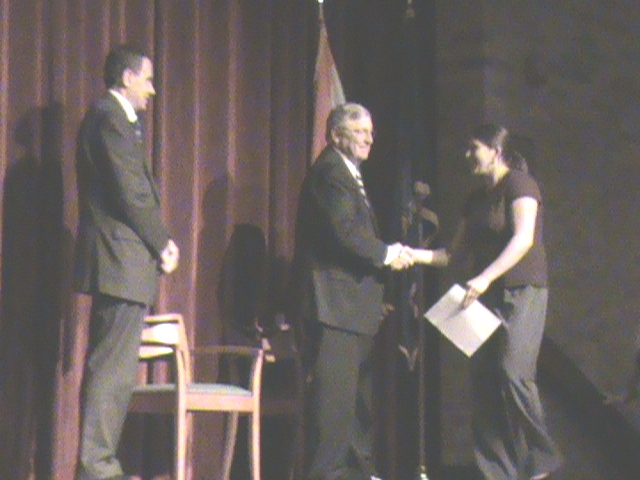
Student accepting award at the 2011 Scholarship Ceremony

Tips from Our Coordinator of the Scholarship Program

Overwhelmed about the thought of applying for scholarships and think you won’t win one anyway? Think again. Burnelle Roser, Associate Director & Coordinator of the Scholarship Program, shares some of the basics about scholarships that will show you how easy it really is and get you applying before you miss out on some great opportunities.

Who: You! Each year, the Ulster Community College Foundation awards over $180,000 in scholarships to more than 200 students. You might think thousands are applying and you don’t have a chance. In fact, only a small percentage of students apply so your chances are good. Scholarships are open to new students entering SUNY Ulster, returning students and those transferring to four-year colleges. “Every single student should apply,” says Burnelle.

When: Right now! The time to start thinking about scholarships for the Spring 2016 semester is December/January. The Foundation’s general scholarship application deadline for SUNY Ulster students is Feb. 6, 2015. Don’t miss out. All the deadlines are on the portal in the “Student Resources” section under “Scholarships.”

How: SUNY Ulster students should fill out the general application and essay to be considered for scholarships administered by the Foundation. You don’t have to pick and choose the ones you want to be considered for. We’ll do it for you. “Our goal is to connect students to as many of the 200 different criteria as we can,” she says. The general application is available in two formats – an electronic PDF that can be completed on a computer or a printable form. Both versions are available at:   www.sunyulster.edu/foundation/scholarships/applications.

Why: Why not? We’re talking FREE money for college that doesn’t have to be paid back. With awards generally ranging from $500 to full tuition, it’s worth the few hours it may take to apply.

Remember to meet the deadlines, carefully follow all the instructions, answer the questions as candidly as possible and go for it! Stay tuned for more scholarship tips here.

Senator Mascot 3

Three Ways to Experience the World

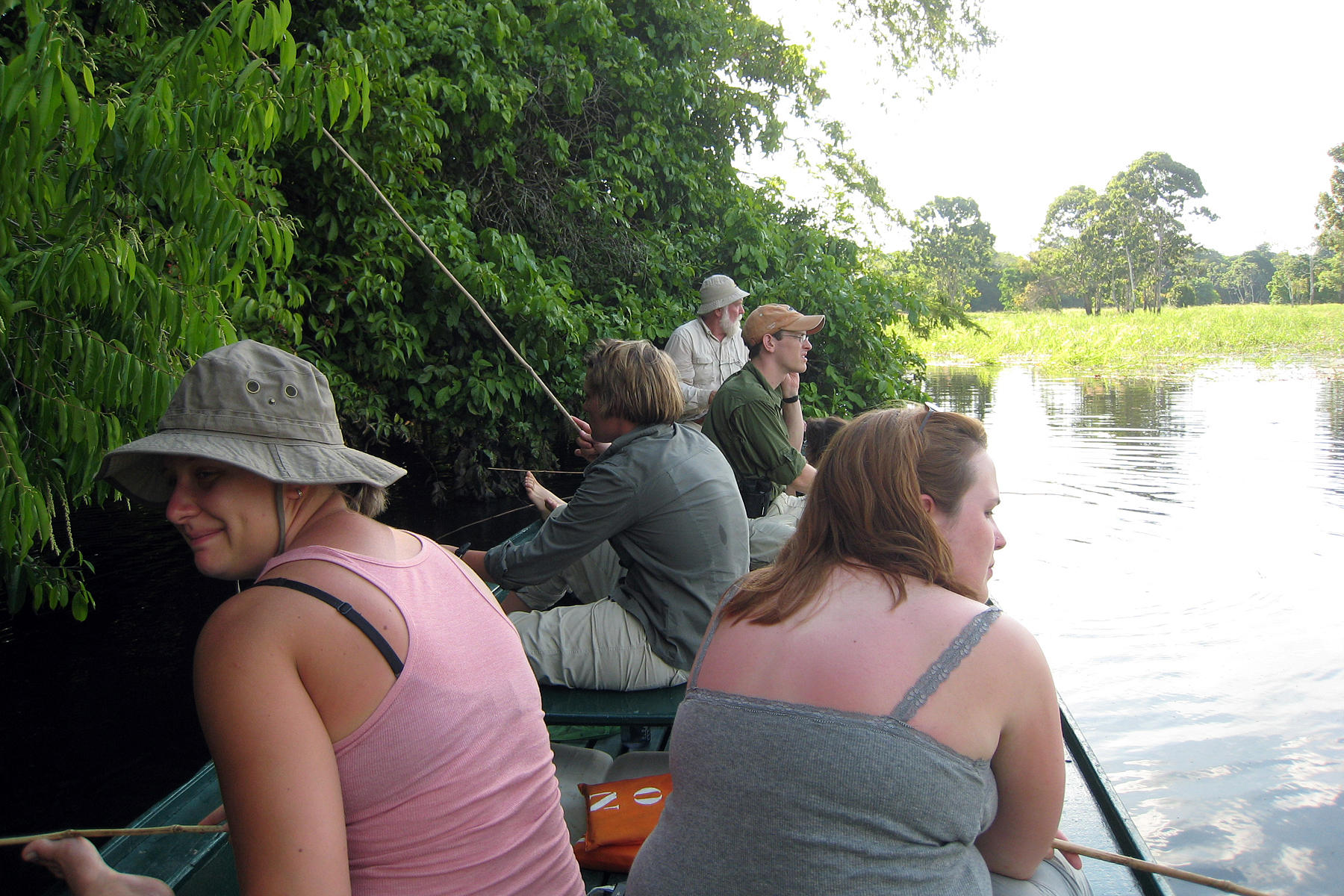
Students in a boat on the Amazon river

Experiencing the world and connecting with other students from around the globe is easier than ever for SUNY Ulster students. It doesn’t have to be costly or out of reach. Here are three ways to make a difference in your education and life:

Academic Travel – International and Domestic – With group rates, knowledgeable instructors and special arrangements that take students to places you wouldn’t normally see, you’ll experience the world and other cultures in a different travel than ever before.

Our students have gone to the Brazilian Amazon, France, Italy and Mexico and other exciting

Design students invade London>
Design students invade London.

destinations over summer and winter breaks; have earned credits and resume experience for transferring; and made lifetime memories. Domestically, theater students travel to the Humana Festival of New American Plays in Louisville, Kentucky, and more. Our trips also are open to community members so you’ll meet interesting people right from our area.

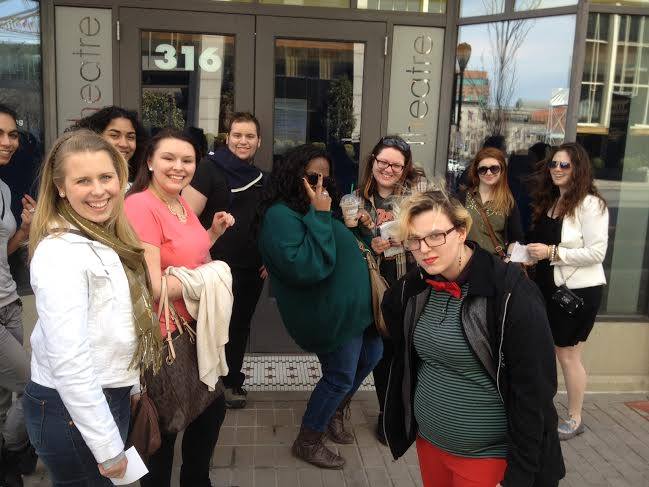
Theatre students in Louisville for the Humana Festival.

Scholarships are available for academic travel, and peer-funding through Project Travel can make domestic and international educational travel programs more accessible.

Online International Learning – Enroll in a Collaborative Online International Learning (COIL) course at SUNY Ulster. These programs use Internet-based tools like Skype and Moodle to connect with students from other institutions around the globe, without ever leaving campus.

This spring, a new collaborative class in genetics will be offered in collaboration with an institution in

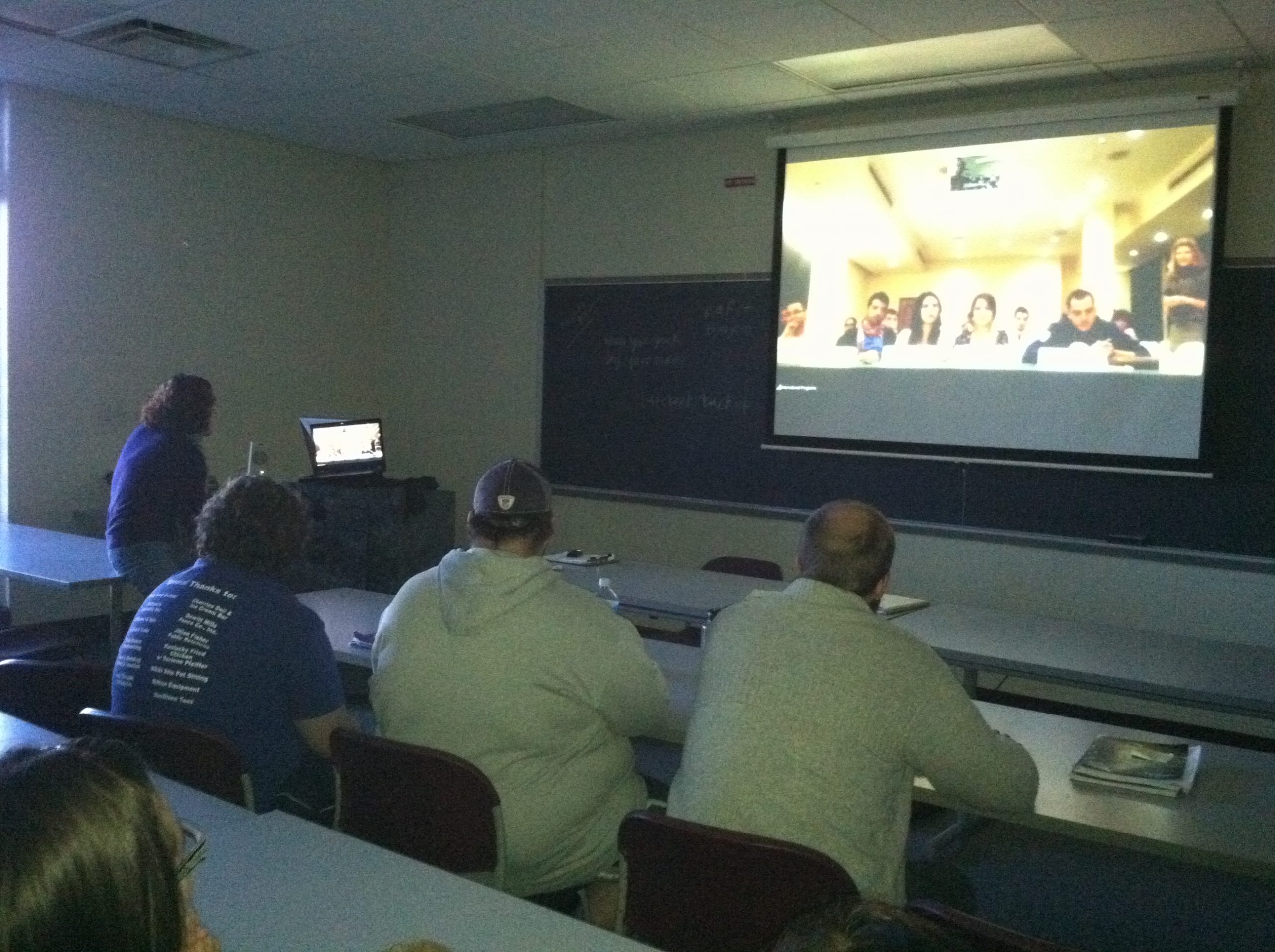
SUNY Ulster business students Skype with business students in São Paulo, Brazil.

Mexico. Through a grant, funded by Santander Bank, a student ambassador from SUNY Ulster also will have the opportunity to visit the partner class and institution during collaborative course activities. Our students have participated in COIL classes with institutions in Beirut, Lebanon; Bologna, Italy and São Paulo, Brazil.

To find out more about expanding your horizons, contact Chris Seubert, Program Coordinator of Academic Travel, (845) 687-5134, seubertc@sunyulster.edu or Richard Cattabiani, Director of International Programs, (845) 687-5135, cattabir@sunyulster.edu.

10 Theater Tidbits

SUNY Ulster Theatre Department Gets Ready for a Performance.


When the curtain goes up for SUNY Ulster’s Theater productions, countless hours of work by students, faculty, community members and volunteers have gone into making the show possible. Here’s a peak at 10 things that happen behind the scenes:

  • Did you know Theater Costumer Aletta Vett travels on average 1,500 miles a production in search of the perfect thrift-store and yard sale bargains, fabrics, accessories and wigs to costume our student performers?
  • Bolts of fabric. Yards and yard of thread. Packages of dye. Dress manikins. Patterns and sewing machines. These are some of the tools of the trade for costume.
  • The Fall 2014 production of “Six One Act Plays by Christopher Durang” had 25 actors and 44 costumes, but with the accessories and pieces like bags, jewelry and shoes that totals hundreds of items to track.
  • Costumes are washed every night and arranged on large racks alphabetically by the actors’ last name with each individual piece hung in the order it will be put on – just like they do on Broadway. The order takes away the stress so actors can concentrate on their performances.
  • SUNY Ulster students have learned how to stitch and build costumes, replace buttons, make extensions, add sequins and more by Costumer Aletta Vett, who once sewed kilts for a living in her “retirement” and has been with SUNY Ulster for nearly a decade.
  • Students never wear their own clothing for costumes – with the exception of large size shoes that are hard to find.
  • Helping in the costume shop is a course requirement for Theater Production Participation credit. Students can be found ironing costumes, organizing accessories and getting fitted in between classes.
  • The costumes for “Six One Act Plays by Christopher Durang” were inspired by the mid 1980s and featured bright colors – except for the mourners in “Funeral Parlor” who wore black with pearl necklaces with the exception of one outrageous mourner who wore a lavender shirt and tie.
  • SUNY Ulster Theatre students have plenty of fun outside the classroom too. This Halloween, students haunted the Hurley Cemetery for the Ghost Walk Tour.
  • Costumer Aletta Vett says she loves working with the enthusiastic students in SUNY Ulster’s Theatre Department and there’s nothing like the energy backstage after opening night. “They are flying with energy,” she says. “It’s an amazing accomplishment.”